



Isro tests CE20 engine at 220kN for LVM3-M7. What does it mean for India’s space ambitions?
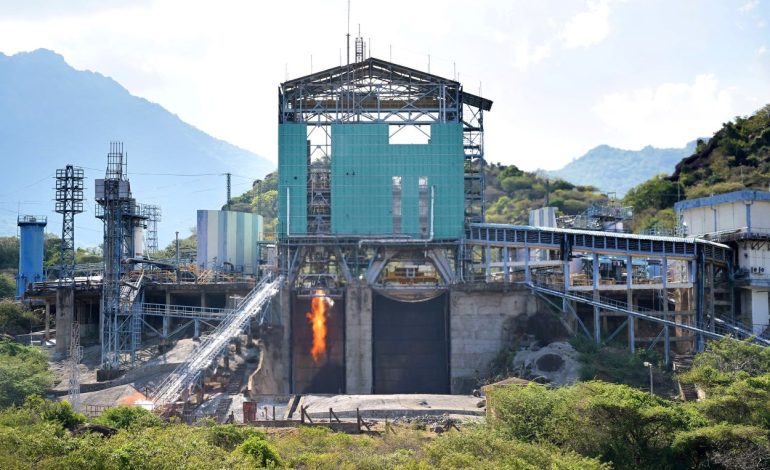
The Isro CE20 engine during its hot test. (Photo: Isro)

New Delhi: The Indian Space Research Organisation (Isro) has successfully tested a higher-thrust CE20 cryogenic engine earmarked for its upcoming LVM3-M7 mission, advancing preparations for an upgraded upper stage designed to carry heavier payloads. The ground firing on Wednesday, also demonstrated a tank-pressurization module intended for future Gaganyaan missions, giving the exercise relevance beyond the immediate satellite launch programme.
Conducted at the Isro Propulsion Complex in Mahendragiri, Tamil Nadu, the flight acceptance test operated the engine at an uprated thrust condition reported as 220 kilonewtons (kN). Isro said the engine systems performed satisfactorily and met all test objectives, confirming their performance under the conditions examined.
The engine will undergo refurbishment before being assembled into the C32 cryogenic flight stage for LVM3-M7, which Isro has scheduled for the fourth quarter of this year. The agency’s announcement did not specify a launch date or quantify the additional payload capacity expected on this particular mission.
A flight acceptance test checks an engine assigned to a mission before its integration into the launch vehicle. Isro conducts such firings for every mission’s cryogenic engine, making this an essential verification step even when the underlying design has already been qualified.
The September firing builds on earlier tests rather than marking the CE20’s first operation at the higher thrust setting. On July 6, Isro tested an engine assigned to LVM3-M7 at 19.5 tonnes of thrust for 45 seconds and 22 tonnes for another 25 seconds, using its nozzle protection system.
That system allows an engine nozzle designed for high-altitude operation to be tested under sea-level conditions, simplifying work that otherwise requires specialized high-altitude testing arrangements. Isro says the approach reduces resource requirements and allows longer tests, potentially easing an important part of launch preparation.
What the test proves – and where caution remains necessary
The evidence supports a measured assessment: India is progressing towards an upgraded operational upper stage through successive ground demonstrations. However, an engine passing its acceptance test does not establish that the complete launch vehicle is ready to fly or independently demonstrate its eventual payload performance.
The technical concerns involved in sea-level testing are real and well documented. Isro has explained that the CE20’s large expansion nozzle can experience separation of the exhaust flow under these conditions, producing severe vibrations and localized thermal problems that could damage the nozzle.
The nozzle protection system addresses that particular testing problem, and its validation predates the latest firing. On March 10, Isro conducted a 165-second sea-level test at the 22-tonne thrust level, reporting that both the engine and the test facility performed as expected throughout.
These findings provide grounds for confidence in the testing approach, but they cannot eliminate every risk associated with an integrated rocket flight. The reasonable inference is that Isro has reduced specific engineering uncertainties; the full upgrade must still deliver its intended performance during a mission.
The Gaganyaan connection also requires precision: the September exercise demonstrated the liquid oxygen tank-pressurization module intended for C32 stages associated with the human spaceflight programme. That is a useful subsystem result, but it should not be interpreted as clearance for an entire crewed mission.
For India, the prospective benefit is greater flexibility in launching heavier spacecraft using an established launch vehicle family. The CE20 already has experience powering lunar and commercial missions, so the upgrade builds on operational heritage rather than starting with an entirely untested propulsion system.
There is no evidence in the announcements reviewed of a newly identified safety crisis or grounds for alarm about this test. The more defensible conclusion is that a necessary engineering milestone has been achieved, with the scale of its operational benefit to be established through subsequent integration and flight.