Swavlamban 2026: Rajnath Singh calls for ‘Atmanirbharta 2.0’ to close defence technology gaps
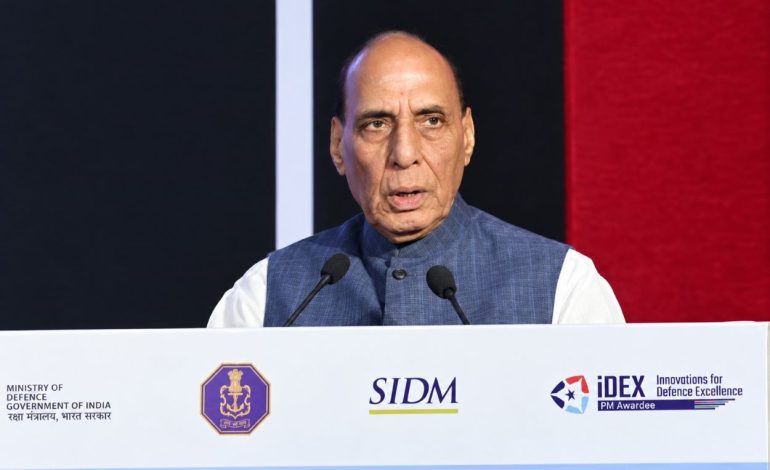
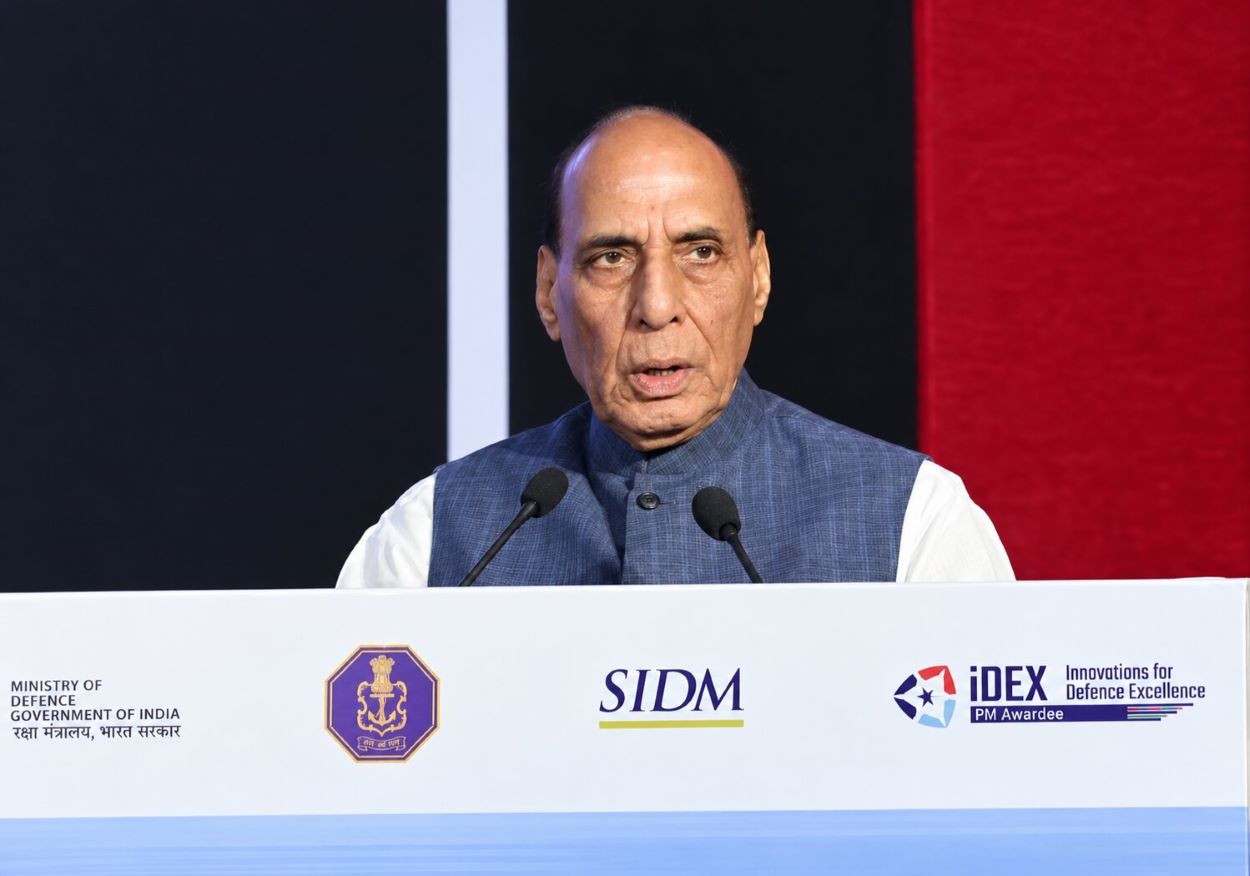
Rajnath Singh during his Swavlamban 2026 address.

New Delhi: The defence minister, Rajnath Singh, on Monday, called for a second phase of defence self-reliance centred on advanced technologies, stronger research capabilities and supply chains that can withstand disruption. Addressing the Indian Navy’s Swavlamban 2026 seminar, he urged industry and researchers to develop equipment that combines operational superiority with affordability, while reducing dependence on critical foreign supplies.
Describing this next phase as “Atmanirbharta 2.0”, Singh said India must build on its manufacturing gains to pursue more demanding technological objectives. His emphasis was on improving the quality, efficiency and competitiveness of indigenous equipment alongside expanding production, linking these efforts to the government’s goal of a developed India by 2047.
A central proposal in his address at Swavlamban was a time-bound roadmap identifying critical technologies, the industries responsible for developing them and the resources required. Such planning, he said, should establish clear milestones for reducing import dependence rather than leave vulnerabilities to be addressed after a crisis emerges.
Singh described supply chain management as a national security responsibility, pointing to constraints arising from limited domestic availability of raw materials, including rare earth elements, and gaps in technological capability. He acknowledged that some overseas dependencies would continue until India developed viable alternatives or secured domestic resources, making the prioritization of critical items essential.
He also called for advance assessments of buffer stocks, domestic manufacturing capacity and potential disruptions to supply routes. The approach would require defence planners and manufacturers to examine whether essential materials and equipment would remain available during an emergency, alongside their routine procurement requirements.
The minister identified research and development as central to overcoming these constraints, while arguing for greater acceptance of the uncertainty involved in technological innovation. He said countries with mature research systems also encounter failures and urged India to consider funding arrangements capable of supporting projects with substantial risks and potentially significant returns.
Singh sought greater private sector participation in research and highlighted the scope for relatively inexpensive technologies that allow ideas to be tested through smaller experiments. He also called for closer cooperation between industry and academia, stronger encouragement for research in educational institutions and more opportunities for young people to build careers in the field.
Citing Israel, South Korea and the United States, he argued that a sustained culture of innovation depends partly on treating unsuccessful experiments as opportunities to learn. His remarks placed institutional attitudes towards research alongside funding and industrial capacity as issues requiring attention in the next phase of self-reliance.
The Navy’s innovation programme provided the immediate backdrop to these proposals, with Singh saying that more than 4,000 proposals had been received against 229 naval challenges under Innovations for Defence Excellence, or iDEX. Start-ups and micro, small and medium enterprises had developed solutions in areas including sensors, communications and naval systems, he said.
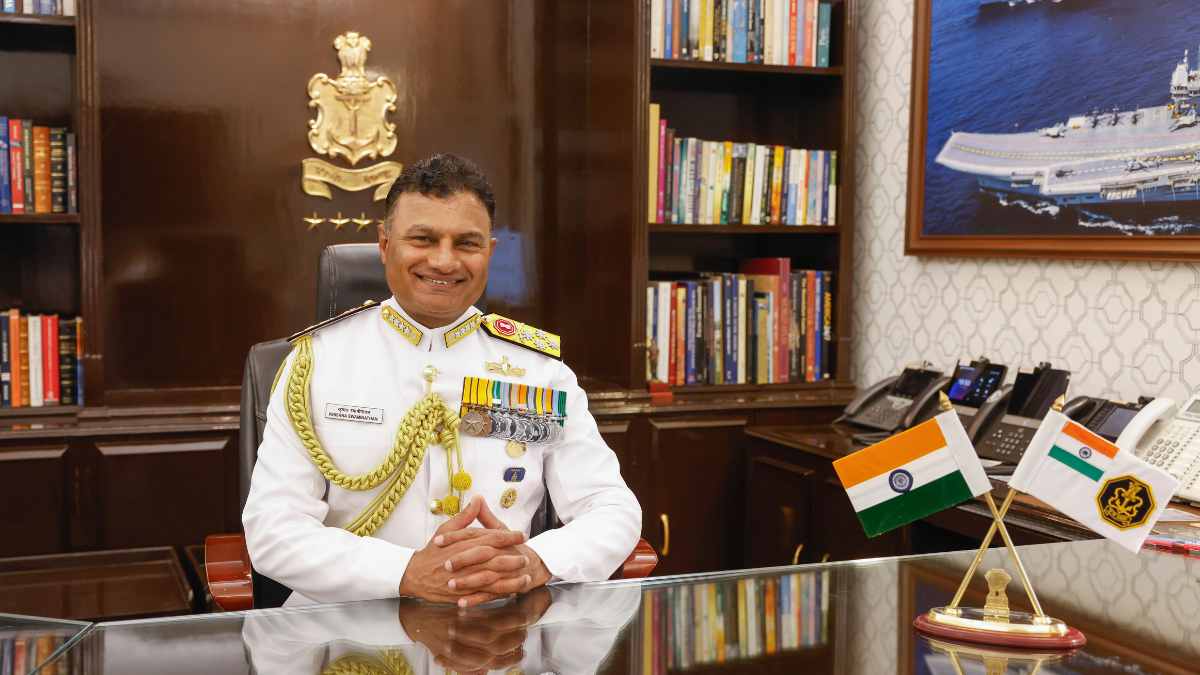
Speaking on the occasion, the chief of the naval staff, Admiral Krishna Swaminathan, said Navy-specific iDEX challenges had increased from 20 to 229 since Swavlamban began in 2022. These now accounted for approximately 35 per cent of challenges issued across the defence sector under the programme.
Adm Swaminathan said 41 procurement cases worth more than ₹3,500 crore had received acceptance of necessity, while 25 contracts exceeding ₹1,900 crore had been signed. Acceptance of necessity represents an initial procurement approval, so the larger figure should be distinguished from the value of contracts already concluded.
Launched in April 2018, iDEX connects military requirements with start-ups, smaller businesses, individual innovators and research institutions, supporting the development of indigenous defence and aerospace technologies. Its Acing Development of Innovative Technologies with iDEX, or Aditi, scheme provides grants of up to ₹25 crore for work on critical and strategic technologies, including artificial intelligence, quantum technology and underwater surveillance.
Singh also drew attention to the cost of expanding naval capability, saying demand for ships was increasing in response to the evolving situation in the Indian Ocean region. Given the capital-intensive nature of shipbuilding, he urged manufacturers and researchers to find ways to lower costs while increasing domestic production.
He identified buyer-nominated equipment as an area where remaining import dependence needed to be addressed. Such equipment is specified by the purchasing service for installation on a platform, making the indigenization of these systems relevant to the wider effort to reduce foreign dependence in domestically built ships.
For a broader approach, Singh proposed a “Dual Technology Roadmap” to identify technologies serving both civilian and military requirements. He called for priority lists covering civil and military shipping, extending the effort beyond the government’s existing positive indigenization lists.
Those positive indigenization lists establish deadlines beyond which specified equipment and components must be procured from domestic manufacturers. Singh’s proposed roadmap would add a focus on technologies with applications across commercial shipping and defence, potentially widening their market and production base.
He also suggested identifying technologies that could be used by the Army, Navy, Air Force and Indian Coast Guard. Describing this as a technological application of jointness, he said common capabilities could become an important part of the next phase of defence self-reliance.
The exhibition accompanying the seminar featured more than 100 stalls by start-ups and smaller enterprises, with displays covering autonomous maritime platforms, persistent surveillance, resilient navigation, advanced communications and counter-drone systems. Other exhibits addressed quantum technologies and the use of artificial intelligence in warfare, while a section presented products being inducted into the Navy.
Singh visited the exhibition and interacted with innovators working on naval operational requirements, while also releasing the “Swavlamban 5.0” document and a compendium of technology imperatives, problem statements and future concepts. The publications are intended to give industry a clearer view of the Navy’s priorities and opportunities for development.
The two-day seminar at the Manekshaw Centre, running from October 26 to October 27, is organized by the Indian Navy with the Defence Innovation Organisation and the Society of Indian Defence Manufacturers. Its programme includes discussions on emerging military technologies, domestic supply chains, academic entrepreneurship and investment to help promising defence businesses expand production.