


Asim Munir joins Saudi, Turkish officials for security talks with Iran in Tehran
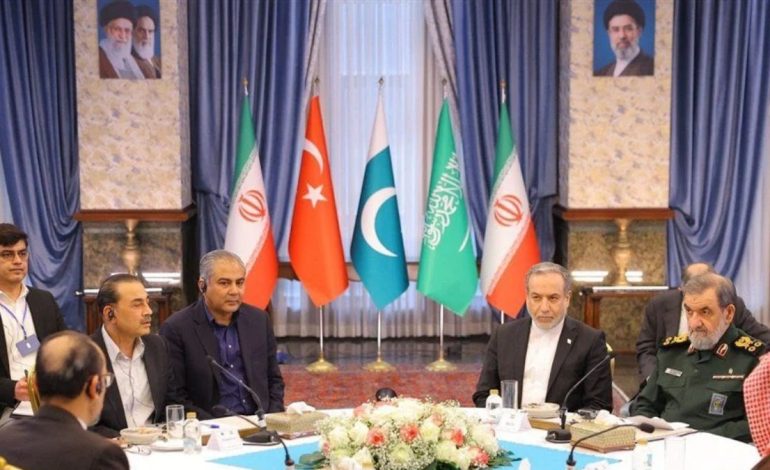
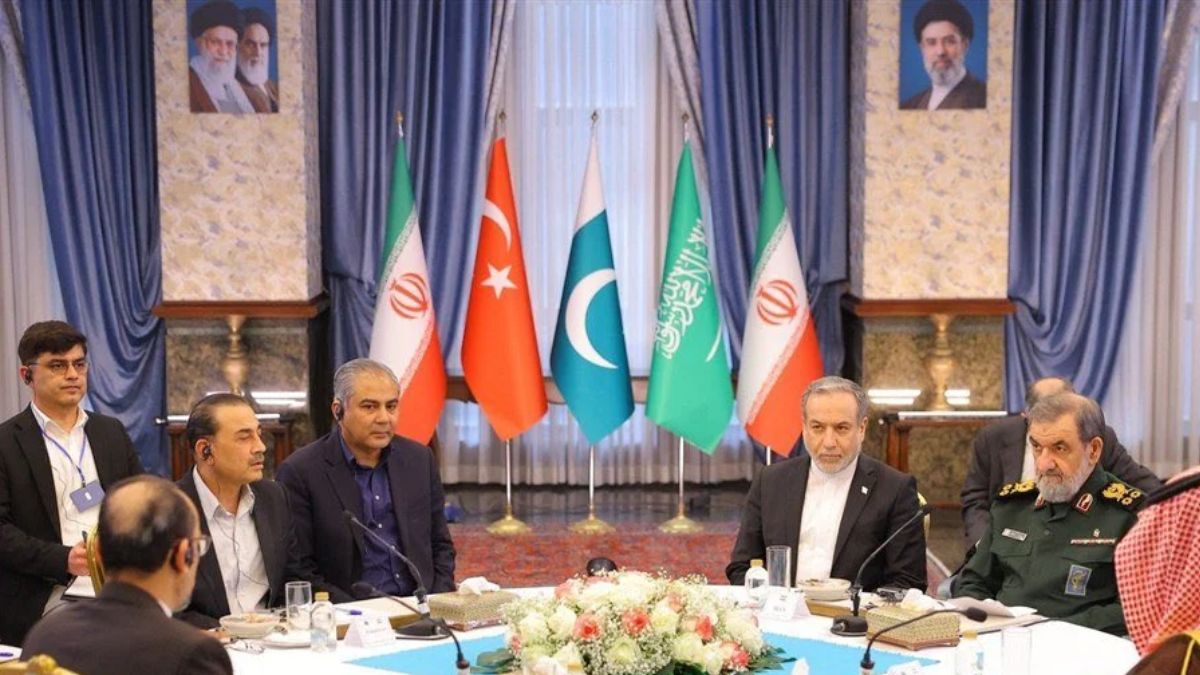
Iranian, Pakistani, Saudi and Turkish officials hold regional security talks in Tehran.(Image courtesy: TASNIM)

New Delhi: The Pakistani army chief, Field Marshal Asim Munir, joined senior Saudi and Turkish officials for security talks with Iran in Tehran on Monday. The meeting came amid escalating Houthi attacks on Saudi Arabia and fears of renewed fighting involving Iran, the United States and Israel.
Pakistan’s Inter-Services Public Relations (ISPR) confirmed Munir’s official visit. Saudi Arabia was represented by its defence minister, Prince Khalid bin Salman, and Turkiye by intelligence chief Ibrahim Kalin. Iranian state news agency IRNA reported that the visiting delegation heads held detailed discussions with Mohsen Rezaei, secretary of Iran’s supreme national security council.
The officials were also expected to meet Iranian president, Masoud Pezeshkian. However, no substantive agreement or joint communiqué had been announced following the discussions with Rezaei.
Pakistan’s proposal and Iran’s security agenda
The Iranian foreign ministry spokesman, Esmaeil Baghaei, said Tehran agreed to the four-country meeting following a proposal Munir raised during an earlier visit last week. Ali Bagheri Kani, deputy secretary of Iran’s supreme national security council, described the initiative as a step towards “endogenous security”, advocating regional security arrangements shaped by countries in West Asia.
Baghaei said discussions would cover developments in Palestine and Lebanon and the repercussions of US-Israeli military action against Iran. Saudi deputy minister for public diplomacy Rayed Krimly emphasized de-escalation, dialogue and support for mediation by Pakistan and Qatar.
The differing public positions underline the diplomatic nature of the engagement rather than the creation of a unified security bloc. Turkiye’s Nato membership and the participants’ separate strategic partnerships further complicate any common regional security framework.
Defence pact and Houthi attacks shape discussions
Signed on August 7, the Makkah Joint Defence Agreement provides that an external armed attack on Saudi Arabia, Pakistan or Turkiye is considered an attack on all three. Pakistan’s foreign office confirmed on Friday that Islamabad and Riyadh had completed ratification, while Turkiye’s approval remained pending. Under Article 16, the agreement enters into force after the final ratification is deposited. Iran is not a signatory.
As RNA Media previously reported, ministers from the three countries agreed at an emergency meeting in Riyadh earlier this month to prepare the rapid deployment of military forces and capabilities to Saudi Arabia. That decision does not independently establish that additional forces have been deployed.
On Monday, the Saudi-led coalition said it intercepted a missile launched towards Riyadh and destroyed two ballistic missile launchers in Yemen’s capital, Sanaa. The Houthis separately claimed attacks on Riyadh airport and Saudi oil pumping stations, although Saudi authorities had not immediately confirmed those claims.
Pakistan and Qatar previously helped broker an interim agreement between Washington and Tehran in June, but it subsequently collapsed as fighting resumed. The latest talks offer an opportunity for direct crisis communication, although no new regional security mechanism or binding commitment has been announced.


1 Comment
[…] International October 26, 2026 […]