Makkah pact takes first step as Pakistan and Turkiye back Saudi Arabia, what happens next?
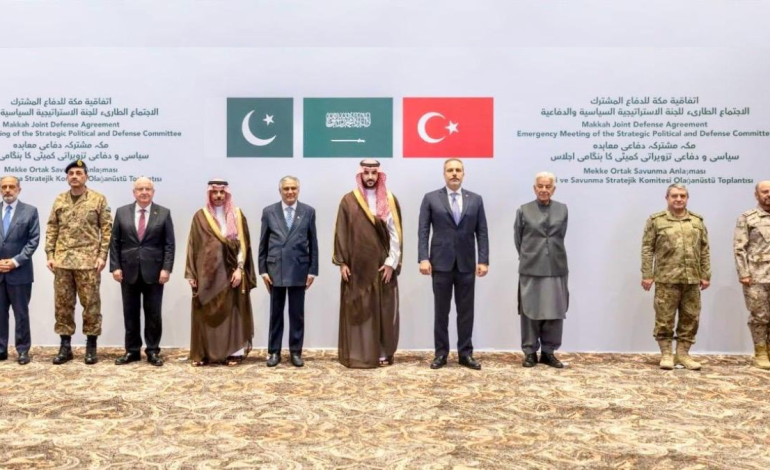
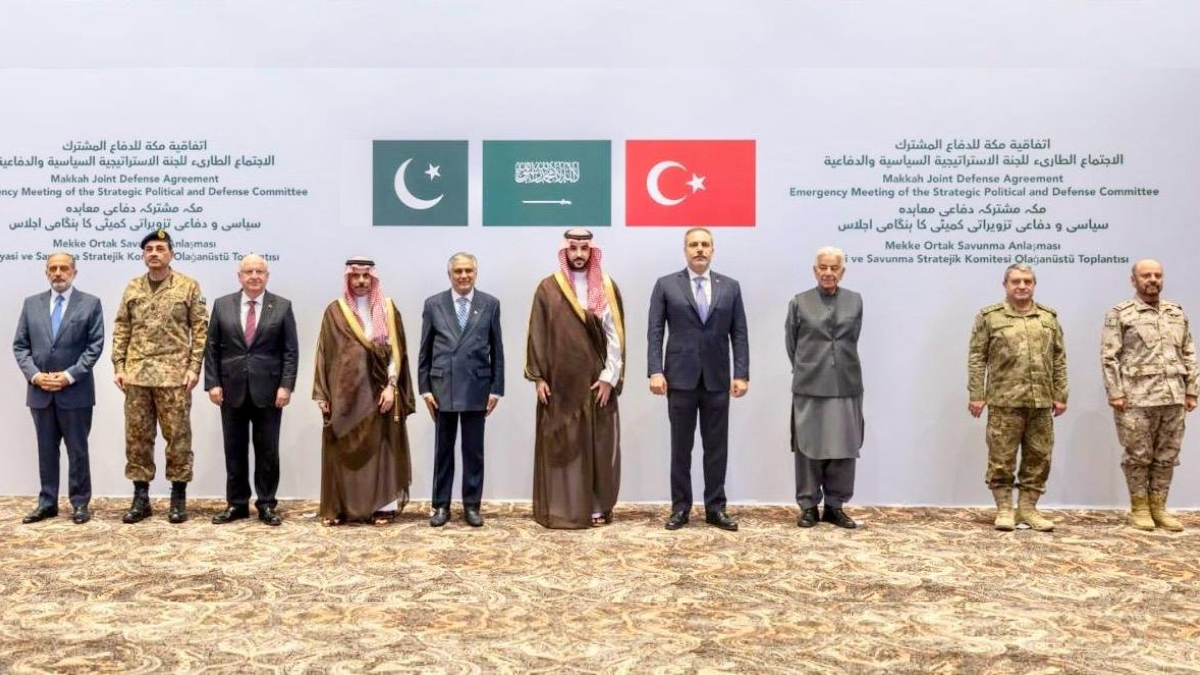
Makkah pact takes first step. (Image courtesy: X/@ForeignOfficePk)

New Delhi: The Makkah Defence Alliance has moved into action mode for the first time, with Saudi Arabia, Pakistan and Turkiye agreeing to activate collective deterrence measures and prepare the rapid deployment of agreed military forces to the kingdom. The decision came at an extraordinary meeting of the Strategic Political and Defence Committee (S-PDC) in Riyadh on Monday, as Houthi attacks and the wider conflict in Yemen raised fresh security concerns for Saudi Arabia.
The three countries agreed to put the alliance’s collective-defence commitments into practical implementation, including providing the agreed military forces and capabilities and ensuring their rapid deployment in Saudi Arabia. The joint commitment will be carried out under approved arrangements and in accordance with the national laws of the three member states.
This is the first time the defence pact, signed on August 7, has been activated since its formation. The agreement establishes a collective-defence framework under which an attack on any one of the three members is treated as an attack on all, making Monday’s decision the first test of that commitment.
The meeting also gave the alliance its first senior institutional appointment, with Pakistan’s nominee, retired Lieutenant General Nauman Mahmood, Hilal-e-Imtiaz, approved as the first secretary general of the Makkah Alliance for three year term.
How the pact will work
Pakistan and Turkiye will provide military support to Saudi Arabia as the kingdom continues operations against the Houthis in Yemen. The Pakistani defence minister, Khawaja Asif, said Pakistani and Turkish forces already have a presence in Saudi Arabia and are providing assistance, while Saudi forces remain responsible for combat operations.
Speaking on Geo News programme Aaj Shahzeb Khanzada Kay Sath on Monday, Asif said the Pakistani and Turkish militaries were playing a supportive role, including “reconnaissance and other things”. He said Saudi forces were engaged in combat and were reclaiming territory from the Houthis.
The next step will be to implement the agreement reached at Monday’s Makkah pact meeting for the rapid deployment of agreed military forces and capabilities in Saudi Arabia. The deployment will take place under arrangements approved by the three countries and in accordance with their respective national laws.
This means Pakistan and Turkiye are not being described as taking over Saudi Arabia’s combat operations. Their role, based on Asif’s comments, is to provide support such as reconnaissance and other military assistance, while Saudi forces conduct the fighting against the Houthis.
Why Saudi Arabia needs Pakistan and Turkiye support?
The decision came amid a sharp escalation involving Yemen’s Iran-aligned Houthis and attacks targeting Saudi Arabia. The Houthis claimed strikes on King Khalid International Airport in Riyadh, an Aramco refinery in coastal Rabigh and several other locations, including an airport and an airbase, although there was no confirmation of the claims from Riyadh.
The developments coincided with a counteroffensive by forces aligned with Yemen’s internationally recognized government and backed by Saudi Arabia. The Yemeni forces claimed to have retaken the Red Sea port city of Mocha and gained control of the strategically important Bab al-Mandab Strait from the Houthis.
Pakistan and Turkiye’s position
Pakistan was represented at the Riyadh meeting by Mohammad Ishaq Dar, Pakistani deputy prime minister and foreign minister; the defence minister, Khawaja Asif; and the Pakistan Army chief, Field Marshal Asim Munir. Islamabad expressed its unwavering solidarity with Saudi Arabia, reaffirmed its full support for the kingdom’s sovereignty, territorial integrity and security, and strongly condemned the attempted targeting of the holy cities of Mecca and Medina as well as the continued attacks against Saudi Arabia.
Pakistan also reiterated its commitment to making every effort towards lasting peace and stability in the region. Meanwhile, the Turkish foreign minister, Hakan Fidan, said the three members discussed in detail what support could be provided for Saudi Arabia’s defence while also considering diplomatic steps to resolve tensions involving Yemen through peaceful means and dialogue.
Fidan said Saudi Arabia had taken a “very constructive approach” and that the participants had an opportunity to hear Riyadh’s position during the meeting. He said the Turkish president, Recep Tayyip Erdogan, had put forward a clear position on the issue and that, reflecting that position, the meeting had taken a number of decisions.
Turkiye’s national defence minister and senior military officials also attended the meeting and contributed particularly to discussions on military, operational and technical matters, Fidan said. He described the talks as productive and said the discussions covered both the immediate situation involving Saudi Arabia and Yemen and the longer-term institutionalization of the alliance.
Fidan said work on the alliance’s institutional structure had reached its final stages, with the participants discussing the structure of the secretariat, technical matters and the appointment of the secretary-general.