

From videogames to military drones: Malaysia eyes gamers to counter China’s growing South China Sea presence
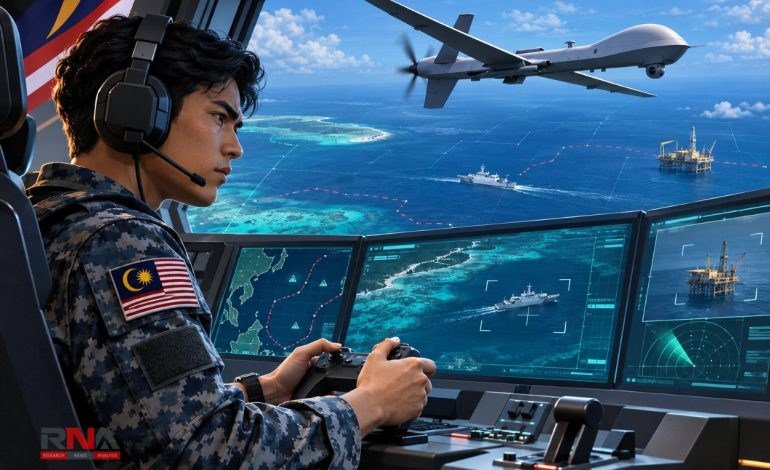
RNA Media illustration for representation.

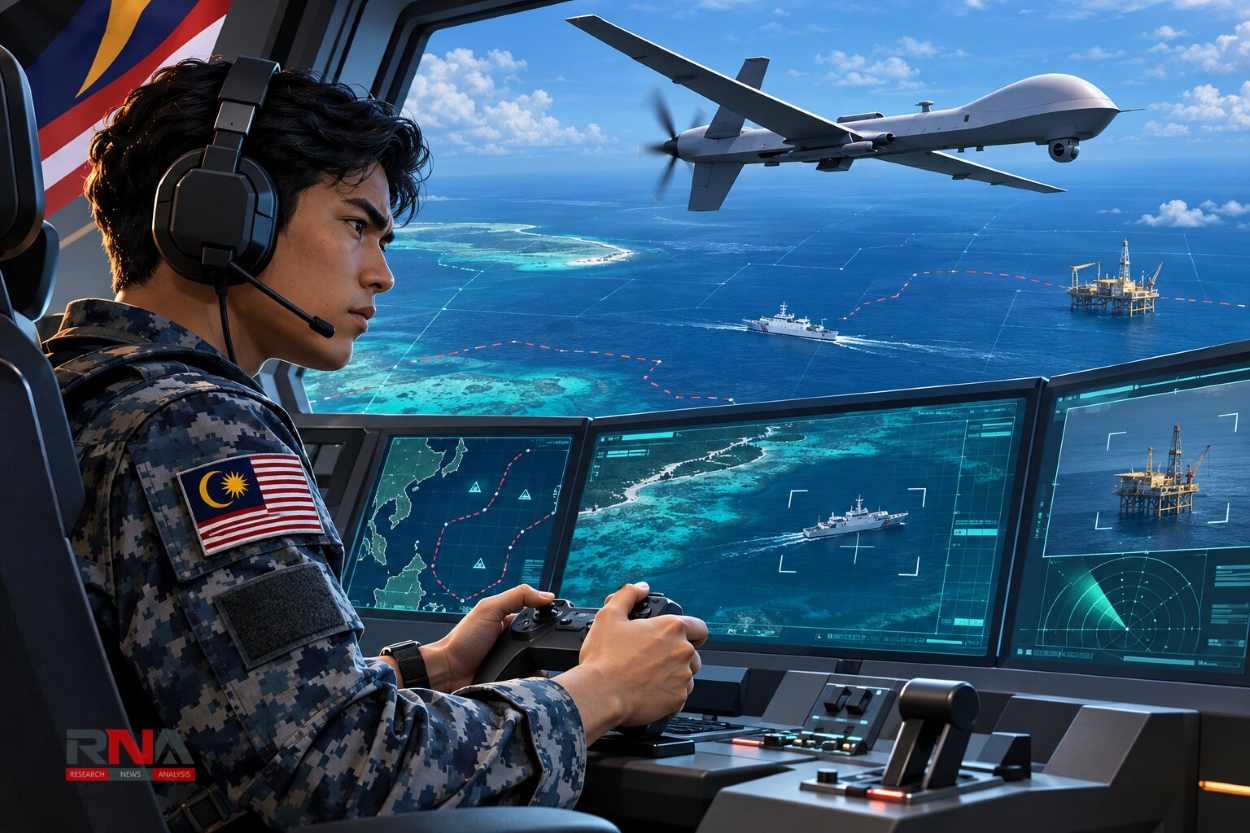
New Delhi: Malaysia is exploring an unconventional recruitment strategy to strengthen its military drone operations by identifying young people with skills acquired through videogaming and recreational drone flying. The initiative comes as Kuala Lumpur expands aerial surveillance over the disputed South China Sea, where China’s growing maritime presence has intensified concerns over sovereignty, offshore energy resources and regional security.
The Malaysian armed forces are examining whether the technical abilities, digital familiarity and hand-eye coordination developed through gaming could help identify suitable candidates for operating sophisticated unmanned aerial systems. However, the country’s armed forces chief, General Malek Razak Sulaiman, has emphasized that gaming proficiency alone cannot qualify anyone to fly military aircraft, which require extensive technical training, operational discipline and professional certification.
Speaking to Malaysia’s Star, Gen Malek Razak said modern military operations increasingly demand personnel capable of handling advanced technologies, coordinating complex missions and making decisions under pressure. He explained that recreational drone operators and experienced gamers might possess useful foundational abilities, but military aviation involves substantially greater responsibilities, particularly in-flight safety, risk assessment, intelligence gathering and operational procedures.
The proposal reflects a broader reassessment of military recruitment as unmanned systems, artificial intelligence and networked surveillance technologies become increasingly important to modern warfare. Malaysia is considering digital platforms, interactive simulations and skills-based assessments to attract technically proficient young people into specialist roles involving drones, communications, cybersecurity and other emerging defence technologies.
The military has also broadened recruitment pathways for candidates with technical and vocational qualifications, recognizing that conventional educational requirements may exclude applicants possessing valuable practical skills. Such changes could help establish a larger pool of personnel capable of supporting increasingly sophisticated equipment without compromising the armed forces’ established standards of professionalism and operational competence.
Turkish ANKA-S drones expand Malaysia’s surveillance reach
Malaysia’s recruitment initiative coincides with the acquisition of three Turkish-manufactured ANKA-S medium-altitude, long-endurance unmanned aircraft, purchased under a contract valued at 423.8 million Malaysian ringgits. The aircraft were formally inducted into the Royal Malaysian Air Force’s No 11 Squadron at Labuan Air Base on June 16, 2026, providing a significant improvement in the country’s ability to monitor its eastern maritime approaches.
According to the Malaysian defence ministry, the aircraft can conduct intelligence, surveillance and reconnaissance missions for nearly 24 hours, including during night-time operations and adverse weather. The system’s extended endurance allows Malaysian forces to observe large maritime areas more persistently than would ordinarily be practical using crewed aircraft or surface vessels alone.
The ANKA-S can operate at altitudes approaching 30,000 feet and transmit surveillance information to ground-based command facilities, improving maritime situational awareness and the identification of potentially suspicious vessels. Malaysia is planning a second acquisition phase involving three additional aircraft, although the government has not announced a confirmed delivery schedule for the proposed expansion.
Significantly, Kuala Lumpur has chosen not to arm its ANKA-S aircraft despite the platform’s capacity to carry precision-guided weapons. The defence minister, Mohamed Khaled Nordin, has characterized their deployment as a defensive measure intended to protect Malaysian sovereignty, improve maritime monitoring and enable more efficient responses to unauthorized activities rather than threaten neighbouring countries.
Why China remains central to Malaysia’s drone strategy
Malaysia’s expanding surveillance capabilities are particularly relevant to the waters surrounding Sarawak and Sabah, where Chinese coast guard vessels have maintained a persistent presence near areas claimed by Kuala Lumpur. The Luconia Shoals, known locally as Beting Patinggi Ali, have emerged as a recurring source of tension because they lie within Malaysia’s 200-nautical-mile exclusive economic zone and close to strategically important offshore energy installations.
In January 2026, Malaysian authorities confirmed that their armed forces were monitoring a Chinese coast guard vessel operating around South Luconia Shoals. The incident illustrated the continuing challenge confronting Kuala Lumpur as it seeks to protect maritime rights without allowing territorial disagreements to disrupt its broader diplomatic and economic relationship with Beijing.
China claims extensive maritime rights across much of the South China Sea, bringing its position into conflict with claims and entitlements asserted by Malaysia, Vietnam, the Philippines, Brunei and Taiwan. Beijing’s expansive claims also conflict with the interpretation of maritime rights established under the United Nations Convention on the Law of the Sea, although China maintains that its historical and territorial claims have a legitimate basis.
Malaysia has traditionally pursued a comparatively restrained approach towards Beijing, combining diplomatic engagement with efforts to strengthen its maritime security capabilities. A November analysis by Singapore’s ISEAS – Yusof Ishak Institute observed that Kuala Lumpur has generally preferred defending its maritime interests without escalating disagreements into confrontations that could damage bilateral relations.
China’s response and regional implications
No specific public response from the Chinese government to Malaysia’s proposed recruitment of gamers or the latest statements concerning military drone operations could be verified as of November 20. However, Beijing and Kuala Lumpur held their third bilateral dialogue on South China Sea maritime issues in Penang on November 11–12, where both governments reaffirmed their commitment to practical cooperation, mutual trust and regional stability.
The diplomatic engagement illustrates Malaysia’s balancing strategy: maintaining functional relations with China while investing in capabilities that strengthen its ability to detect, document and respond to maritime intrusions. Persistent drone surveillance could improve the evidentiary record of encounters at sea, support more precise deployment of patrol vessels and reduce the operational burden on expensive crewed platforms.
For India, the developments carry relevance beyond Malaysia’s immediate security requirements, particularly as New Delhi seeks to strengthen maritime cooperation with Southeast Asian countries. As RNA Media reported, the defence minister, Rajnath Singh, highlighted the Indian Navy’s expanding operational reach into the South China Sea in September, underscoring India’s growing maritime engagement beyond the Indian Ocean.
Malaysia’s initiative also reflects a wider transformation in military manpower requirements, where digital proficiency is becoming increasingly relevant alongside conventional combat training. Its success will ultimately depend not on how well recruits play videogames, but on whether the armed forces can convert transferable technical abilities into the disciplined operational expertise required for sustained military surveillance.