
Turkiye rules out Yemen combat role, weighs Saudi air-defence support under Mecca pact
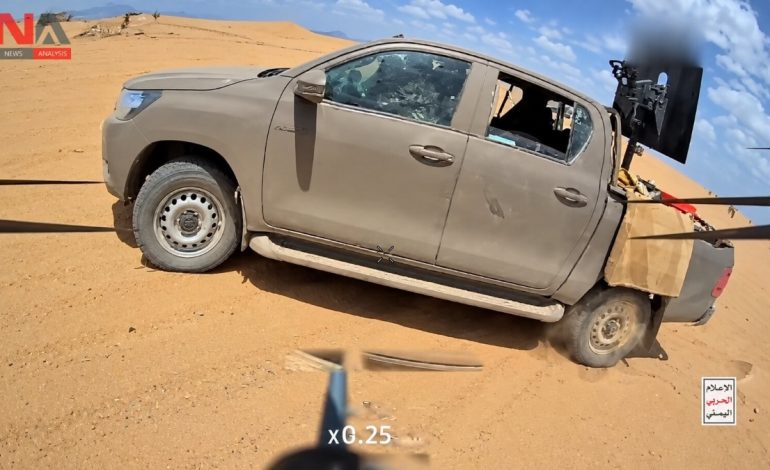
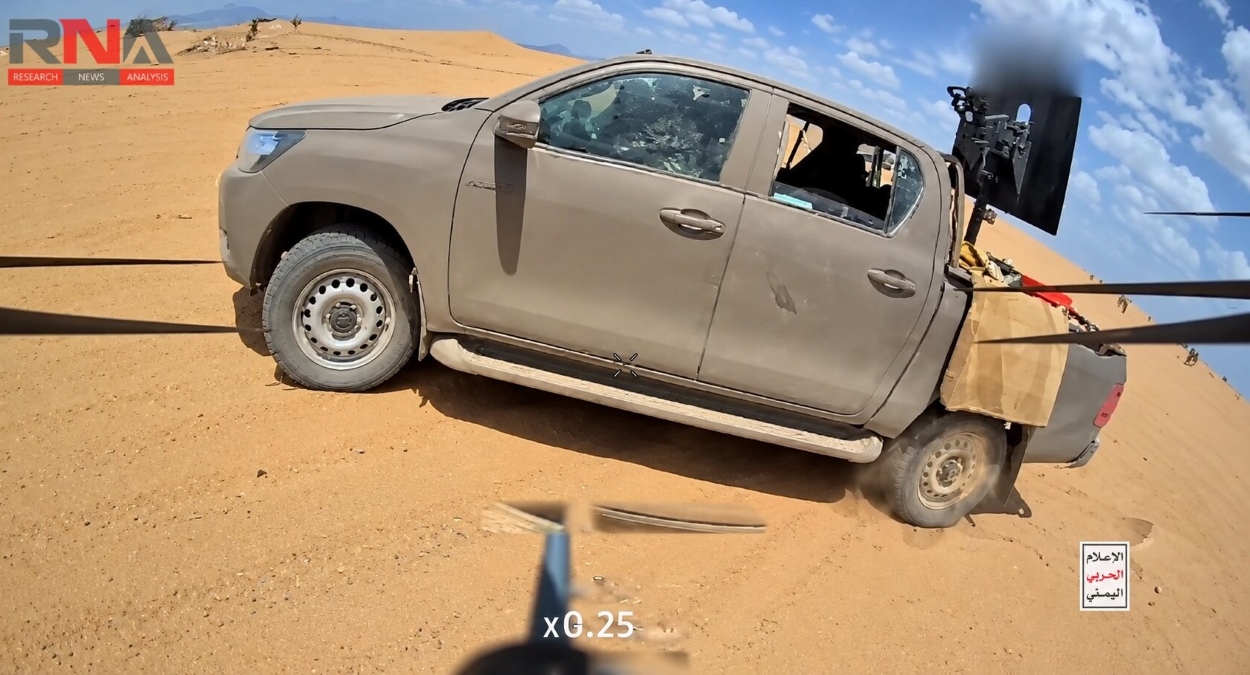
This screenshot taken from a high-resolution Houthi video shows a Houthi FPV kamikaze drone approaching a pickup truck with Saudi-backed forces just before striking it.

New Delhi: Turkiye has ruled out sending troops into Yemen to attack the Houthis while assessing how it can strengthen Saudi Arabia’s defences under a three-country security pact that also includes Pakistan. The announcement sets a clear limit on Ankara’s involvement as the alliance begins implementing its collective defence commitments in response to attacks on the kingdom.
The foreign minister of Turkiye, Hakan Fidan, outlined that position at a joint news conference with his Hungarian counterpart, Anita Orban, in Ankara on Thursday. He said the Mecca agreement provides for mutual defence when a member is attacked, rather than authorizing military offensives against another country.
“This is not an attack agreement,” Fidan said, stressing that Turkish troops would not enter another country’s territory to conduct an attack. He also said Ankara was working to resolve the confrontation through dialogue, while Yemen’s internationally recognized government forces continued fighting with Saudi support.
Military officials are examining possible Turkish and Pakistani contributions to Saudi Arabia’s operational requirements, including air defence, electronic warfare and technical assistance. Fidan’s remarks therefore leave room for substantial defensive support without committing Turkish forces to an offensive campaign inside Yemen.
The clarification follows an emergency meeting in Riyadh on Monday, where representatives of Turkiye, Saudi Arabia and Pakistan agreed to implement their collective defence commitments and accelerate the deployment of agreed forces and capabilities in Saudi Arabia. The talks were dominated by Houthi attacks, including missile and drone strikes against the kingdom’s energy infrastructure.
Earlier on Wednesday, the US president, Donald Trump, had said he welcomed the move by Türkiye and Pakistan to provide military support to Saudi Arabia as part of a new collective defence arrangement involving the three countries.
Speaking to reporters at the White House before departing for Texas, Trump was asked about the decision by Ankara and Pakistan to send forces to Saudi Arabia under the Makkah Defence Alliance.
As reported by RNA Media earlier, the Makkah Defence Alliance, formed after the Mecca Joint Defence Agreement, treats an armed attack on one signatory as an attack on all three. However, its full text has not been published, leaving important questions about each country’s precise obligations and the arrangements for deploying forces.
Turkiye’s parliament has yet to ratify the agreement, although Fidan said preparations to submit it had been completed and the final presentation had been made to the president, Recep Tayyip Erdogan. The Riyadh meeting also addressed the alliance’s institutional development, including its military headquarters, secretariat and appointment of a secretary.
Some assistance is already being provided through existing bilateral arrangements, according to officials quoted by Reuters. A Turkish official described equipment, intelligence sharing and weapons systems as the expected contributions, while a US official said the support included strategic planning, logistics, drone operators and help in refining defensive measures.
Those accounts indicate that defending Saudi territory can involve personnel and sophisticated military capabilities without Turkish units joining ground combat in Yemen. Analysts told the National that Ankara was more likely to provide advisers, border protection, air and missile defence systems, and intelligence than approve a large cross-border operation.
The distinction has become more consequential as renewed fighting threatens both Saudi security and the approaches to the Red Sea. Houthi advances had included Mokha and the islands of Hanish and Perim, strengthening the movement’s position around the strategic Bab al-Mandab Strait.
Yemeni government forces, backed by Saudi-led coalition air support, have subsequently launched a counteroffensive to regain territory near the strait. The waterway connects the Red Sea with the Gulf of Aden and is a critical passage for commercial shipping, making the conflict consequential beyond the countries directly involved.
Ankara’s caution also reflects its wider regional relationships: it maintains political and trading ties with Iran, which backs the Houthis, while expanding defence cooperation with Saudi Arabia. For now, Fidan’s stated position commits Turkiye to helping protect its partner while retaining a firm boundary against offensive troop deployments into Yemen.