
Houthis target Riyadh airport as Saudi Arabia’s Mecca Pact faces first major test
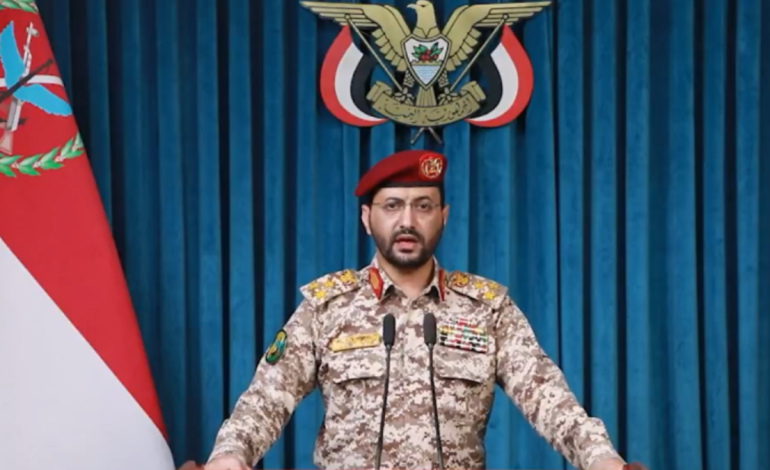
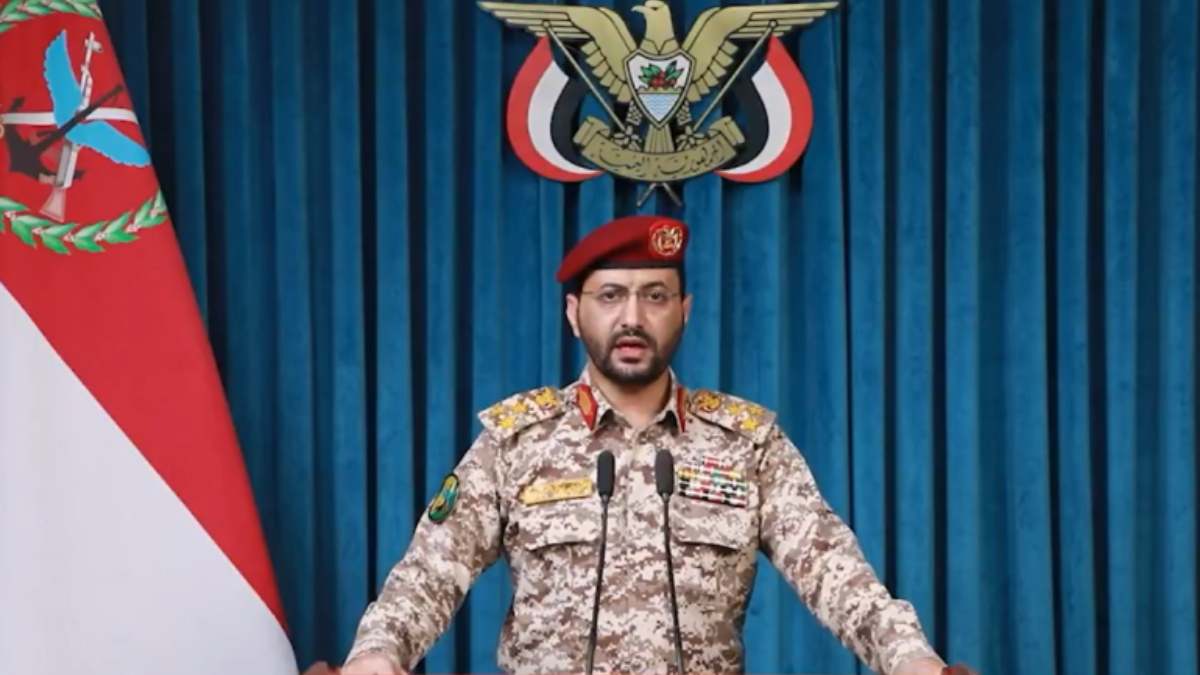
Houthi military spokesman, Yahya Saree. (Image courtesy: X/@Yah_Saree)

New Delhi: Yemen’s Houthi group on Thursday claimed it struck King Khalid International Airport in Saudi Arabia’s capital Riyadh with a ballistic missile, saying the attack disrupted air traffic. The claim came hours after the Saudi-led coalition said it had intercepted three Houthi ballistic missiles targeting Saudi territory and warned that attacks on civilian sites would not go unpunished.
The Houthi military spokesman, Yahya Saree, said the group’s forces had targeted King Khalid International Airport with a ballistic missile and claimed it accurately struck its target, disrupting airport operations. The claim was reported by RNA Media.
The latest attack triggered multiple explosions in Riyadh, including a large blast near the airport, according to witnesses cited by The Associated Press. Airport operations were disrupted and parts of the terminal were reportedly evacuated. Saudi authorities, however, said the incoming missiles were intercepted.
Houthis issue warning to international airlines
Following Thursday’s missile claim, Saree issued what he described as a “last” warning to international airlines against continuing to operate flights through Saudi airspace, Anadolu Ajansi reported.
He said Saudi airspace had become a “theater” for Houthi military operations and warned airlines of the consequences of continuing flights through the kingdom. Saree said the warning did not apply to airspace over the Muslim holy cities of Mecca and Medina.
The threat has already had an impact on commercial aviation. According to reports, Lufthansa Group suspended its Riyadh flights until October 16, while Air India cancelled flights to Riyadh through October 10 following the renewed attacks and security warnings.
Saudi coalition strikes 82 Houthi targets
In response to the latest escalation, Saudi-led coalition spokesperson, Maj Gen Turki Al-Maliki, said coalition forces had destroyed 82 Houthi military targets across Yemen. According to the Saudi Press Agency, the targets included missile sites, command and control centres, communications systems, weapons storage facilities and Houthi gathering positions in Saada, Al-Hudaydah, Al-Jawf and Marib.
Al-Maliki said the operation followed repeated Houthi attacks on Saudi civilians and civilian infrastructure, specifically citing the recent attacks on King Khalid International Airport in Riyadh and Abha International Airport. The coalition said its forces had intercepted two ballistic missiles heading towards Riyadh and another missile heading towards Khamis Mushait.
Saudi defence authorities also said debris from an intercepted missile caused material damage to a nursery and medical clinic complex in Riyadh.
Saudi Arabia faces renewed Houthi threat
The attacks mark a sharp escalation in the conflict between the Houthis and Saudi-backed Yemeni forces. Yemen’s civil war has continued since the Houthis seized Sanaa and other parts of the country in 2014, prompting a Saudi-led military intervention in March 2015 in support of the internationally recognized government.
The conflict had entered a period of relative calm following a UN-brokered truce in 2022, but fighting intensified again from July this year. The Houthis have also made territorial gain in Bab al-Mandab Strait, a strategically important maritime passage.
Makkah defence pact under pressure
The latest attacks also come as Saudi Arabia seeks greater military coordination with Turkiye and Pakistan under the newly announced Makkah defence agreement. The pact provides for mutual defence commitments, with an armed attack on one member being treated as an attack on all three.
The Turkish foreign minister, Hakan Fidan has said the agreement is defensive in nature and does not authorize offensive military operations against another country. He has also ruled out sending Turkish troops into Yemen for offensive operations, while stressing the need for a diplomatic solution.
However, Pakistan on Thursday rejected reports that its Air Force aircraft were being used in operations against the Houthis under the Makkah pact, describing the reports as “fake and fabricated,” Arab News reported. Pakistan’s information ministry urged international media organizations to avoid speculative reporting on the employment of its military forces under the agreement, saying any details about their deployment would be provided by the concerned authorities.
Saudi Arabia, meanwhile, is seeking stronger protection against Houthi missiles and drones. Turkiye and Pakistan could provide support through areas such as air defence, electronic warfare, intelligence-sharing, logistics and technical assistance, without necessarily deploying ground forces for offensive operations in Yemen.
The latest Houthi attacks therefore pose an immediate security challenge for Saudi Arabia while also testing the practical implications of its new defence arrangements with Turkiye and Pakistan. The continued targeting of airports and threats to commercial aviation have taken the Yemen conflict beyond the battlefield and into regional air travel and civilian infrastructure.