



AI cheating scandal claims South Korean education minister’s job as exam crackdown triggers nationwide chaos
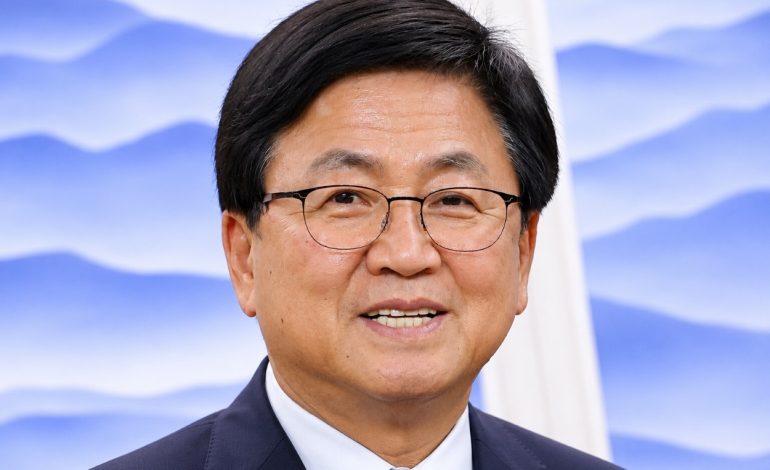
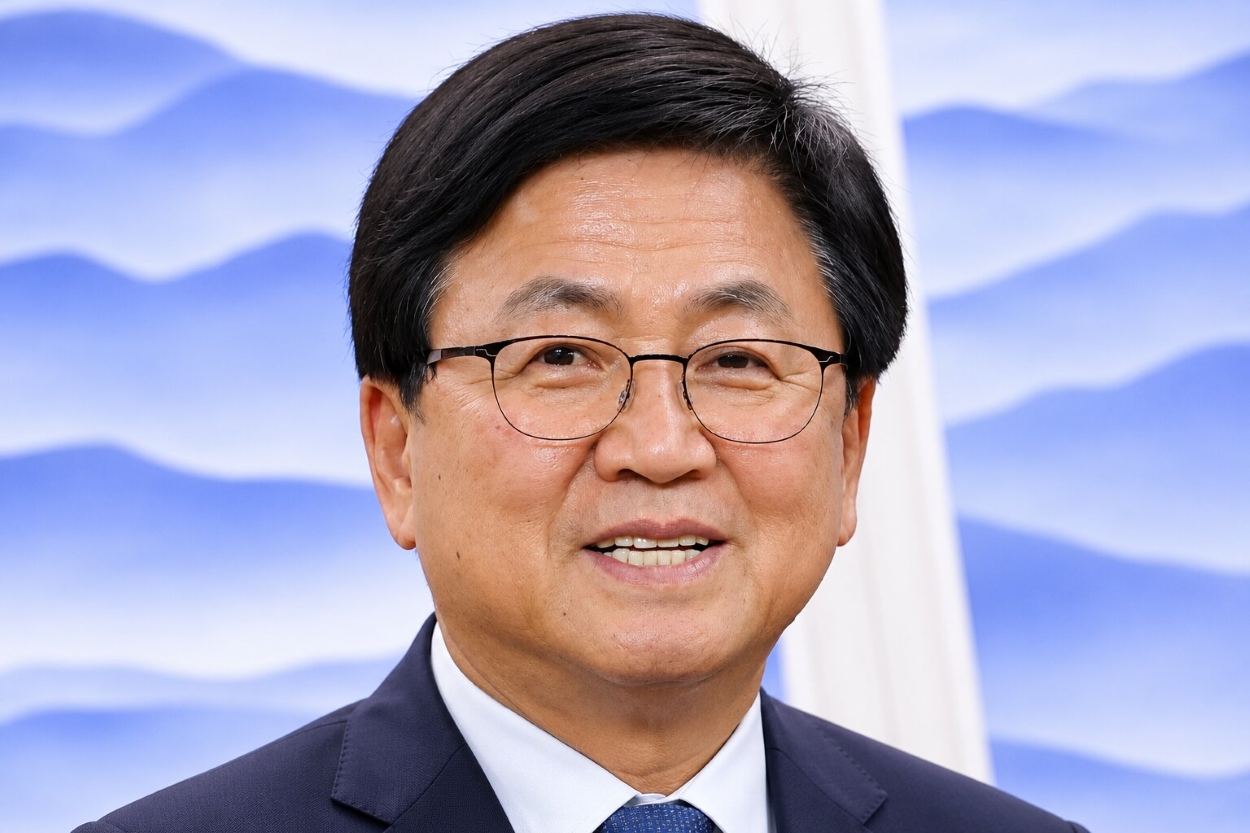
Choi Kyo-jin. (Photo: Wikipedia)

New Delhi: South Korea’s education minister, Choi Kyo-jin, resigned on Sunday, November 22, after a hurried government crackdown on artificial intelligence-assisted cheating threw the country’s crucial university entrance examinations into confusion and provoked widespread criticism. The president, Lee Jae Myung, accepted his resignation within an hour, bringing an abrupt end to a controversy that has exposed serious weaknesses in the country’s ability to safeguard competitive examinations against increasingly sophisticated technology.
Choi stepped down three days after more than 550,000 candidates were expected to sit the College Scholastic Ability Test (CSAT), commonly known as Suneung, on November 19, under extraordinary security arrangements. The authorities had repeatedly revised examination rules in the preceding days, forcing students, parents and teachers to adjust to new restrictions at virtually the last moment.
In a statement issued through the education ministry, Choi acknowledged that the government’s preparations had been inadequate and that the sudden changes had caused considerable inconvenience. He accepted responsibility for the administrative failures, saying the examinations had concluded without a major incident but that he could not escape criticism over the ministry’s handling of the situation.
According to Yonhap News Agency, the presidential office confirmed that Lee had accepted the resignation shortly after Choi submitted it. The president subsequently instructed the prime minister, Han Seong-sook, to oversee follow-up measures and ensure that weaknesses exposed during the examinations were addressed.
How an AI cheating scandal triggered the crisis
The controversy originated outside the university entrance examination system when the highest-scoring candidate in South Korea’s national certified tax accountant examination admitted using concealed electronic equipment and generative AI to obtain answers. The admission, made public on November 15, raised questions about whether conventional examination security could detect technologically advanced cheating methods.
The candidate, identified as Han Won-seok, reportedly used a miniature camera to capture examination questions and a smartphone to obtain AI-generated responses. The revelations followed other suspected instances of AI-assisted cheating, including the use of smart glasses in standardized language tests and university examinations, according to the Associated Press.
With the national entrance examinations approaching, authorities feared that similar techniques could undermine the integrity of a test regarded as one of South Korea’s most consequential academic assessments. However, instead of having a comprehensive security framework ready, the education ministry introduced successive restrictions that created uncertainty for candidates and examination supervisors.
On November 17, just two days before the examinations, the government announced the deployment of approximately 8,400 additional personnel, including 1,800 officials assigned to detect concealed electronic devices and 6,600 corridor supervisors. Candidates were instructed to submit their spectacles for inspection, while buttons on clothing were to be covered with stickers to prevent miniature cameras from being concealed inside them.
The restrictions became more stringent on November 18, when authorities prohibited several previously permitted writing materials, including certain marking pens, correction tape, erasers and mechanical-pencil leads. According to SBS News, the abrupt changes also forced newly recruited examination supervisors to undergo emergency training immediately before the tests.
Emergency alerts and unprecedented surveillance
In one of the most unusual measures, authorities sent three emergency alerts to mobile phones nationwide during the examination to identify candidates who might have concealed electronic devices. The alerts were intended to make hidden phones ring or vibrate, exposing students who had failed to surrender them before entering examination halls.
The government also authorized closer inspections of suspicious candidates, including the use of metal detectors, and announced tougher penalties for examination fraud. Students caught cheating could face a ban of up to 10 years from the examination system, substantially increasing the consequences of violations.
Despite the heightened surveillance, the education ministry reported 111 suspected cheating cases involving electronic devices during the examination. However, the figure did not establish how many incidents involved AI, making it important to distinguish suspected violations involving electronic equipment from confirmed AI-assisted fraud.
The restrictions prompted criticism from teachers’ organizations, which argued that the government had transferred responsibility for identifying sophisticated technological threats to examination staff without adequate preparation. Students also complained that the changing instructions had increased pressure ahead of an examination already associated with intense psychological stress.
Minister’s parliamentary remarks deepen controversy
Choi’s position weakened further because of remarks he made during a parliamentary hearing on November 16, when opposition lawmakers questioned whether the government could effectively prevent AI-assisted cheating. Asked whether he could guarantee the detection of every such attempt, the 72-year-old minister expressed doubts and referred to his age, prompting accusations that he lacked sufficient understanding of the emerging threat.
The comments reinforced criticism that the ministry had underestimated the problem and reacted only after the tax accountant examination scandal became public. Opposition politicians and student groups subsequently demanded Choi’s resignation, arguing that examination security required systematic preparation rather than improvised restrictions.
The ruling Democratic Party called for a swift appointment of a successor capable of responding to technological changes in education, while the opposition People Power Party demanded a wider investigation into the government’s handling of the crisis. According to the Korea Times, the opposition also argued that the minister’s departure alone would not restore public confidence.
Why South Korea’s examination system matters
South Korea’s Suneung is not merely another academic assessment but a national event that can significantly influence university admissions, professional opportunities and social mobility. On examination day, business schedules are adjusted, air traffic is restricted during listening tests, and police assist candidates struggling to reach examination centres on time.
Such arrangements reflect the importance attached to educational achievement in a highly competitive society, where admission to prestigious universities can shape an individual’s career prospects. Consequently, even limited doubts about examination fairness can develop into a wider political controversy, particularly when technology appears capable of giving some candidates an unfair advantage.
The latest scandal illustrates a challenge extending beyond South Korea, as miniature cameras, connected devices and generative AI increasingly complicate the enforcement of examination rules. Traditional safeguards designed to prevent the use of mobile phones or written notes may prove insufficient against equipment capable of discreetly transmitting questions and receiving answers.
Lee has indicated that examination procedures will undergo a broader review, including proposals to introduce identifying marks on question papers to help investigators trace photographed or leaked material. The immediate challenge for his administration is to develop safeguards that can keep pace with technological advances without imposing disruptive restrictions on legitimate candidates.
Choi’s resignation has therefore turned an examination-management failure into a larger debate about accountability, technological preparedness and public trust in educational institutions. For South Korea, the central question is no longer simply how to catch students using AI to cheat, but how to preserve confidence in a high-stakes examination system when the technology available to defeat its safeguards is evolving faster than the rules themselves.


