
Ajit Doval, Iran security chief hold talks as Gulf shipping attacks raise concerns for India
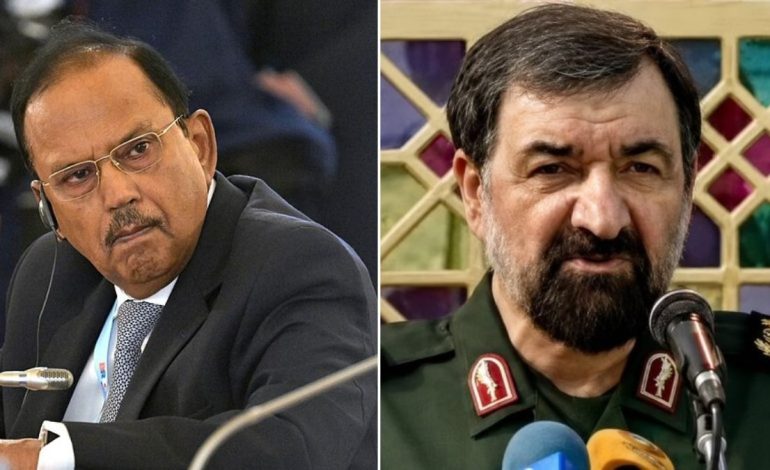
(Image courtesy: Ajit Doval Wikimedia Commons and Mohsen Rezaei Digitally enhanced video screenshot)

New Delhi: India’s national security adviser, Ajit Doval, held a telephone conversation with Mohsen Rezaei, secretary of Iran’s supreme national security council, on Monday, amid escalating attacks on commercial shipping and civilian infrastructure across West Asia. The two discussed regional and international developments and matters of mutual interest, but neither side has publicly disclosed a detailed agenda or any agreement arising from the call.
The Iranian embassy in New Delhi confirmed the conversation in a post on X, saying the officials “exchanged views on the latest regional and international developments and issues of mutual interest to the two countries”. The statement offered no further account of their exchanges, and no detailed Indian government readout was available.
The recent attacks on Saudi airports were understood to have featured in the conversation, according to PTI, although the embassy did not confirm this. There is similarly no official confirmation that the two discussed specific tanker incidents, US-Iran negotiations or any mediation initiative.
Maritime attacks put Indian crews at risk
The conversation also came hours after Iran’s Islamic Revolutionary Guard Corps (IRGC) navy claimed to have struck a third supertanker in the Strait of Hormuz within 48 hours. The Iranian force said the vessel caught fire after allegedly switching off its navigation system and ignoring warnings while attempting to leave the waterway, according to Press TV. The vessel’s identity and the claimed sequence of three strikes have not been independently verified.
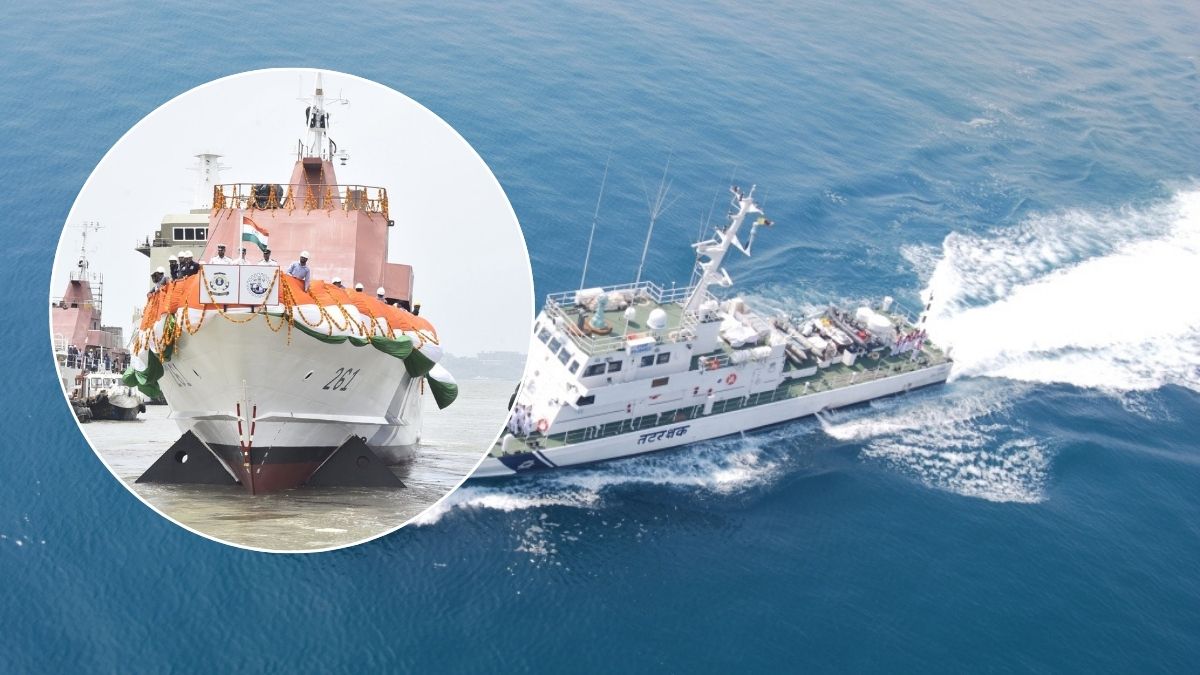
The call followed two attacks on merchant vessels carrying Indian crews on October 11. The Nicaragua-flagged tanker MT Petro Dolphin was struck by a drone at Sohar Anchorage in Oman, leaving two of its 11 Indian seafarers missing. Nine others were rescued. In a post on X, the ports, shipping and waterways minister, Sarbananda Sonowal, said the local Coast Guard was conducting search-and-rescue operations while Indian authorities were coordinating with relevant agencies to locate the missing seafarers.
Separately, the marshall islands-flagged MT Valthera was hit by an unidentified projectile, causing a fire. All 11 Indian seafarers aboard were reported safe. The Ministry of External Affairs (MEA) condemned the attacks, saying its embassy in Muscat was coordinating with Omani authorities and ship operators to assist the affected crews.
India has called for immediate de-escalation and stressed that attacks on commercial vessels, seafarers and civilian infrastructure must stop. It also reaffirmed freedom of navigation and safe maritime commerce in accordance with international law.
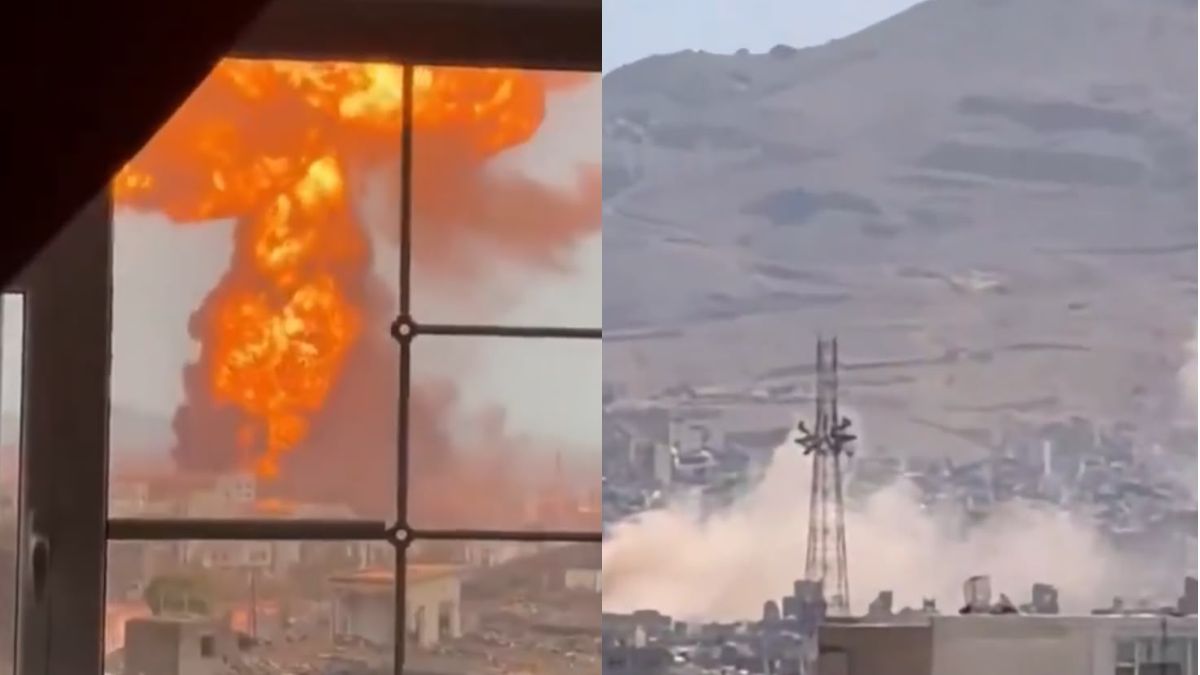
Saudi Arabia has meanwhile faced repeated strikes on King Khalid International Airport in Riyadh. An Indian national died and 10 others were injured in the October 10 attack, according to India’s embassy, which said it was assisting those affected. Saudi authorities blamed the attacks on Yemen’s Houthi movement, while New Delhi condemned strikes on civilians and civilian facilities.
Diplomatic contacts amid US-Iran standoff
The conversation came as Washington and Tehran remained divided over reopening the Strait of Hormuz, a key route for energy shipments. Iran’s foreign ministry spokesman, Esmaeil Baghaei, said on Monday that Tehran was reviewing the US response to its proposal and would reply through intermediaries. There was no indication that Doval’s conversation formed part of those negotiations.
The contact followed other recent India-Iran engagements. The prime minister, Narendra Modi, met Iran’s president, Masoud Pezeshkian, during the September 11 BRICS Summit in New Delhi, after another meeting on August 31. Modi urged a diplomatic resolution to the West Asia crisis and emphasized the safety of seafarers and freedom of navigation.
The external affairs minister, S Jaishankar, had also discussed the Gulf conflict with his Iranian counterpart, Abbas Araghchi, on the sidelines of the UN general assembly in September. As RNA Media reported earlier, the discussions covered regional developments, while Jaishankar separately reiterated India’s commitment to freedom of navigation and the safety of commercial shipping.
India simultaneously maintains military cooperation with Washington. September’s Yudh Abhyas exercise, involving around 600 troops from each country, was conducted for the first time across two locations: Mahajan in Rajasthan’s desert terrain and Auli in Uttarakhand’s Himalayan sector near the line of actual control with China. The exercise was separate from the Doval-Rezaei conversation.
The Iranian Embassy’s statement remains the only official description of Monday’s telephone conversation. Neither government has announced a specific outcome or the next stage of security-level discussions.