
Indian Army Chief, Defence Secretary Slapped With Rs 2 Lakh Fine Over Pension Delays
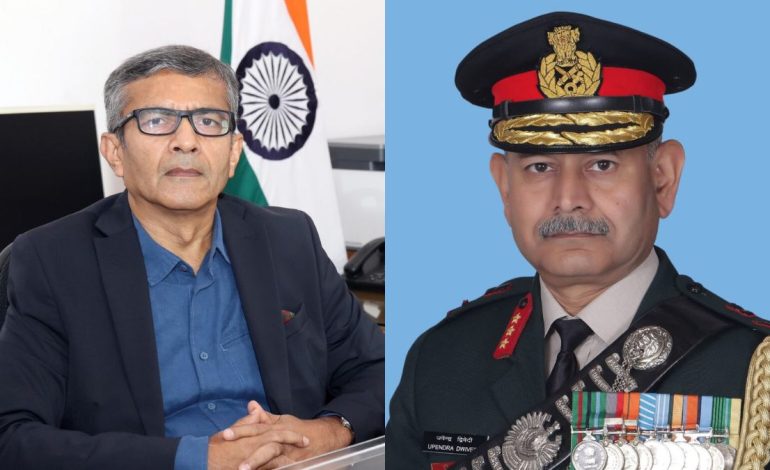
Punjab and Haryana High Court imposes Rs 2 lakh cost on the Army Chief and Defence Secretary over delay in disability pension compliance. Image courtesy: Wikimedia Commons

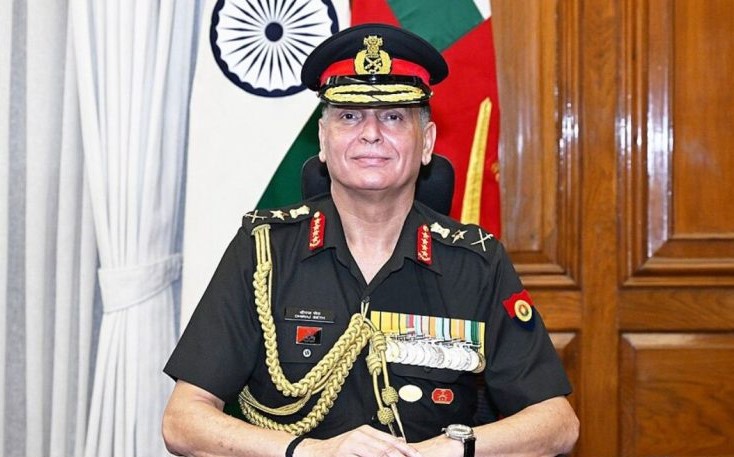
An Indian court has ordered Indian Army Chief General Upendra Dwivedi and Defence Secretary Rajesh Kumar Singh to pay
a fine of Rs 2 lakh over delays in granting disability pension to a retired officer, who had to go through 24 surgeries and suffered a kidney ailment due to his military service.
The Punjab and Haryana High Court bench of Justice Sudeepti Sharma noted, on Thursday (April 30, 2026), that the Indian Army chief and the defence secretary had not complied with her last order for filing a compliance affidavit on paying pension to a Major-ranked officer.
“On the last date of hearing, the last opportunity was granted to the respondents to file a compliance affidavit with a condition that in case of non-filing, a cost of Rs 2 lakh shall be imposed,” the judge noted in the order.
“As no compliance affidavit was filed, one more opportunity was granted, subject to payment of Rs 2 lakh cost, to be equally deducted from the salary of both respondents (the Defence Secretary and the Army Chief) and to be paid to the petitioner by way of a demand draft,” the order said.
Major Rajdeep Dinkar Pandere, a retired Indian Army officer and a resident of Pune, had filed a contempt petition in the High Court after the military authorities had failed to implement the court’s previous order granting him disability pension.
It was while hearing this contempt petition that Justice Sharma passed the order for the Indian Army chief and the defence secretary to pay the fine.
Major Pandere was commissioned in the Indian Army on September 15, 2012, in a physically fit condition. He was posted with the 4 Ladakh Scouts in Leh and later got field, peace, special action group, and high-altitude postings.
He later suffered a medical problem in June 2017 while on military duty and was brought before the Sick Leave Medical Board at the Delhi Cantonment Base Hospital, diagnosed with cystitis systical glandularis.
The officer underwent surgery and was placed in a “low medical category on September 19, 2017. He was brought before the Categorisation Medical Board six times and was later placed before the Release Medical Board on September 2, 2022 at the Western Command Hospital in Chandimandir.
He was recommended for a release from military service in the low medical category. His disability was assessed at 15% for life, but it was opined as neither attributable to nor aggravated by military service, but no reasons were cited as to why the board arrived at the opinion.
Major Pandere was released from the army on September 14, 2022, after 10 years of service. His request for disability pension was rejected on November 23, 2022.
On his petition before the Armed Forces Tribunal (AFT), the Chandigarh bench observed in its order on October 10, 2024, that Major Pandere was examined by the Categorisation Medical Board and the Recategorisation Medical Board several times, and he was operated on time and again, and the disability was attributable to military service every time.
“We failed to understand what parameter was adopted by the Release Medical Board for assessing the disability at 15 per cent for life and to declare the disability of the applicant as neither attributable to nor aggravated by military service at the time of release from service,” the AFT’s Chandigarh Bench said.
It ordered that the disability pension be considered 40% under the Guide to Medical Officers (Military Pensions), 2008, holding that Major Pandere was entitled to the disability pension. His pension was rounded off to 40% from 50% for life in accordance with the Supreme Court guidelines, effective July 1, 2022.
The Indian government filed a writ against the AFT order before the Punjab and Haryana High Court. The HC’s Division Bench dismissed the government’s petition, noting that Major Pandere was entitled to the disability pension.
Since the military authorities did not implement the orders of the AFT and the HC, Major Pandere filed the contempt petition. His counsel, Rajesh Sehgal, argued that the respondents had failed to implement the High Court judgment despite more than two months having passed.
The counsel also noted that Major Pandere had not been paid even a single paisa, nor had any sanction letter or pension payment order been issued for disability pension.