


Hezbollah’s Fibre Optic Drones Challenge Israel, As Tel Aviv Pounds Lebanon
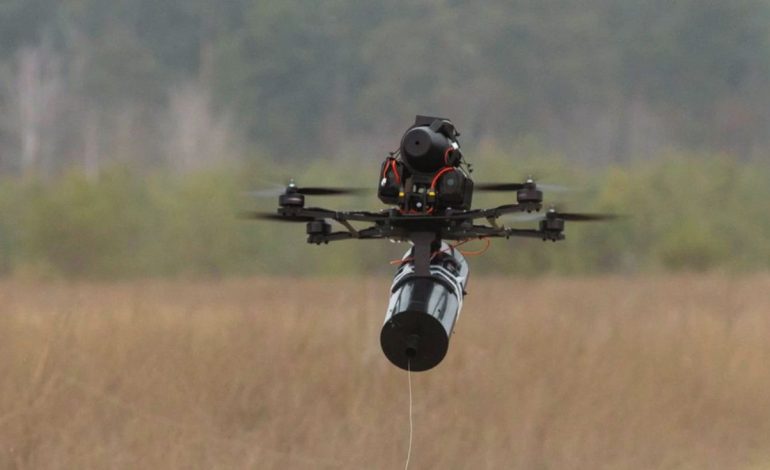
Hezbollah deploys fibre-optic drones that bypass electronic defences, posing a new challenge to Israeli forces. Image courtesy: Wikimedia Commons

Israel is facing a major threat from Hezbollah in southern Lebanon and northern Israel from the military group’s exploding drones designed to evade electronic jamming.
Hezbollah has been using low-cost fibre-optic drones that have created operational challenges for Israeli forces, forcing the armed forces to adjust to the militant group’s tactics.
In recent weeks, Hezbollah has been attacking Israeli military positions using deadly drones, while Israel is still figuring out how to defend itself from these threats.
According to Western reports, the Hezbollah drones were using thin, almost invisible fibre-optic cables to control the drones, but not radio signals.
This threat has been difficult for Israel to detect and counter, as was witnessed in the Russian-Ukrainian war, too, the reports said.
Israeli military reportedly confirmed that two of its soldiers and one civilian contractor were killed in Hezbollah’s drone attacks last week, and several others were wounded, despite a ceasefire agreement in place since mid-April.
The small, inexpensive, and widely accessible drones, which a researcher called “children’s toys,” were used to attack Israeli forces last week, rendering Israel’s multi-million dollar defence systems ineffective.
The researcher, Orna Mizrahi from the Institute for National Security Studies, claimed the Israeli military was inadequately prepared for such low-tech explosive drone systems.
Unlike the conventional drones that used GPS or radio signals, the low-cost devices were connected to their operators through fibre-optic cables that can extend dozens of kilometres.
This allowed the operators to control the drones in real time using first-person view systems such as screens or virtual reality goggles.
The drones do not transmit images via a radio broadcast and do not receive guidance commands through a radio receiver.
The drones cannot be detected by electronic intelligence or blocked through electronic warfare, according to the reports.
Hezbollah’s reliance on these fibre-optic drones marked a major shift in its tactics. Earlier, Hezbollah used rocket barrages. This is an indication of the group’s adaptation to asymmetrical warfare through the use of less advanced tools to exploit vulnerabilities in a technological superior enemy.
Interestingly, the cost of assembly such drones ranges from a few hundred dollas to about $4,000, with some of the drones availbla to buy online and to later modify for battlefield use.
Hezbollah’s spokesperson Youssef al Zein also acknowledged that the group was now manufacturing and deploying these fibre-optic drones in Lebanon. “We are aware of the enemy’s superiority, but at the same time, we are exploiting its weak points,” Zein was quoted as saying.
Hezbollah using relatively inexpensive drones presents a financial and operational dilemma for Israel, as intercepting them with advanced air defence systems or fighter jets is too costly in this asymmetric war.