



China launches 28th internet satellite batch, expands its answer to Starlink
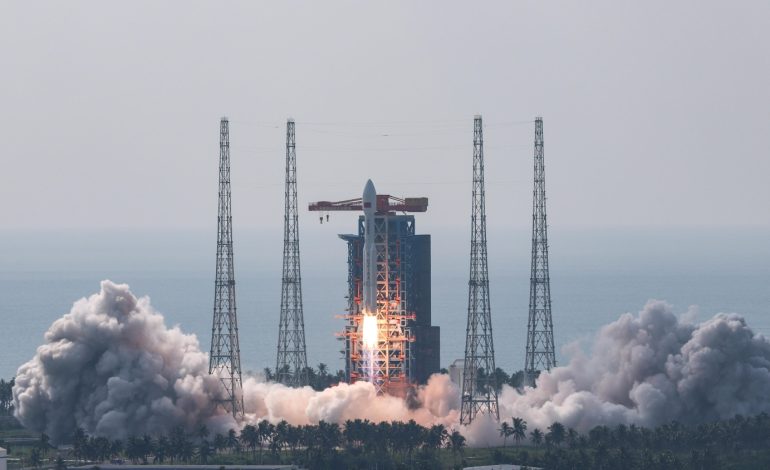
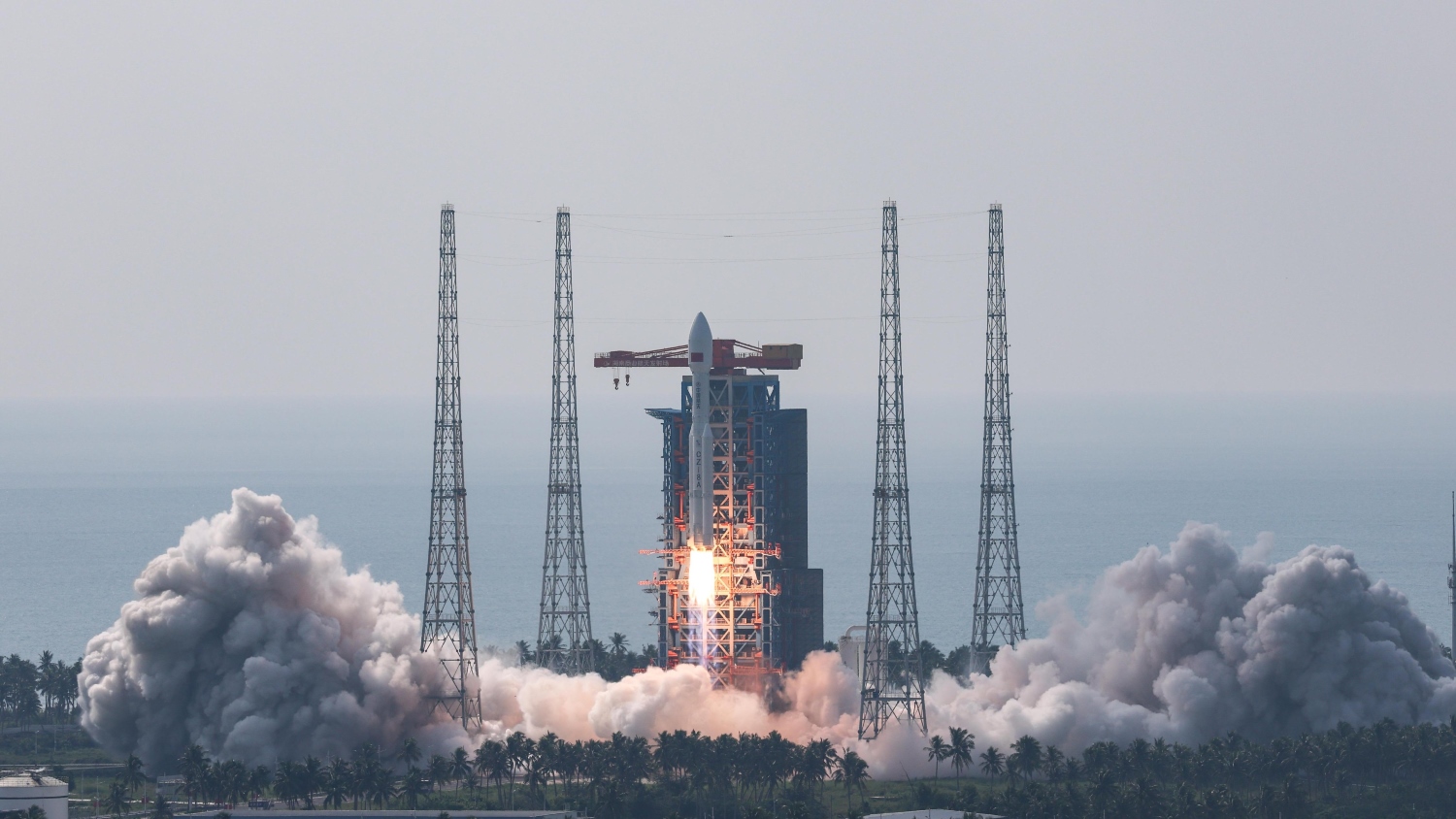
This widely circulated photo on X shows the Long March-8A rocket during its launch, on October 26, 2026.

New Delhi: China launched a fresh batch of low-Earth-orbit internet satellites on October 25, 2026, continuing the deployment of a space-based broadband network intended to extend connectivity and compete with foreign satellite services. A Long March-8A rocket carried the spacecraft from the Hainan commercial spacecraft launch site, with Chinese state media reporting that they successfully reached their designated orbit.
The rocket lifted off at 10.03am Beijing time, or 7.33am IST, from the southern island province, according to the launch report published by Global Times. The mission carried the 28th group of low-orbit internet satellites and marked the 674th flight of the Long March rocket family.
The spacecraft were developed by the China Academy of Space Technology, a major Chinese satellite manufacturer. The announcement did not specify how many satellites were aboard the rocket, their operating altitude or when they would begin providing services; the designation “28th group” identifies the deployment batch rather than the number of spacecraft launched.
The deployment forms part of the programme widely known as Guowang, or “national network”, overseen by the state-owned China Satellite Network Group, also called China SatNet. The planned constellation is intended eventually to comprise about 13,000 satellites and provide worldwide internet coverage, according to an earlier Chinese report on the network.
Deployment of the first Guowang production satellites began on December 16, 2024, with a Long March-5B mission from Wenchang in Hainan. Successive launches are building the constellation in stages, using different rocket types to place groups of communications spacecraft in orbit.
The latest mission underlines the role of the Long March-8A in that effort. Developed by the China Academy of Launch Vehicle Technology, the rocket made its maiden flight on February 11, 2025, carrying the second group of satellites for the low-orbit internet constellation.
The 50.5-metre launcher can carry up to seven tonnes to a 700-kilometre sun-synchronous orbit, according to technical information published by the Tianjin Economic-Technological Development Area. Its upgraded hydrogen-oxygen upper stage and 5.2-metre payload fairing increase the weight and volume of satellites it can accommodate, supporting missions that deploy multiple spacecraft together.
Low-Earth-orbit broadband networks seek to overcome a limitation of traditional satellite internet: the delay caused by signals travelling to and from much more distant geostationary spacecraft. Operating closer to Earth shortens that journey, making these networks better suited to applications such as video calls and other services requiring a quick response.
The trade-off is that each satellite covers a smaller area and constantly moves relative to users on the ground. Continuous connectivity therefore requires a constellation of spacecraft, coordinated handovers and supporting infrastructure, including gateways, user terminals and network-control systems, as explained in the European Commission’s comparison of broadband technologies.
For China, the programme also has a strategic purpose: a domestically controlled network would reduce dependence on foreign satellite communications providers such as SpaceX’s Starlink. As SpaceNews reported when Guowang deployment began, Chinese military interest in such systems increased after Starlink demonstrated its value during Ukraine’s response to Russia’s invasion.
Guowang is separate from Qianfan, also known as Spacesail or Thousand Sails, another Chinese broadband constellation under development. China is consequently pursuing more than one large satellite internet network, combining national infrastructure ambitions with efforts to establish a stronger position in the international communications market.
However, placing satellites in orbit is only one stage in establishing a functioning broadband service. The October 25 announcement confirmed another successful deployment but provided no consumer pricing, advertised connection speeds or commercial service launch date, leaving the network’s availability to users to be established through subsequent announcements.