

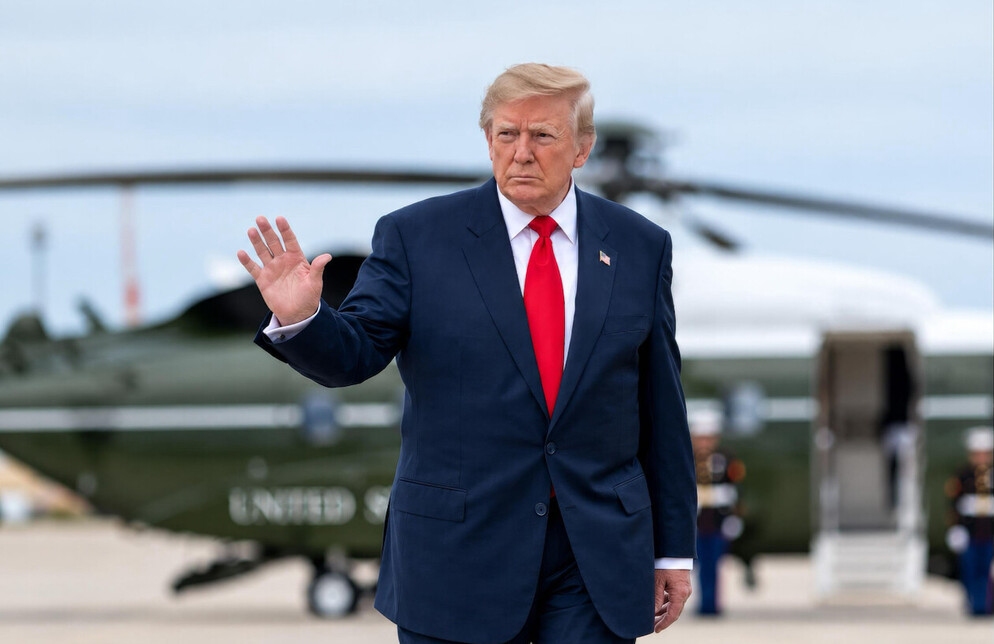


Why has Trump’s stance on Zelenskyy shifted as he moves closer to Putin?
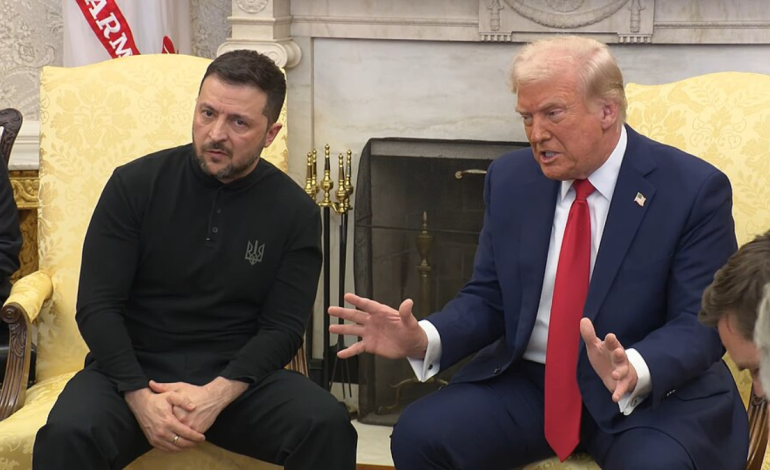
Trump’s stance on Zelenskyy. (Image courtesy: Wikimedia)

New Delhi: The United States president, Donald Trump, has said the Russian president, Vladimir Putin, appears more interested in reaching a peace agreement over Ukraine than Ukrainian president, Volodymyr Zelenskyy, placing renewed attention on Washington’s efforts to end the war. His remarks come as the US administration moves ahead with a deal involving Russian diesel supplies, while rising fuel costs and the November 3 midterm elections add pressure on the White House.
Trump said his administration needed to convince Zelenskyy to pursue a settlement. The comments reflect his continued criticism of the Ukrainian president and his engagement with Putin, even as the administration faces questions over how its decisions on Russian energy supplies could affect the course of the war.
Trump’s Russian diesel deal draws scrutiny
The Trump administration announced an arrangement allowing an initial shipment of more than 300,000 metric tonnes of Russian diesel, with additional deliveries expected in November and later. The move involves a temporary licence permitting certain transactions linked to Russian diesel, creating a limited opening for supplies despite the sanctions imposed on Moscow after its full-scale invasion of Ukraine in February 2022.
The decision has attracted attention because the US and its allies have used economic sanctions to restrict Russia’s access to international markets and reduce the revenue available to support its military activity. Zelenskyy has argued that income from Russian energy sales helps Moscow finance the war.
Trump has connected the diesel arrangement with attacks on Russian refineries carried out by Ukraine and the impact of fuel costs. His administration’s decision has consequently raised questions about how Washington is balancing pressure on Russia with its efforts to manage energy supplies and prices in the United States.
Fuel costs become an issue before US midterms
The November 3 midterm elections will determine control of the US Congress for the remaining two years of Trump’s presidency. All 435 seats in the house of representatives and 35 seats in the Senate are being contested, with republicans seeking to defend their narrow majorities.
Fuel prices and the broader cost of living have become important issues as voters assess the administration’s economic record. An AP-NORC poll published on October 1 found that 26 per cent of Americans approved of Trump’s handling of the economy, while 17 per cent approved of his handling of the cost of living.
The figures underline the political challenge facing the administration as it approaches the elections. Decisions affecting oil and refined-fuel supplies are therefore relevant not only to its foreign policy but also to its response to domestic economic concerns.
Trump has alco convinced the group of seven countries to release 100 million barrels of oil and refined fuels from emergency reserves over four months. The measure is intended to add supplies to the market, although its effect on prices will depend on when the fuel reaches consumers and on wider market conditions.
US envoys link diesel arrangement to peace negotiations
According to reports, US envoys Steve Witkoff and Jared Kushner told Ukrainian officials during a meeting in Miami that the Russian diesel arrangement was intended to encourage Moscow to return to peace negotiations.
The reported explanation places the energy decision within the administration’s wider diplomatic efforts to bring Russia back to talks. However, it remains uncertain whether the arrangement will prompt renewed negotiations or influence the positions taken by Moscow and Kyiv.
Facing voter concerns over rising fuel costs ahead of the November 3 midterms, Trump has moved to ease restrictions on Russian diesel supplies, a decision that could help address domestic energy concerns while marking a shift in Washington’s approach to Moscow.