

Two Maldivian pilots detained in Flydubai attack probe as India investigates wider conspiracy
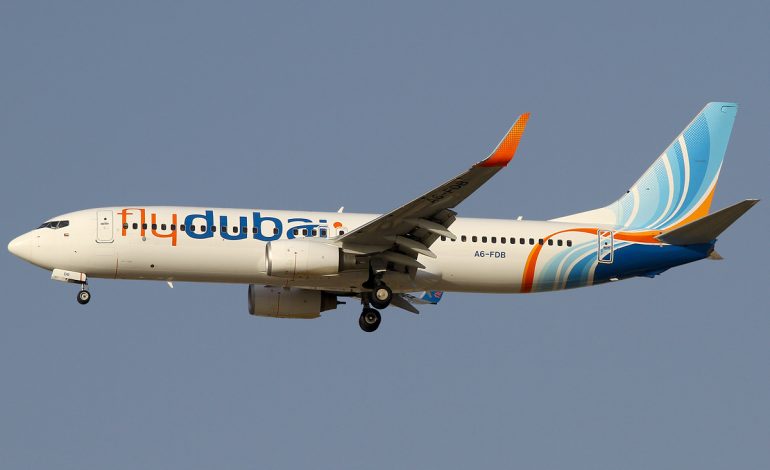
A Flydubai Boeing 737. (Wikimedia photo for representation.)

New Delhi: Two Maldivian pilots employed by Flydubai have been detained in the UAE as investigators examine possible connections surrounding the cockpit attack that Indian captain Smit Machchhar helped thwart on a Dubai-Tel Aviv flight. The case has now acquired a direct Indian investigative dimension, with the National Investigation Agency (NIA) registering an FIR to establish whether the Omani co-pilot accused of attacking him acted alone or had assistance.
The detention of the Maldivians introduces a significant regional strand to an investigation whose central question remains unresolved: whether the alleged attempt to turn a passenger aircraft into a weapon involved a wider conspiracy. UAE prosecutors say the accused co-pilot claimed to have acted alone, but investigators are continuing to test that account and examine possible accomplices.
According to an October 8 report by Adhadhu, the Maldivian embassy in the UAE informed the two pilots’ families that they were in police custody after relatives initially received no information about their whereabouts. The newspaper described them as the newest recruits among six Maldivian pilots working for Flydubai and said they had interacted professionally with the accused co-pilot, identified in media reports as Hamam al-Hammami.
The Maldivian news outlet Edition reported, citing Mihaaru News, that the two men lived in the same building as al-Hammami and also worked as co-pilots on services to Israel. However, the report explicitly acknowledged that the nature of their connection to the incident had not been established, and the available accounts disclose no specific allegation that either helped prepare the attack.
The reporting also shows an evolving picture of their legal status: Adhadhu’s initial account on October 3 described questioning and quoted the government spokesman, Mohamed Hussain Shareef, as saying they had been summoned by investigators. Its subsequent report described detention and said both the president’s office and the foreign ministry had declined to comment further, leaving important questions about the basis of their custody unanswered publicly.
India’s investigation provides the latest substantive development in the case, rather than simply revisiting the emergency aboard Flight FZ1073 on September 30. The Indian Express reported on Sunday that the NIA had registered the case following a central government direction to investigate the attack’s national and international ramifications and any larger conspiracy.
The FIR identifies alleged offences under the Anti-Hijacking Act, 2016, and the Unlawful Activities (Prevention) Act, 1967, arising from the assault on Machchhar, an Indian national. The inquiry is expected to examine whether the first officer acted independently or as part of a network; its launch does not establish that such a network existed or implicate the detained Maldivians.
The Indian captain’s resistance was crucial to allowing others to intervene during the cockpit emergency, as RNA Media report on the attack detailed. Despite serious injuries, Machchhar managed to open access to the flight deck, enabling fellow pilots, cabin crew and passengers to confront and restrain the attacker.
Two other pilots travelling aboard subsequently brought the aircraft safely into Tabuk in northwestern Saudi Arabia, while passengers continued to Israel on a replacement aircraft. Reuters reported that the aircraft lost approximately 16,000 feet in 30 seconds during the confrontation and that the accused was later transferred to the UAE.
UAE prosecutors have since provided a more specific account of the alleged objective, moving beyond the conflicting descriptions that circulated immediately after the diversion. In an October 9 statement carried by the Emirates News Agency, the attorney general, Hamad Saif al Shamsi, said the suspect intended to seize the aircraft and crash it into the passenger terminal at Ben Gurion Airport in a suicide attack inspired by September 11, 2001.
Prosecutors said he had used two previous flights to familiarize himself with the route and airport and attacked Machchhar with an emergency axe inside the cockpit. They also said the suspect had satisfied Flydubai’s professional and security requirements, including licensing and good-conduct checks, without those procedures revealing his alleged extremist intentions.
Machchhar, meanwhile, has been recovering in Abu Dhabi after receiving initial treatment in Saudi Arabia, with the Indian embassy reporting steady progress in an update publicized on October 7. As RNA Media reported, the prime minister, Narendra Modi, spoke to him by video call on October 2 and praised his courage and presence of mind.
Israel has also announced that the president, Isaac Herzog, will confer the Presidential Award for Civilian Heroism on Machchhar once he recovers. That recognition honours the captain’s decisive intervention, while the parallel investigations must still establish whether anyone else knowingly assisted the alleged plot.