Trump Says Iran Ceasefire Holds, But Resumes Escort Operations In Hormuz
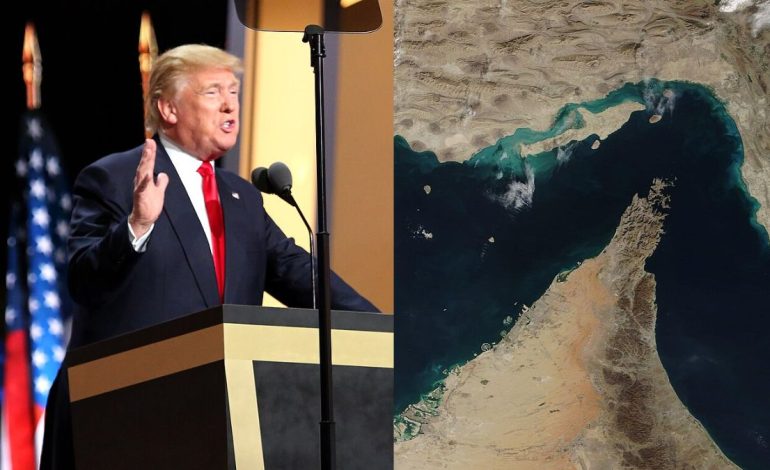
Trump says the Iran ceasefire remains intact even as tensions flare again in the Strait of Hormuz over US naval escort operations. Image courtesy: Wikimedia Commons

US President Donald Trump, on Thursday (May 7, 2026), claimed that the ceasefire with Iran was still in place, though the two nations clashed in the Strait of Hormuz recently over the American Navy’s escort operations for cargo ships to transit the waterway.
However, Trump was preparing to restart the naval escort operations in the narrow maritime passage after Saudi Arabia and Kuwait reportedly lifted the restrictions on the use of their military bases and airspaces by the US forces.
On the clash in the Strait of Hormuz, the US accused Iran of launching missiles, drones, and small armed boats against its warships, calling it “an unprovoked attack.” Trump claimed Iran “trifled with us today.”
However, Iran’s top military command alleged that the US had targeted an Iranian oil tanker and another vessel approaching the Strait of Hormuz and carried out “aerial attacks” on its coast.
The military flare-up came a day after Iran’s Foreign Ministry said it was considering a US proposal to end the war, while Washington also claimed it was considering a fresh proposal from Tehran
As the fragile ceasefire held, the United Arab Emirates’ Defence Ministry claimed its air defences were “actively engaging” Iranian missiles and drones. The UAE claimed Iran had launched two ballistic missiles and three drones, resulting in three “moderate injuries.
Iran, meanwhile, claimed “explosions” in the Strait of Hormuz and in Tehran on Friday (May 8), describing them as an “exchange of fire” with the “enemy”.
A military statement said the US aerial strikes had struck Bandar Khamir, Sirik, and Qeshm Island on its coast. It also claimed to have retaliated, inflicting “significant damage” and accused the US of “violation of the ceasefire.”
The US Central Command (CENTCOM) said the Iranian attacks were “unprovoked”, claiming the latter’s military launched “multiple missiles, drones, and small boats” as American guided-missile destroyers transited the Strait of Hormuz. “CENTCOM does not seek escalation but remains positioned and ready to protect American forces,” the statement added.
CENTCOM claimed it “eliminated inbound threats” and targeted Iranian military facilities responsible for attacking the US warships. It said the targets were missile and drone launch sites, command and control locations, and intelligence, surveillance, and reconnaissance nodes.
Trump posted on Truth Social that the US had destroyed multiple small boats, missiles, and drones, adding that “great damage” was “done to the Iranian attackers.”
He warned that “just like we knocked them out again today, we’ll knock them out a lot harder, and a lot more violently, in the future, if they don’t get their Deal signed, FAST!”
In a statement on X, Iranian Foreign Minister Abbas Araghchi said: “Every time a diplomatic solution is on the table, the US opts for a reckless military adventure.”
Meanwhile, the US is preparing to launch its escort operations for the safe passage of cargo ships in the Strait of Hormuz, which came after Saudi Arabia and Kuwait lifted restrictions on the use of their military bases and airspace.
The restrictions were imposed by US allies in West Asia after the launch of the escort operations by the US Navy in the Strait of Hormuz. The lifting of the restrictions provided the impetus to the Trump administration’s plan for naval escorts for cargo ships in the troubled waterway.
Pentagon officials said the naval escort could restart next week, but no final decision on the schedule has been made yet. The escort operations heavily depend on the military bases and airspace in West Asia, as the US Navy would need air support and surveillance to carry out its military mission.