
Lee Jae Myung Calls For Talks To End Korean War. Why Are North And South Korea Still At War?
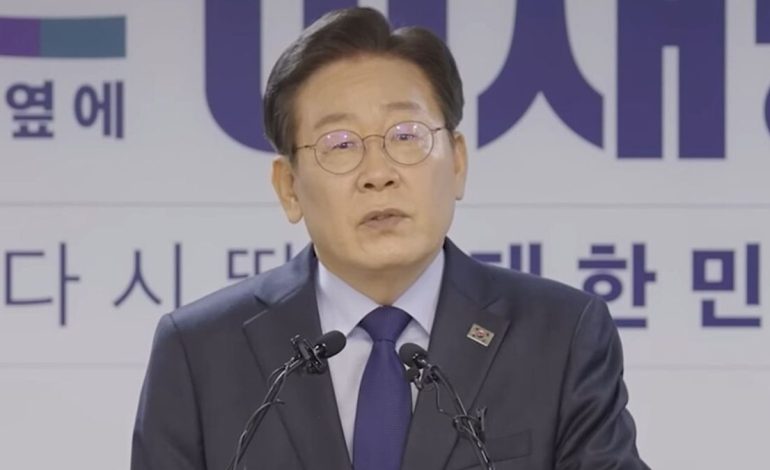
Lee Jae Myung Calls For Talks To End Korean War. Image credit: Wikimedia

New Delhi: Lee Jae Myung, South Korea’s president, proposed talks with North Korea to formally end the Korean War and replace the current armistice with a lasting peace regime. He made the announcement on Saturday at a ceremony marking South Korea’s 81st Liberation Day, which commemorates Korea’s liberation from Japanese colonial rule in 1945.
Lee called on both sides to reduce hostility and set up a system to manage tensions and prevent military crises on the peninsula.
The proposal raises a question that often causes confusion: if the Korean War ended in 1953, why are North and South Korea still described as being at war?
The answer lies in what happened at the end of the conflict. The fighting stopped under an armistice, but the two sides never concluded a peace treaty formally ending the war.
How did the Korean War begin?
Korea was divided after the end of Japanese colonial rule in 1945, with the Soviet Union occupying the north and the US occupying the south. The division around the 38th parallel eventually hardened, and separate governments were established in North and South Korea in 1948.
On June 25, 1950, North Korean forces crossed into South Korea, beginning a war that quickly drew in outside powers. US-led United Nations forces fought alongside South Korea, while China intervened on the side of North Korea.
The conflict continued for three years before the parties agreed to stop fighting.
Why an armistice is not the same as a peace treaty
On July 27, 1953, the two sides signed the Korean Armistice Agreement at Panmunjom, bringing the active fighting to a halt.
The agreement also created the Demilitarised Zone, or DMZ, meant to act as a buffer and prevent the fighting from resuming. But an armistice only stops the shooting. It is not a political settlement, and it does not formally end a war the way a peace treaty does.
That distinction is why North and South Korea are still, in a legal sense, at war today.
Why was there no peace treaty?
The armistice was meant to be a first step towards a lasting political settlement, but that settlement never arrived.
Both North and South Korea developed into separate states with opposing systems and rival alliances, and the division only deepened over time.
There have been several major attempts to improve relations since then. The UN’s peace agreements databaselists inter-Korean agreements from 1972, 1991, 2000 and 2007, among others. None of them replaced the armistice with a formal peace treaty.
This does not mean that the two sides have been fighting continuously since 1953.
There has been no full-scale war since the armistice, though the peninsula has periodically seen border clashes and spikes in tension. The DMZ is the clearest sign of that unresolved status. It functions as a buffer created by a ceasefire, not a border settled by treaty.
What is Lee proposing now?
Lee wants to replace what he called the peninsula’s “unstable armistice system” with a peace regime. He has asked both sides to set aside their intentions to threaten each other and begin talks to end the war, according to Yonhap News.
His proposal also includes discussing ways to halt the growth of North Korea’s nuclear weapons programme.
Lee has floated a “multilayered security system” to manage tensions and reduce the risk of a crisis, and has called for talks that include the US and China alongside the two Koreas, according to Reuters.
North Korea has not responded positively. Pyongyang has repeatedly dismissed Seoul’s past attempts at engagement and continues to reject the idea of giving up its weapons.
Why the nuclear issue is central to this
North Korea passed a law in 2022 declaring its nuclear status irreversible, and it has continued to expand its stockpile since.
Lee said in January that North Korea is producing enough fissile material for an estimated 10 to 20 additional nuclear weapons a year, according to UPI.
Independent estimates of the North’s existing arsenal vary widely. Sweden’s Sipri institute puts the figure at around 50 to 60 warheads, while South Korea’s state-run Korea Institute for Defence Analyses estimated in a recent assessment that the real number could be as high as 127 to 150.
North Korea is also expanding its conventional missile capacity. In June, Kim Jong-un, North Korea’s leader, ordered a 2.5-fold increase in production of ballistic and cruise missiles over the next five years, according to 38 North.
Why is the proposal difficult?
North Korea fired a ballistic missile towards the Sea of Japan on August 11, according to Reuters. It was the country’s 11th suspected missile test of the year and came days before annual joint military drills between Seoul and Washington.
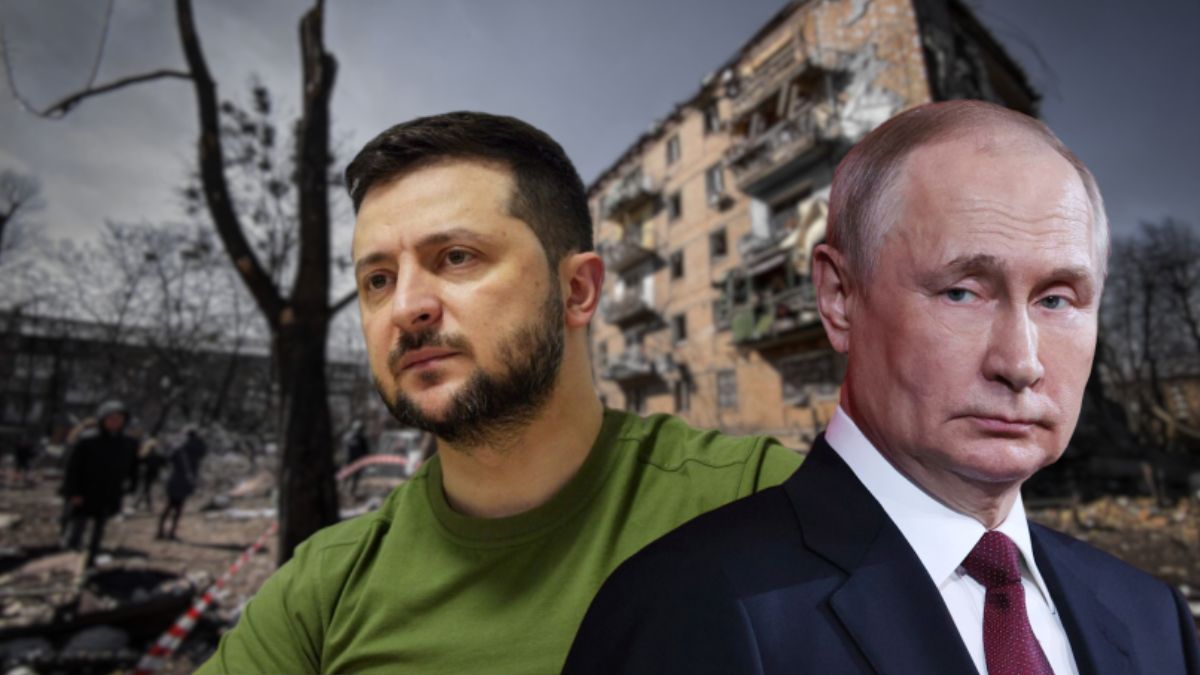
Pyongyang has also kept deepening ties with Moscow. On Sunday, Kim exchanged messages with the Russian president, Vladimir Putin, reaffirming their partnership with Putin saying cooperation would continue “in all the sectors,” according to Reuters.
That growing relationship with Russia gives North Korea an alternative source of support, one that may reduce its incentive to engage with Seoul’s proposal.
A formal peace agreement would change the status of a conflict that has remained unresolved since 1953. But it would not, on its own, settle the wider security disputes that have developed on the peninsula.
North Korea’s nuclear programme and the presence of about 28,500 US troops in South Korea are governed by separate arrangements and would require separate negotiations. Ending the Korean War would therefore be a significant political step, but not an end to the tensions that have shaped relations between the two Koreas for decades.
That is the challenge facing Lee’s proposal: turning a ceasefire that has lasted for more than seven decades into a lasting peace, while dealing with the security issues that have grown around it.