Jaishankar’s separate UNGA meetings with Russia, Iran put Gulf conflict in focus
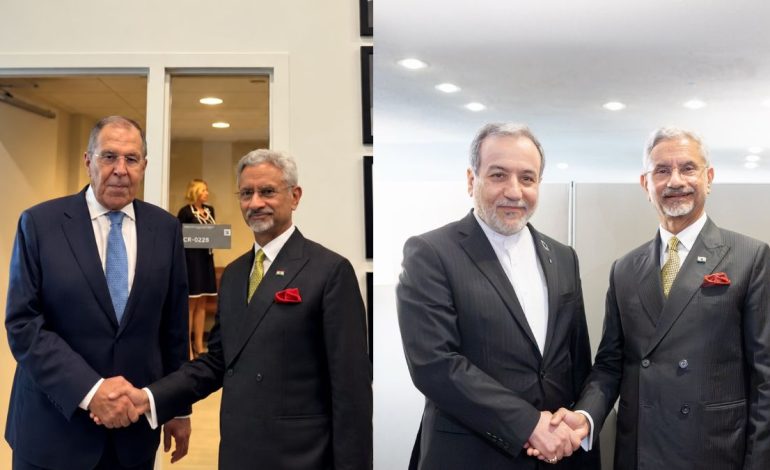
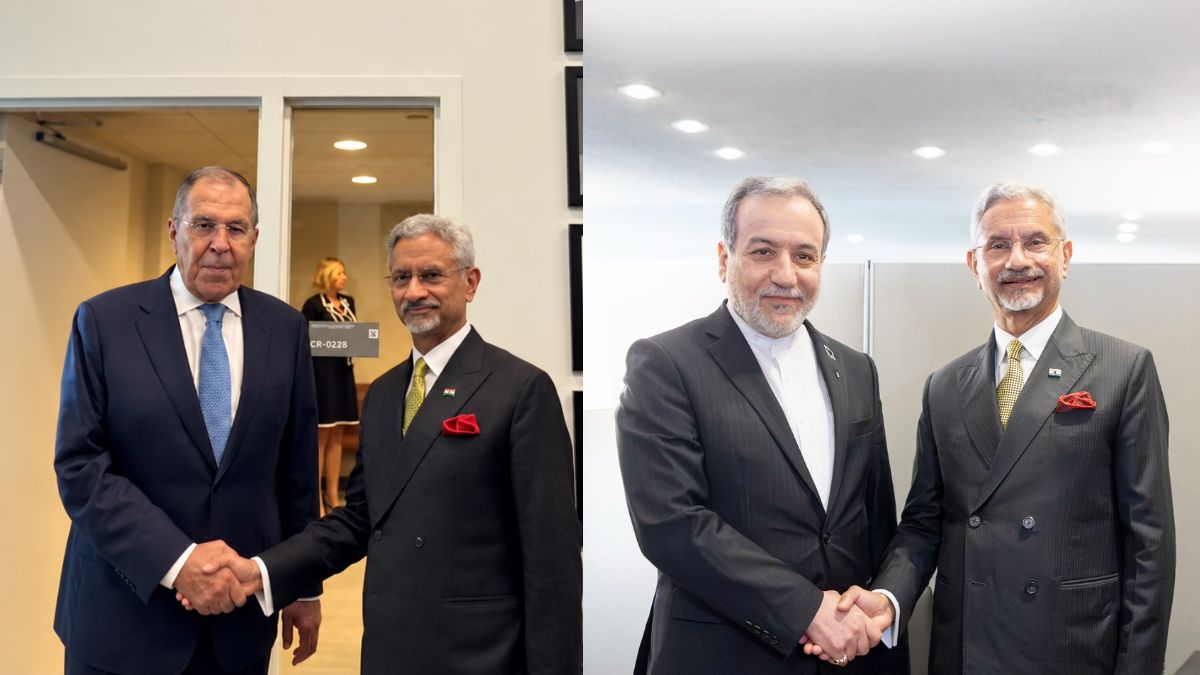
S Jaishankar meets Sergey Lavrov and Abbas Araghchi separately on the sidelines of UNGA 81. (Image courtesy: X.com/@DrSJaishankar)

New Delhi: The external affairs minister, S Jaishankar, held separate meetings with the Russian foreign minister, Sergey Lavrov, and his Iranian counterpart, Abbas Araghchi, on the sidelines of the 81st session of the UN general assembly in New York, discussing bilateral ties, BRICS cooperation and the continuing Gulf conflict. The engagements came as India seeks to protect its energy, shipping and seafarer interests while navigating new US sanctions legislation targeting Russia.
With Moscow, discussions covered bilateral and multilateral cooperation alongside regional and global developments, while the meeting with Tehran centred on the Gulf conflict. The talks followed Jaishankar’s wider engagements in New York on energy security, freedom of navigation and threats to commercial shipping.
Russia talks cover Ukraine, Middle East
Jaishankar said he had a “good meeting” with Lavrov at UNGA, where the two “exchanged views on a number of ongoing issues” and took stock of bilateral and BRICS cooperation. The Russian foreign ministry said their discussions also covered upcoming bilateral contacts, the Ukraine crisis and developments in West Asia.
India earlier this month hosted the BRICS Leaders’ Summit in New Delhi, attended by the Russian president, Vladimir Putin, and the Iranian president, Masoud Pezeshkian. Russia and Iran are both members of the grouping, giving the separate New York engagements an additional multilateral context.
The meeting came a week after the US president, Donald Trump, signed the Lindsey O. Graham Sanctioning Russia and Iran Act of 2026. As RNA Media reported earlier, the law authorizes tariffs of up to 100 per cent on major buyers of Russian oil and natural gas, potentially affecting countries such as India and China.
India has already raised concerns over the legislation with the US secretary of state, Marco Rubio. Jaishankar said during their UNGA meeting that he reiterated India’s “interests and concerns” over the law while also discussing the Gulf and Ukraine situations.
Russia nevertheless remains India’s largest crude supplier, with imports at about 2.1 million barrels per day in August despite falling 16.5 per cent from July.
Gulf conflict central to Iran meeting
Jaishankar said his conversation with Araghchi covered “the latest developments regarding the Gulf conflict” and that the two would remain in touch. No mediation initiative or expanded bilateral agenda was announced in the Indian readout.
The Gulf situation has direct implications for India’s maritime and energy interests. During the same UNGA week, Jaishankar reiterated India’s commitment to freedom of navigation and the safety of seafarers and commercial shipping at an India-Gulf Cooperation Council meeting.
The Iran provisions of the new US law are separate from its Russia-energy tariff mechanism and extend the Iran sanctions act until 2031. The two meetings kept India’s concerns over energy flows, maritime security and regional stability at the centre of its engagement with Moscow and Tehran.