
In Sri Lanka, Rajnath Singh says India’s trade-deal network now expands to 38 countries under Modi government
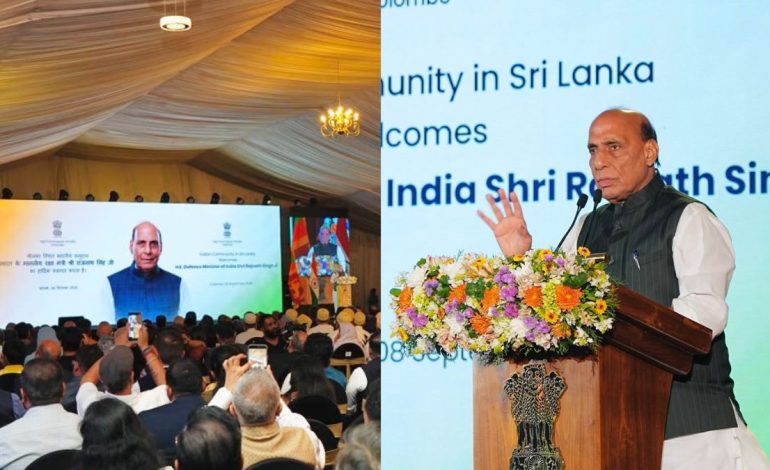
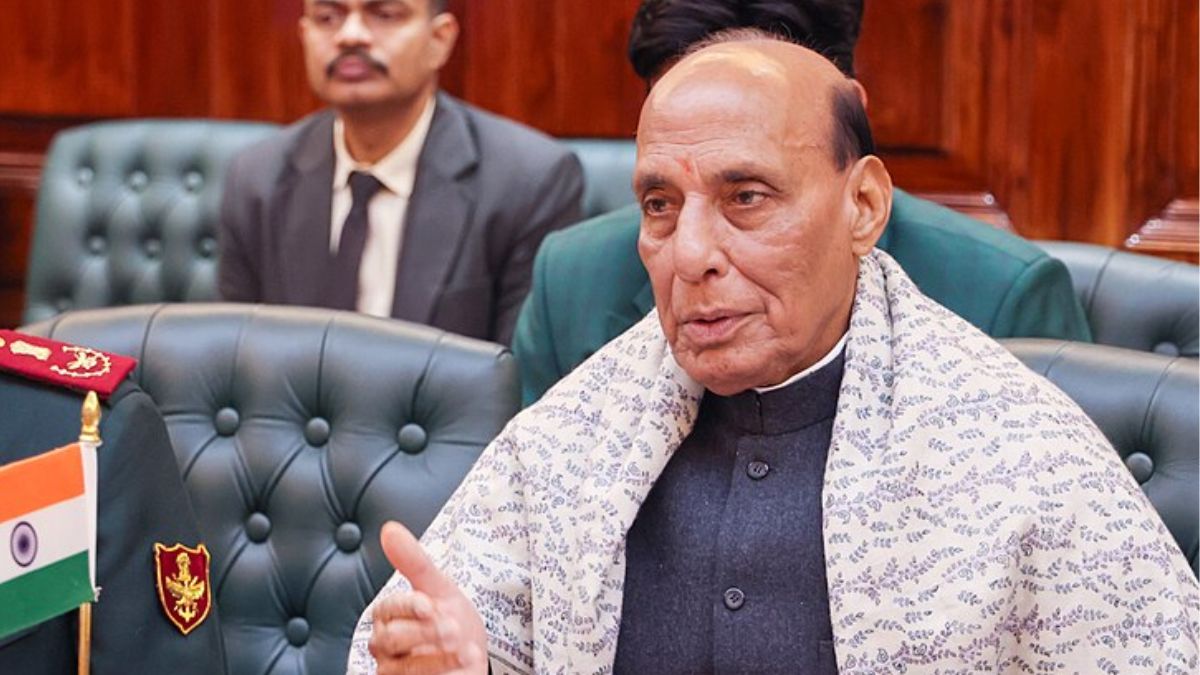
Rajnath Singh addresses the Indian community in Colombo, Sri Lanka. Image courtesy: X.com/@rajnathsingh

New Delhi: India’s recent trade agreement push now spans 38 countries, the defence minister, Rajnath Singh, said in Colombo on Tuesday, contrasting the pace of negotiations under the Narendra Modi government with the period before 2014. Official commerce ministry data broadly support the 38 country figure but show that it represents a group of agreements and negotiating outcomes rather than 38 separate bilateral free-trade agreements.
Addressing members of the Indian community in Sri Lanka in the island nation’s capital, Singh said India had concluded trade deals covering 38 countries over the past 12 years, including FTAs with eight major nations, compared with “just four” before 2014. He also referred to the India-European Union Free Trade Agreement as the “Mother of All Deals”.
What the 38-country tally includes
The commerce ministry releases use a nine-FTA, 38-country formulation, although their detailed breakdown includes agreements at different legal stages. The list covers Mauritius, the United Arab Emirates, Australia, the four-member European Free Trade Association, the United Kingdom, Oman, New Zealand, the 27-member European Union and the United States interim trade framework.
The Mauritius comprehensive economic cooperation and partnership agreement entered into force in 2021, followed by the UAE comprehensive economic partnership agreement and the Australia economic cooperation and trade agreement in 2022. The India-EFTA trade and economic partnership agreement became operational on October 1, 2025.
The Oman CEPA entered into force on June 1 this year, while the India-UK comprehensive economic and trade agreement became operational on July 15. Reuters separately reported that the UK pact gives Indian exporters duty free access to most UK tariff lines, benefiting sectors including textiles, leather, footwear, marine products, gems and jewellery and processed food.
The New Zealand FTA was signed on April 27 but has not yet entered into force, with both sides still required to complete their domestic procedures.
EU deal concluded but not yet operational
The India-EU FTA, which Singh highlighted in his Colombo remarks, is the largest component of the 38 country calculation. Negotiations were concluded on January 27, but the agreement has not yet been signed or entered into force.
The European Commission says the negotiated texts remain subject to legal revision and will become final upon signature. The pact will become legally binding only after both sides complete their internal procedures.
Commerce ministry data say the agreement will give India preferential access on 96.8 per cent of EU tariff lines covering 99.5 per cent of Indian exports, with 90.7 per cent of exports by value becoming duty free once the agreement enters into force. The wider India-EU economic space covers about two billion people and close to a quarter of global GDP.
The United States component also remains incomplete. India and the US announced a framework for an interim trade agreement in February, but negotiations are still continuing and no operational FTA is in place.
Singh said the present expansion compared with four comprehensive trade agreements before 2014. ANI separately quoted him as saying the previous government had been able to conclude comprehensive trade agreements with “only four countries”.
That figure should not be interpreted as meaning India had preferential trade arrangements with only four countries before 2014. Commerce ministry records show that India already had agreements involving Sri Lanka, Singapore, South Korea, Japan, Malaysia, Asean members and South Asian partners. The government has not publicly set out the precise methodology behind Singh’s narrower four-country comparison.
The government says its expanded FTA strategy is aimed at lowering tariff barriers, improving market access for Indian goods and services and integrating domestic firms more deeply into global value chains.
Preferential access, however, does not automatically translate into higher exports. Companies must satisfy rules of origin and other conditions to claim reduced tariffs, while domestic competitiveness and effective use of the agreements determine how much benefit exporters ultimately derive.
India is also negotiating or reviewing agreements with other partners, including Peru, Chile, Israel and the Eurasian Economic Union. These negotiations remain separate from the 38-country tally and should not be treated as concluded agreements.