Houthis seize two more strategic islands as they tighten Bab al-Mandab grip, Saudi crown prince meets US Centcom chief
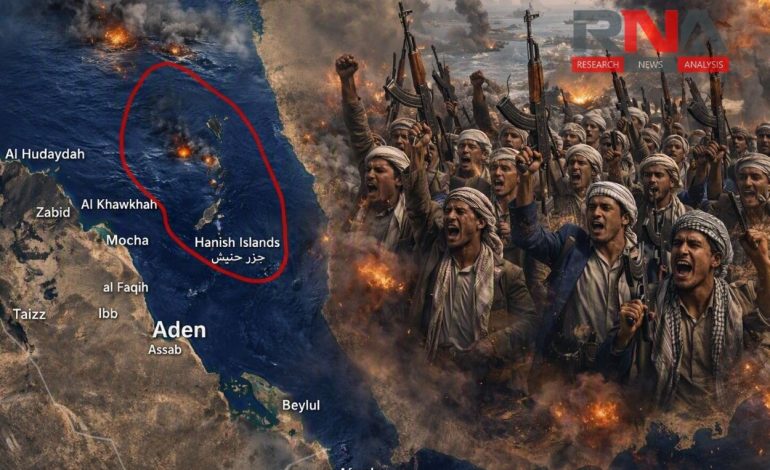
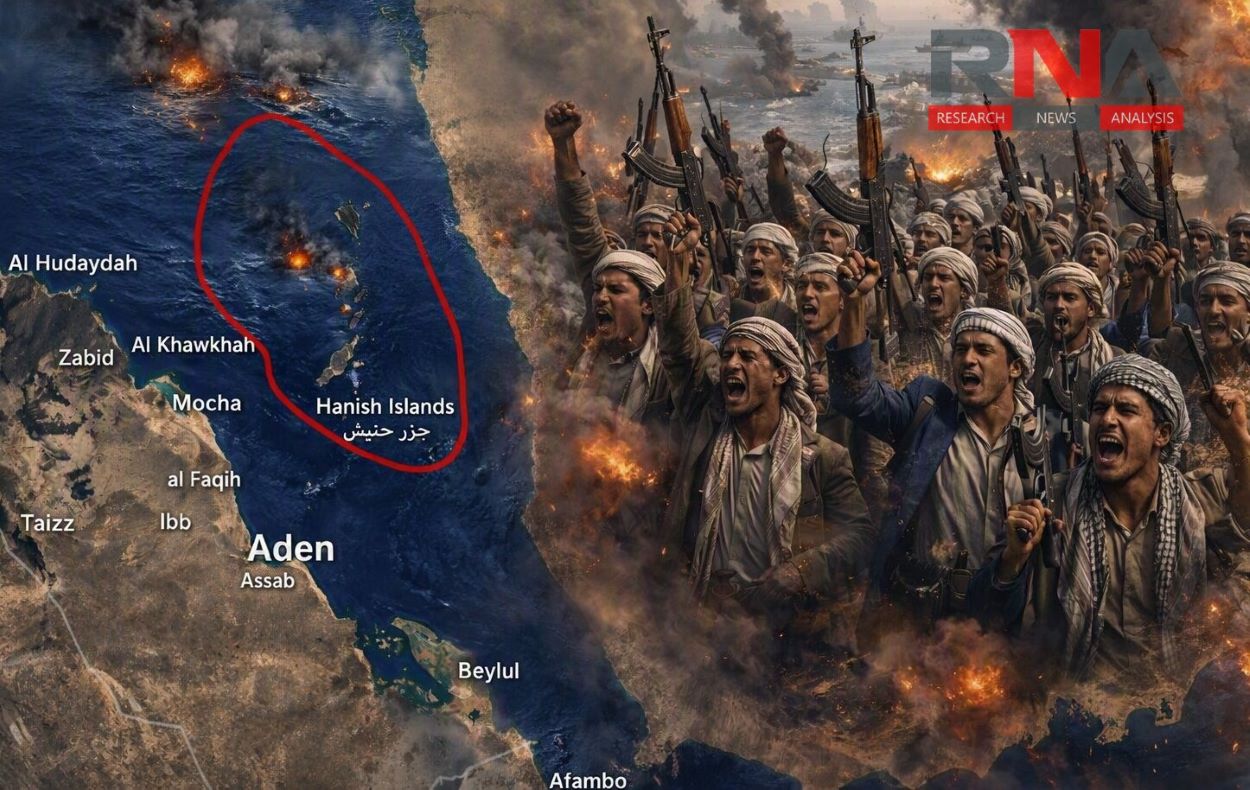
RNA Media illustration for representation. Map not to scale.

New Delhi: Yemen’s Iran-aligned Houthi rebels have seized two more strategic islands in the southern Red Sea, extending their hold over the Bab al-Mandab Strait to both shores of one of the world’s busiest maritime chokepoints. The advance caps a fortnight in which the group has redrawn the map of western Yemen, and it has now prompted Saudi Arabia’s crown prince to seek out Washington’s top military commander in the region for talks.
The offensive began on September 10, when Houthi fighters overran the port city of Mokha, forcing government-aligned units – including the Giants Brigades and the Nation’s Shield – to retreat southward towards Dhubab. Within 48 hours, as RNA Media had reported earlier, the group had pushed on to seize Perim island, also known as Mayun, which splits the Bab al-Mandab Strait into two navigable channels.
The Hanish archipelago, roughly 160 kilometres to the north, fell soon after. Yemeni government sources described the losses as a rout, with one military official telling foreign news agencies that “everything that was under our control on the western coast has fallen”.
The consequences for shipping were immediate. Vessel crossings through the strait fell sharply within days of the Mokha offensive, and several large shipping lines have already begun rerouting tankers around the Cape of Good Hope, adding more than three weeks to journey times.
The stakes go well beyond Yemen.
Bab al-Mandab links the Gulf of Aden to the Red Sea and, through the Suez Canal, to European markets, carrying a substantial share of the world’s seaborne oil and container traffic. Its closure would come on top of the near-total suspension of tanker movement through the Strait of Hormuz, which Iran has restricted since its war with the United States and Israel escalated earlier this year, leaving the global energy trade with vanishingly few safe corridors.
Saudi Arabia’s own energy and civilian infrastructure has not been spared either. Ballistic missile and drone strikes in recent weeks have hit cities including Abha, Jazan and Najran, wounding dozens of people and setting fire to oil facilities and utilities in the kingdom’s south.
An attack on Saudi Arabia’s East-West Crude Oil Pipeline (Petroline), blamed on Iran-aligned militias operating out of Iraq, has opened a second front against the kingdom’s export infrastructure. Riyadh now finds itself squeezed from north and south simultaneously – both of its principal alternatives to shipping oil through Hormuz under threat at once.
It is against this backdrop that Saudi Arabia’s crown prince, Mohammed bin Salman, has, according to people familiar with the matter, pressed President Donald Trump directly for American military action against the Houthis. The two leaders are reported to have spoken by telephone several times in recent days.
Trump has so far resisted committing US forces to strikes, offering instead to expand intelligence-sharing and targeting support for Saudi and allied operations. Several dozen American military personnel are already stationed in the kingdom, coordinating surveillance and operational planning alongside Saudi officers – a presence that predates the current crisis but has taken on new urgency.
The Saudi outreach has not stopped at Washington. Riyadh has also approached other Gulf states and Egypt for support, and has, according to diplomatic officials in the region, sought assistance from Israel indirectly through the Centcom channel, in the form of intelligence that could help prevent the strait from being sealed off entirely.
Two of Saudi Arabia’s newer defence partners have kept a visible distance. Pakistan and Turkey, which signed a strategic defence agreement with bin Salman only about a month ago, have confined themselves to mediation efforts with the Houthis rather than any military role, a stance suggesting that neither Islamabad nor Ankara wishes to be drawn into direct confrontation with Tehran.
Saudi crown prince meets Centcom chief in Jeddah
It was in this atmosphere that bin Salman met the commander of the US Central Command, Admiral Brad Cooper, in Jeddah on September 14, 2026. Saudi state media offered only a brief account of the discussion, describing it as a review of “regional developments” and bilateral security cooperation.
Monday’s meeting was not Cooper’s first stop in the kingdom this month. The Centcom commander was in Saudi Arabia for coordination talks as recently as September 11, and his return to Jeddah three days later underlined how fluid the security conversation between Washington and Riyadh has become.
A Centcom spokesperson declined to comment on the admiral’s movements, and Saudi officials likewise offered no elaboration beyond the customary language of “developments” and “bilateral relations”. Iran International, an outlet critical of Tehran, was among the first to report that bin Salman had received Cooper and his delegation in Jeddah.
The visit fits a pattern that has defined the American posture through this crisis: engaged, but calibrated. Washington’s preference for intelligence support over direct strikes reflects both its reluctance to open a new active front so soon after its confrontation with Iran, and its wish to keep Gulf allies in the lead role on a conflict Riyadh has been fighting, on and off, since 2015.
For India, a country that depends heavily on the Gulf for crude and gas and routes a significant share of its westbound trade through the Red Sea and Suez corridor, the tightening of the Bab al-Mandab chokepoint carries its own consequences. Higher freight and insurance costs, longer transit times should rerouting become necessary, and the broader risk of energy-price volatility are matters that New Delhi’s shipping and oil-marketing companies will be watching closely as the Yemen crisis unfolds.
Whether Monday’s talks in Jeddah produce anything beyond another round of quiet coordination remains to be seen. What is clear is that the fight for control of one of the world’s most consequential waterways is no longer a peripheral concern for Riyadh, Washington or the wider region.