Austria blocks Iran nuclear chief from attending IAEA meeting, Tehran denounces move
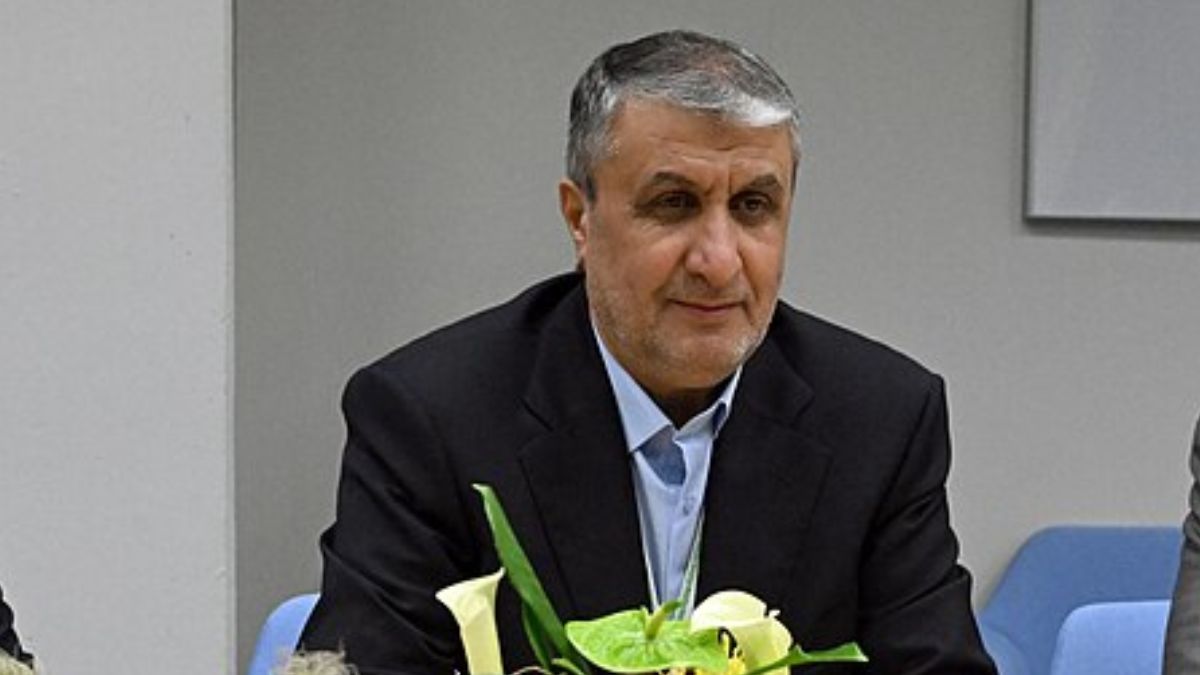
Iran’s nuclear chief Mohammad Eslami. Image courtesy: Wikimedia Commons

New Delhi: Iran’s nuclear chief, Mohammad Eslami, was prevented from attending the International Atomic Energy Agency’s (IAEA) annual general conference in Vienna on Monday after a United Nations sanctions committee rejected a travel-ban exemption sought by Austria. Tehran condemned the decision and accused the United States of pressuring Austria, while Washington confirmed that it had formally objected to the exemption request.
Eslami, Iran’s vice-president and head of the Atomic energy Organization of Iran, had been expected to attend the conference in the Austrian capital. Iran’s ambassador to the IAEA, Reza Najafi, told delegates that denying Eslami access amounted to a serious violation of Iran’s rights as a member of the agency.
Iranian officials said Austria had initially issued Eslami a visa before withdrawing it under US pressure. Austria, however, said it had sought an exemption from the travel restrictions imposed on Eslami but the request failed to secure approval from the relevant UN security council sanctions committee.
The US ambassador to the UN in Vienna, Preston Wells Griffith III, confirmed that Washington had objected to the exemption. Reuters reported that the US objection prevented the exemption from being approved by the UN sanctions committee. US opposition to the waiver is therefore confirmed, while Tehran’s broader allegation that Washington pressured Austria remains an Iranian claim.
Iran’s foreign ministry spokesperson, Esmail Baghaei, said Tehran had protested the decision and summoned Austria’s chargé d’affaires. Russia also criticized the move, with its ambassador to the IAEA, Mikhail Ulyanov, backing Iran’s objections and questioning Austria’s handling of its responsibilities as host to Vienna-based international organizations.
Nuclear dispute returns to security council
The row comes days after the IAEA’s 35-member board of governors referred Iran to the UN security council over unresolved safeguards issues. Associated Press reported that the September 9 resolution was adopted by 23 votes to three, with eight abstentions, following concerns over Tehran’s failure to resolve questions about uranium traces detected at undeclared locations. .
The verification problem has become more acute following strikes on Iranian nuclear facilities and reduced access for international inspectors. As RNA Media reported earlier, IAEA inspectors have not accessed Iran’s deeply buried Pickaxe Mountain complex near Natanz, while uncertainty has persisted over the location and condition of the country’s stock of uranium enriched up to 60 per cent.
The agency’s last estimate, based on information available up to June 13, 2025, put Iran’s stockpile of uranium enriched up to 60 per cent U-235 at 440.9 kilograms. The IAEA has since said that continuity of knowledge over parts of Iran’s nuclear inventory has been lost, making renewed access and verification a central issue in its dealings with Tehran.
Iran maintains that its nuclear programme is peaceful and denies seeking nuclear weapons. It has also disputed the legitimacy of the UN sanctions restored through the snapback mechanism, a position backed by Russia and China.
The dispute over Eslami’s attendance has opened another diplomatic front in an already strained relationship between Iran, the IAEA and Western governments, but the immediate disagreement remains centred on the application of the UN travel restrictions and Austria’s obligations as host of the conference.