


Houthis capture Mayun Island: Why the Red Sea chokepoint matters
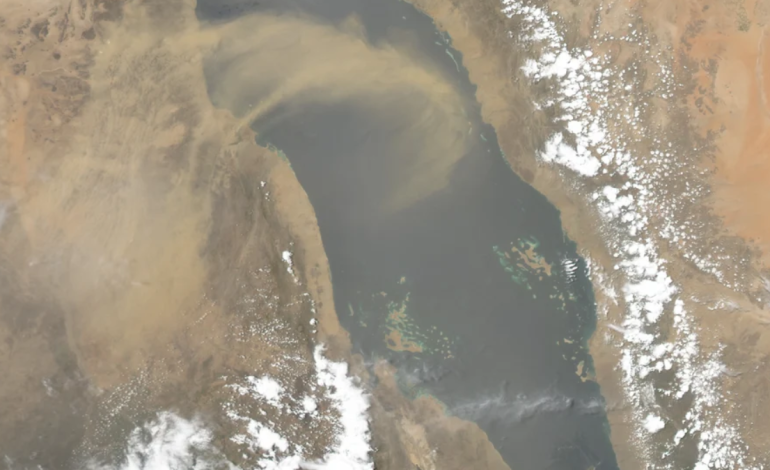
Representational image. (Image courtesy: Wikimedia)

New Delhi: The Houthis are building a stronger military presence around Yemen’s Red Sea coast, with the capture of Mayun Island giving the group a strategically positioned outpost at the entrance to a vital international shipping route. The move comes as Houthi forces push through coastal areas and could give them greater leverage over both Saudi-backed forces in Yemen and maritime traffic passing through the region.
The latest advance follows the capture of the port city of Mocha, adding an offshore position to the Houthis’ expanding coastal presence. The takeover of Mayun was confirmed by a senior military official from Yemen’s internationally recognized government and a Houthi official, the Associated Press reported.
Mayun, also known as Perim, is a small volcanic island of around 13 square kilometres located inside the Bab al-Mandeb Strait. Its geographical position gives it strategic importance because it divides the narrow waterway into two channels and places whoever controls it close to vessels entering or leaving the Red Sea.
The Houthis already control areas surrounding the strait and much of Yemen’s Red Sea coastline. Their latest territorial gains therefore give Mayun a wider military context, turning the island into part of a growing Houthi-controlled belt along Yemen’s western coast.
The island was previously associated with the Saudi-led coalition’s military presence in Yemen. In 2021, the coalition acknowledged its presence on Mayun following reports of a UAE-linked airbase being constructed there, although the current status of that facility remains unclear after the UAE withdrew from the conflict.
A new position against Saudi-backed forces
The capture comes at a difficult moment for Saudi-backed Yemeni government forces, which have struggled to prevent the Houthis from making rapid gains along the coast. The group’s advance has now brought it closer to several locations that are important both militarily and commercially.
Farea Al-Muslimi, a research fellow at Chatham House, told Al Jazeera that the speed of the Houthi advance reflected weaknesses among government forces despite Saudi-backed efforts to strengthen them. Poor coordination and inadequate armament have made it harder for those forces to stop the group’s territorial expansion.
For the Houthis, controlling Mayun also creates another defensive position that could complicate any attempt to reverse their recent gains. The surrounding mainland is particularly important because control of the coastline and hinterland can provide the logistical support needed to sustain an isolated island position.
Shipping faces a closer threat
The most significant international concern is what the new position could mean for vessels using Bab al-Mandeb. Security analyst Wolfgang Pusztai told Al Jazeera that the Houthis’ position around the strait could allow them to threaten ships using shorter-range missiles instead of relying solely on longer-range weapons.
The group has said it will allow general shipping through the Red Sea and Bab al-Mandeb while targeting vessels linked to Saudi Arabia. Houthi military spokesman Yahya Saree has described the policy as “siege for siege” and “escalation for escalation” against Saudi Arabia over its blockade of Houthi-held areas.
That assurance comes against the backdrop of a previous Houthi campaign that significantly disrupted Red Sea shipping. Reuters reported that the group carried out more than 100 attacks on commercial ships since November 2023, while some vessels targeted had little or no connection to Israel.
Why the Strait matters beyond Yemen
Bab al-Mandeb is the southern gateway to the Red Sea and forms part of the maritime route towards the Suez Canal. Any sustained threat to the waterway can therefore affect ships travelling between the Indian Ocean, Middle East and European markets, making the Houthi advance relevant far beyond Yemen’s civil war.
The development could also strengthen Iran’s regional position because the Houthis are a key Tehran-aligned force. Pusztai told Al Jazeera that greater Houthi control around Bab al-Mandeb could give Iran additional leverage over another international maritime chokepoint alongside the Strait of Hormuz.
Al-Muslimi similarly said the development serves both the Houthis’ domestic objectives and Iran’s negotiating position on issues extending beyond Yemen. That gives the Mayun takeover a regional dimension, particularly as tensions involving Iran, the United States and other Middle Eastern powers continue to affect maritime security.
The impact on global trade would not necessarily require the Houthis to physically close Bab al-Mandeb. A greater perception of danger around the route could be enough to raise insurance premiums, charter rates and the cost of transporting goods.
Can the Houthis hold Mayun?
The Houthis’ ability to retain the island will now become as important as their ability to capture it. Andreas Krieg, an associate professor at King’s College London, told Al Jazeera that the group is well positioned to hold Mayun in the short term because it controls the surrounding mainland.
A counterattack would nevertheless remain possible, particularly if Saudi-backed forces attempt to regain the island. Krieg said an amphibious assault would be a high-risk operation, while the Houthis’ ability to maintain control of the mainland coastline and hinterland would be critical to defending their position.
The challenge for the Saudi-backed side is that the Houthi advance has already changed the geography of the conflict. Any attempt to push the group back would now have to account for an increasingly connected network of coastal and offshore positions rather than isolated Houthi-held areas.
The United States president, Donald Trump, said during his visit to Ireland that the Houthis had contacted Washington and indicated they did not want US involvement in the Yemen conflict. He also said most ships were being allowed to pass and suggested that the dispute involving Saudi Arabia could be resolved.
For now, Mayun gives the Houthis another strategic asset at a critical point on the Red Sea map. If they can consolidate the island alongside their mainland gains, the group could turn its expanding coastal control into a more durable source of military and political leverage over Yemen, Saudi Arabia and the wider maritime environment.