British national’s killing puts the spotlight on deepening unrest in POK
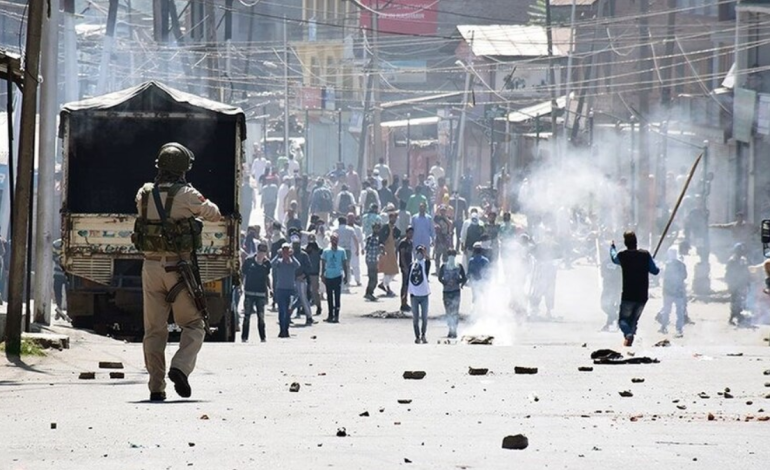
Representational image. (Image courtesy: Wikimedia)

New Delhi: The killing of British national Mohammad Akhtar during unrest in Pakistan-occupied Kashmir (POK) has brought fresh attention to a crisis that has widened from protests over prices and political representation into a serious challenge to Islamabad’s authority in the region.
Akhtar, 50, a resident of Peterborough, was killed on June 9 while staying in Kotli. His family told the Guardian that he was not participating in the protests and was struck in the chest by a stray bullet after Pakistani security forces opened fire near his home. The family also said it was unable to register a police complaint and feared repercussions if the case was pursued.
The case became public on Monday, more than two months after the shooting. The report also said another British national, Waqas Arif, 38, from Nottingham, has been held in a prison in Mirpur since early June. His family says he was not involved in demonstrations.
The agitation is led by the Joint Awami Action Committee (JAAC), an umbrella grouping of traders and civil society activists. Earlier campaigns focused on high electricity tariffs, flour prices and governance. The latest wave has been intensified by opposition to 12 seats in the 45-member directly elected regional assembly reserved for people classified as refugees from Jammu & Kashmir but living elsewhere in Pakistan.
JAAC argues that the arrangement dilutes local representation and gives Pakistan-based political parties disproportionate influence. Pakistani authorities reject that claim and say the seats are constitutionally protected. The regional government banned JAAC under anti-terror laws in June.
Violence has repeatedly accompanied the confrontation. Reuters reported 11 deaths and more than 70 injuries during clashes in early June, while another nine people died on July 14. By mid-July, local estimates put the toll at around 30. Protest leaders later claimed higher casualties, although those figures have not been independently verified.
The crisis has directly affected regional elections. On Monday, authorities postponed voting in seven of the 11 constituencies remaining in the final phase, citing the law-and-order situation in Poonch and Sudhnoti. Voting proceeded in four constituencies. The Pakistan Muslim League-Nawaz had already won 24 of 34 seats contested earlier, while the Pakistan Peoples Party secured 10.
Road closures and internet disruption have continued in parts of the region, particularly around Rawalakot. Restrictions on media access have also complicated independent verification of casualty and detention claims.