How artillery helped India win the Kargil war
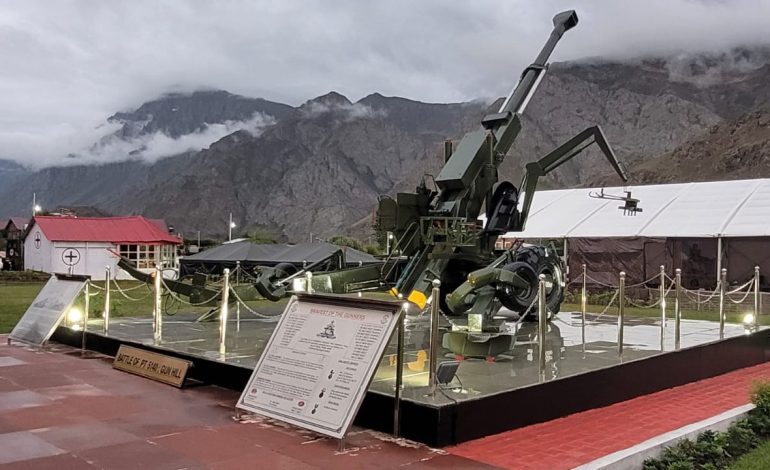
The Battle of 5140 Memorial at Kargil, which pays tribute to a Bofors 155mm howitzer for the role it played during the Kargil conflict. (RNA Media photo by Smruti Deshpande.)

Dras: When the Kargil war began in May 1999, Indian infantry units were sent to retake posts occupied by Pakistani troops along the line of control (LoC). Many of these posts sat on high ridgelines, some above 15,000 feet, and the climb alone left soldiers exhausted and exposed to fire from above. The earliest assaults, made without artillery support, showed how costly that exposure could be.
Officers who fought in the war say artillery became the deciding factor in the battles that followed – particularly at Tololing and Point 4875, later renamed Batra Top.
Movement in the mountains was slow and gruelling, a senior artillery officer said, and troops climbing up stayed exposed to enemy fire for long stretches. “You walk 10 steps at 11,000 feet and you’re already out of breath,” he said. “These men fought at 15,000–18,000 feet, carrying their weapons, while the enemy above was firing down on them.”
Artillery was used in two ways. In indirect fire, guns positioned 17–35 kilometres behind the front line struck targets they could not see, guided by an observer with the infantry. In direct fire, guns were moved into valleys within sight of the target and fired at it directly, letting the crew watch where each round landed and correct their aim.
More than a hundred guns were used across the war. It was common for 50–100 rounds to be fired on a single target before an infantry assault went in.
India relied primarily on the Bofors 155mm FH-77B howitzers during the 1999 Kargil War, whose accurate high-altitude fire proved decisive in dislodging Pakistani positions, alongside 105mm Indian Field Guns and multi-barrel rocket launchers like the Pinaka and Grad BM-21 for supporting fire.
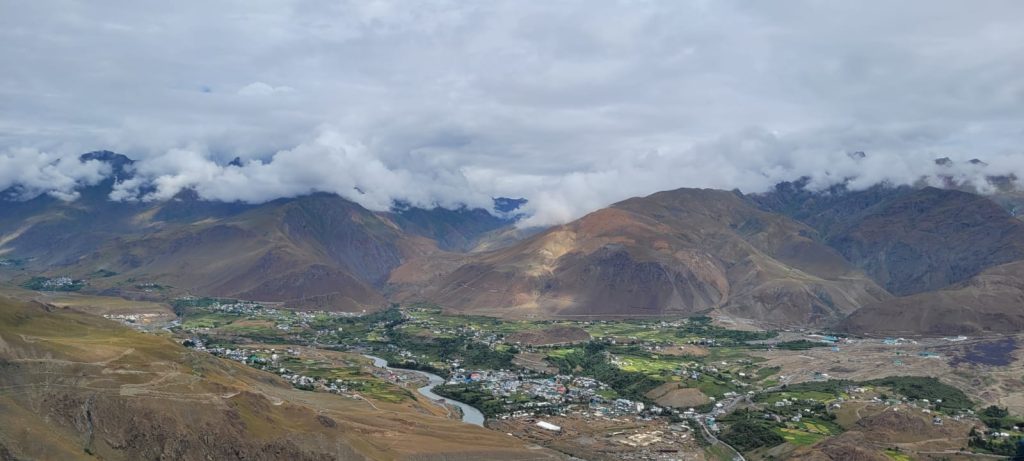
Tololing
Tololing was one of the first objectives. It overlooked the Dras-Kargil highway, the road used to supply Leh, Ladakh and the Siachen Glacier, and Pakistani troops on the peak could fire down on it at will.
Capt Akhilesh Saxena (Retd) was a forward observation officer with 2 Rajputana Rifles during the battle. In the early days of the war, he said, it was not even clear who Indian forces were fighting. “We were not very sure what the strength of the enemy, what kind of weapons they were carrying, or whether they were actually Pakistani Army or our own terrorists,” he told RNA Media.
Pakistani soldiers had dressed in civilian clothing to hide their identity. This became clear only after army patrols – including one led by Capt Saurabh Kalia – were ambushed.
The first attempts to retake Tololing, made without significant artillery support, failed. Troops climbing the peak came under heavy fire as soon as they reached the top, Capt Saxena said. The task then passed to 2 Rajputana Rifles under Colonel Ravindranath, who asked for artillery support. “Col Ravindranath called me and told me, ‘Capt Akhilesh, we have called the artillery, and I am very sure we will not be able to get success without the very, very active support of the artillery,’” Capt Saxena said.
Two days before the attack, his team carried out what is called ranging – firing test rounds at the target and adjusting for wind and other conditions until the aim was accurate. “We give the correction – minus 800 – they recalibrate and fire,” he said. “We keep correcting it till the time it is bang on the target.” These settings were then used during the actual assault.
On the night of the attack, Capt Saxena moved with the infantry and directed fire from around 120 guns onto the Tololing peak. “It is so vast, it is so devastating, that they go down and sit in their bunker,” he said. “This gives the chance to infantry to move up.” As Indian troops closed in on the top, the range of fire was pushed further out to avoid hitting them, since artillery fire covers an area rather than a single point.
Tololing was retaken. The next peak, Point 5140, fell to the same approach and was later renamed Gun Hill. It was the first time in the war that artillery was used at full strength, Capt Saxena said, and it changed how every attack after was planned. “Every attack after that, we got it, because we were working with artillery,” he said.
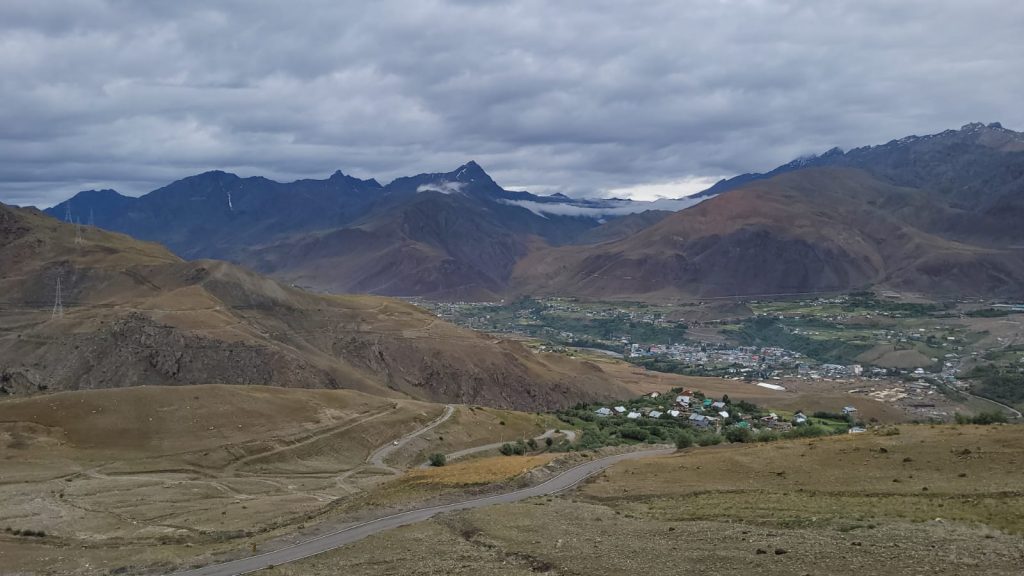
Point 4875
Point 4875, later renamed Batra Top, was another key objective. Then-Captain and now Brigadier Shashi Ghildiyal was the forward observation officer with 17 Jat during the assault, fought over three nights from July 4–7, 1999. The attack also involved 13 Jammu & Kashmir Rifles, led by Capt Vikram Batra, and 2 Naga.
Capt Ghildiyal’s unit first attacked a feature called Whale Back. “We had captured Whale Back two nights prior, and we were sitting there under the enemy’s accurate fire, trying to save ourselves,” he said. “We had a lot of casualties.” His unit was then moved to attack a position known as the Pimple Complex, alongside Capt Anuj Nayyar, an officer he knew from earlier training.
During the attack on the Pimple Complex, the company commander was wounded, leaving Capt Ghildiyal and Capt Nayyar to direct the assault alone. Around the same time, Capt Vikram Batra led a separate attack on Point 4875 to relieve pressure on Ghildiyal’s position, which was under fire from two directions. “He got martyred there,” Brig Ghildiyal said, “and finally the fire from at least one direction was stopped.” Capt Nayyar was killed shortly after.
“So, I was the only officer left,” Brig Ghildiyal said. “We pressed on the attack. We finally captured the feature, though I was also quite badly injured.” His unit was reinforced and the position cleared. Twenty-one bodies of Pakistani soldiers were found in the top bunker, including that of a lieutenant.
Brig Ghildiyal was evacuated and treated, first in Dras and then in Delhi, where he spent about a month recovering before rejoining his unit. He was awarded the Vir Chakra for taking command of the infantry company after the other officers were killed or evacuated.
The battle for Point 4875 brought several gallantry awards, including two Param Vir Chakras, for Capt Vikram Batra and Rifleman Sanjay Kumar, and two Maha Vir Chakras, for Capt Anuj Nayyar and Sepoy Imliakum Ao of 2 Naga. A third officer, Capt Jerry Prem Raj of 2 Naga, was also killed in the battle and was later awarded the Vir Chakra. According to Brig Ghildiyal, 54 Pakistani soldiers were found dead in the area after the fighting ended.
Both battles show a similar pattern: early attacks without artillery support failed, and later attacks, backed by carefully directed artillery fire, succeeded. Officers who took part say the coordination between artillery and infantry, and the accuracy of the fire, made the difference in retaking these positions.