
Indonesia’s foreign minister concludes New Delhi visit; BrahMos deal, Modi trip in focus
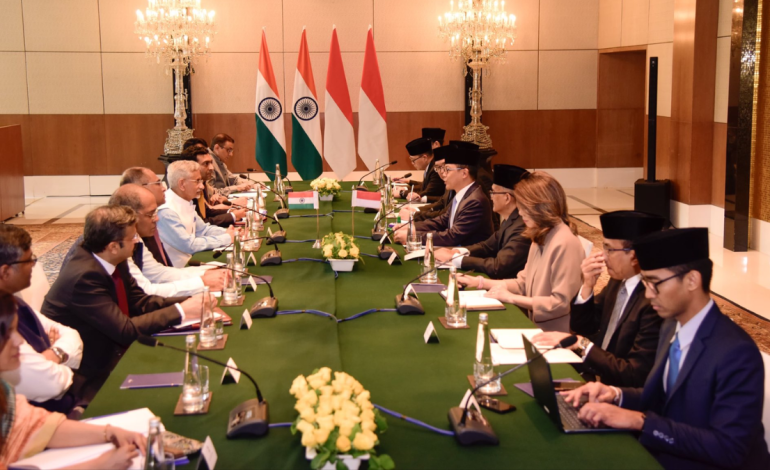
Indonesia’s foreign minister concludes New Delhi visit. (Image courtesy: X/@DrSJaishankar)

New Delhi: Indonesia’s foreign minister, Sugiono, concluded a three-day visit to India on Monday, with the centrepiece being the 8th India-Indonesia Joint Commission Meeting (JCM) – a forum that had last convened four years ago. The visit, described by analysts as a diplomatic warm-up for Prime Minister Narendra Modi’s planned trip to Jakarta in July, covered a broad sweep of bilateral concerns, from fertilizer imports and critical minerals to the near-finalized BrahMos missile deal.
The JCM was established at the level of foreign ministers following a memorandum of understanding (MoU) signed in January 2001, with the 7th JCM having been held in New Delhi in June 2022. The gap of four years lent the current meeting added significance. Sugiono and the external affairs minister, S Jaishankar, co-chaired the 8th India-Indonesia JCM in New Delhi on Sunday.
Niranjan Oak, research analyst at the Manohar Parrikar Institute of Defence Studies (MP-IDSA), told RNA Media that Sugiono’s visit was fundamentally a preparatory step for Modi’s July trip. “The JCM happened after four years, with the last one taking place in 2022,” Oak noted.
The visit follows Indonesian president Prabowo Subianto’s attendance at India’s 76th Republic Day celebrations in January 2025 as chief guest – a visit that set in motion a visible uptick in bilateral engagement. Jaishankar and Sugiono had also met on the sidelines of the BRICS foreign ministers’ meeting in New Delhi in May 2026.
Wide agenda
According to the Ministry of External Affairs (MEA), the two ministers held wide-ranging discussions spanning political affairs, defence and security, maritime ties, trade and investment, pharmaceuticals, healthcare, digital infrastructure, energy, connectivity, space, education, consular services, and cultural engagement.
Jaishankar noted on X that the two sides held substantive discussions on political, defence and security, maritime and shipping, trade, fintech, health, pharmaceuticals, fertilizers, critical minerals, as well as tourism, education, and cultural cooperation.
Beyond bilateral matters, the meeting also served as a platform for regional diplomacy, with the two ministers exchanging views on the evolving regional landscape and the need for enhanced multilateral coordination, with a focus on deepening India-Asean ties.
The MEA described Indonesia as a key pillar of India’s “Act East” policy, saying the Comprehensive Strategic Partnership “continues to grow from strength to strength across established and new areas of cooperation”.
One area that Oak flagged as particularly significant was the discussion on fertilizers. “There are reports that India has approached Indonesia to import fertilizers amid the West Asian crisis, as Jakarta has emerged as a global player in the fertilizer space,” he said. The detail points to India’s attempt to diversify supply chains at a time when Middle Eastern instability continues to affect global commodity flows.
BrahMos deal
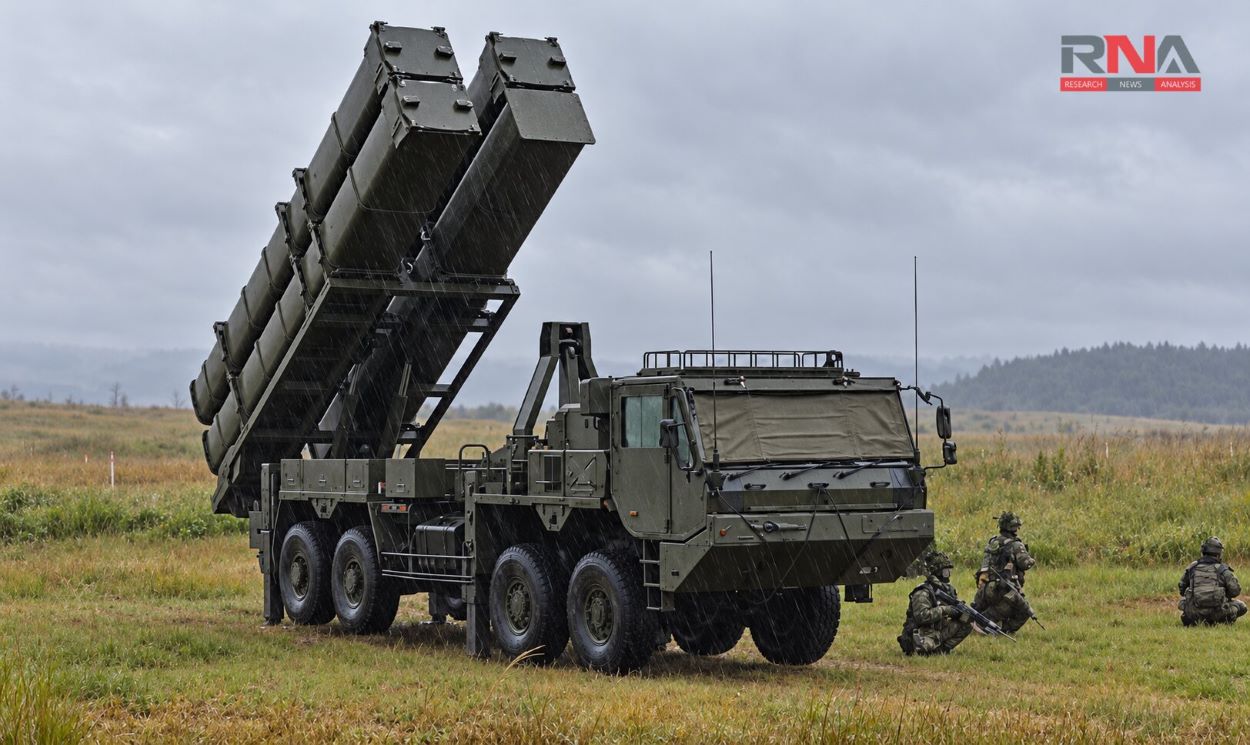
The visit also carried a sharp defence dimension, with the BrahMos missile system looming large over proceedings. In March this year, Indonesia’s defence ministry spokesman, Brigadier General Rico Ricardo Sirait, confirmed that Jakarta had finalized an agreement with India to procure the BrahMos cruise missile system, describing it as part of efforts to modernize the country’s weaponry and strengthen coastal defence. He said the system would help “boost deterrence capabilities in safeguarding national sovereignty”.
The official contract signing is expected in mid-2026, though the delivery schedule has not been announced. Defence analysts estimate the deal could be worth between $350 million and $450 million, though the contract value has not been officially disclosed.
Referring to comments made by India’s defence secretary, Rajesh Kumar Singh, at the Shangri-La Dialogue 2026, where Singh indicated the BrahMos deal with Indonesia was in its final stages, Oak said there could have been discussion of the topic during the JCM. “We could see progress during Modi’s visit to Indonesia in July 2026,” he added.
India has successfully used BrahMos missiles in its Operation Sindoor against Pakistan in 2025 – a combat deployment that has drawn significant international attention to the weapon’s real-world capabilities and is widely believed to have accelerated foreign interest in the system.
The groundwork for the deal was laid well before the formal announcement. Last year, a high-level Indonesian defence delegation headed by Major General Yunianto, accompanying Prabowo to India, visited BrahMos Aerospace’s headquarters in New Delhi, where they were briefed on the supersonic weapon system and its capabilities.
BrahMos Aerospace says induction of the missile in the Indian Navy began in 2005 with INS Rajput, while the Indian Army inducted its first regiment in 2007. The missile is a joint venture between India’s Defence Research and Development Organisation (DRDO) and Russia’s NPO Mashinostroyeniya, established in 1998. It is among the world’s fastest operational supersonic cruise missiles, flying at Mach 2.8–3. Its range, per MTCR-compliant export specifications, is up to 290 kilometres.
The Philippines was the first foreign customer for the BrahMos, signing a $374 million coastal defence deal in early 2022, with the first batch delivered in April 2024. Vietnam has also recently signed a BrahMos deal, with reports placing the contract value at approximately ₹6,000 crore (around $629 million), covering missile systems, training, and logistical support. Indonesia’s agreement, once formally signed, will make it the third Southeast Asian nation to operate the system.
Civilizational ties
India and Indonesia share a civilizational relationship stretching back centuries, rooted in cultural, religious, and maritime links that have shaped both nations. The two countries – Asia’s largest democracies and major Indo-Pacific powers – elevated this bond to a Comprehensive Strategic Partnership in 2018.
Indonesia under Prabowo has pursued an assertive defence modernization agenda, including the purchase of 48 Turkish-made KAAN jets, and has set aside around $19.9 billion in its defence budget for 2026. As Modi’s July visit approaches, what began as a civilizational affinity is steadily hardening into a defence and strategic partnership of consequence in the Indo-Pacific.