
Philippines set to back India’s UNSC bid, credits BrahMos for ‘credible deterrence’ in South China Sea: Ambassador
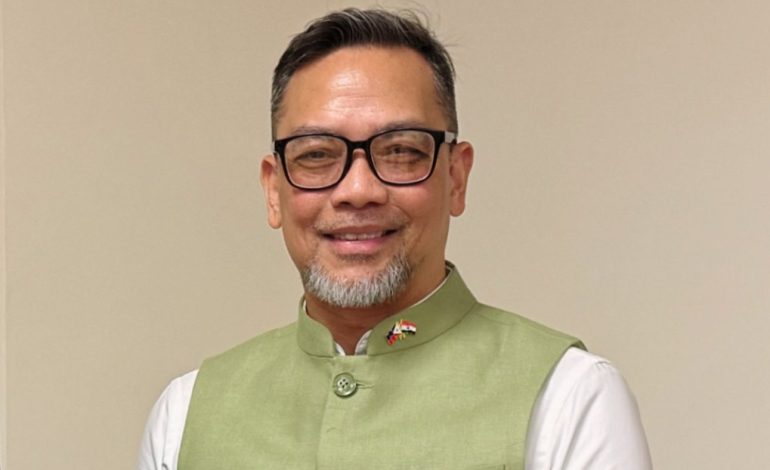

New Delhi: The Philippines is inclined to back India’s candidature for a non-permanent seat on the United Nations security council (UNSC) for the 2028–29 term, the Philippine ambassador to India, Josel F Ignacio, said on Tuesday. He also credited the BrahMos missile system with giving Manila “credible deterrence” against China’s expanding footprint in the South China Sea and named India among the country’s foremost potential defence suppliers.
Speaking to ANI (YouTube video), Ignacio was asked whether New Delhi could count on Manila’s support at the ballot. He said such decisions are typically confirmed closer to the vote itself, but pointed to a “meeting of the minds” between the two countries on Security Council matters as grounds for optimism.
“Normally decisions on candidatures like this are made known or are intimated closer to the voting. But I think, if I may call it so, a source of optimism, if not confidence, is the fact that when it comes to UN security council issues, the Philippines and India have a meeting of the minds,” he said.
According to Ignacio, the two countries hold closely aligned positions on security council reform, spanning both permanent and non-permanent membership. “We both have the same advocacies and positions, or similar anyway, very similar positions when it comes to UN security council reform, membership whether permanent or non-permanent … we can expect that the Philippines will consider very favourably India’s candidature,” he said, adding the caveat that a formal decision would only be firmed up nearer the date.
India formally opened its campaign for the 2028–29 non-permanent seat on July 13, when the external affairs minister, S Jaishankar, launched the candidature at the UN headquarters. Jaishankar framed the bid against what he described as a “profound paradox” facing the world body – rising conflict and instability even as the case for a functioning, credible security council grows stronger. He said member states would weigh both India’s vision for global challenges and its track record on peace and security.
If elected, it would be India’s ninth term on the council, following stints that include its most recent tenure in 2021–22. The Philippines and India both sit in the UN’s Asia-Pacific regional grouping, whose votes typically carry weight in determining the group’s endorsed candidate ahead of the wider General Assembly ballot, where a two-thirds majority is required.
BrahMos a ‘high point’ in defence ties
On the defence front, Ignacio was equally forthcoming about the BrahMos supersonic cruise missile system, of which the Philippines became the first foreign customer. Manila signed a $375 million deal in January 2022 for three batteries of the missile’s shore-based anti-ship variant, developed jointly by India’s Defence Research and Development Organisation and Russia’s NPO Mashinostroyeniya. The first battery was delivered in 2024.
“The BrahMos was a very good opening, and it’s an important high point,” Ignacio said, tracing the relationship back to a defence cooperation agreement signed more than a decade ago that he said had “blossomed” into equipment cooperation only in recent years.
The envoy said India’s growing indigenous defence manufacturing base, and its demonstrated ability to deliver reliable hardware, had put New Delhi firmly on Manila’s radar for future purchases. “India has become one of the top-of-mind potential providers for the Philippines,” he said, adding that Philippine defence and military officials now routinely visit India to assess sourcing options as part of the country’s broader acquisition planning – alongside its traditional partners.
On the missile’s operational value, Ignacio said BrahMos – whose speed and range have grown since India’s 2016 entry into the Missile Technology Control Regime eased earlier export restrictions – had given the Philippines a credible edge in the contested West Philippine Sea, the country’s term for the waters it claims within the wider South China Sea. “It’s giving us credible deterrence … it bestows on the Philippines some measure of anti-access and area denial. And that kind of capability now also raises for any potential aggressor the costs of such actions,” he said.
Manila’s claims in the South China Sea have repeatedly clashed with Beijing’s, including recurring standoffs near Second Thomas Shoal and Scarborough Shoal, despite a 2016 international arbitral ruling that rejected China’s expansive claims in the waters – a verdict Beijing has never recognized.
Ignacio was careful to frame the acquisition as defensive rather than provocative. “The Philippines has always been a peace-loving country. We’ve always said that we’re a friend to all, an enemy to none. But it goes without saying that every country must look to its own defences,” he said.
The ambassador’s remarks sketch a partnership advancing on parallel tracks – diplomatic backing at the United Nations and expanding defence-industrial cooperation in the Indo-Pacific – built up over the past decade through equipment deals, military exchanges and maritime security dialogue. With Manila’s defence establishment now treating India as a routine port of call when drawing up its procurement lists, and New Delhi pressing its case for a larger role at the UNSC table, the relationship looks set to be tested, and potentially deepened, on both fronts in the months ahead.