




Modi puts India Inc on notice over jobs, wages and investment as corporate tax cuts fail to deliver expected gains
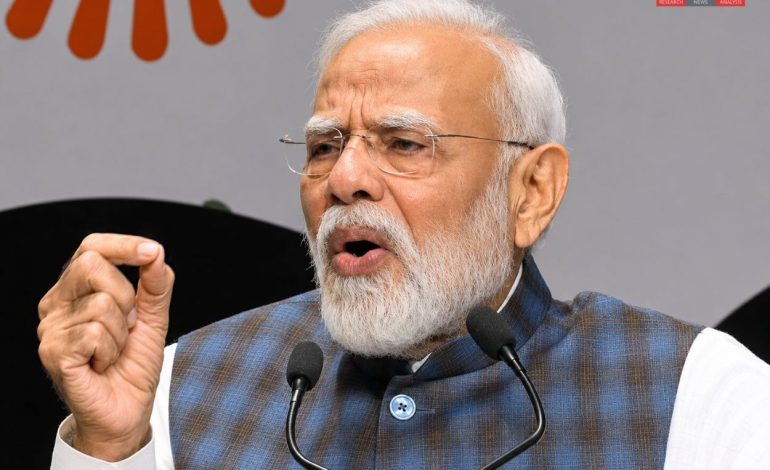
Narendra Modi during his Ficci centenary convention speech.

New Delhi: The prime minister, Narendra Modi, has called on Indian businesses to increase hiring, improve employee salaries and accelerate investment, questioning whether the corporate sector has adequately responded to years of tax concessions and economic reforms. His unusually direct message to industry leaders has brought renewed attention to a central challenge facing India’s economy – translating corporate profitability, government incentives and industrial expansion into better-paid employment and stronger consumer demand.
Addressing the annual general meeting and centenary convention of the Federation of Indian Chambers of Commerce and Industry (Ficci) in New Delhi on Thursday, Modi questioned the extent to which businesses had passed on the benefits of government reforms to employees and the wider economy. He pointed to reductions in corporate taxation, improvements in the regulatory environment and measures intended to encourage private investment, arguing that companies needed to demonstrate greater commitment to employment generation and wage growth.
The remarks have wider implications for India’s economic growth model, which increasingly depends on the private sector to complement public investment in infrastructure and manufacturing. They also raise questions about whether businesses are investing sufficiently in expanding production capacity, developing skilled workers and creating the purchasing power necessary to sustain domestic consumption.
Tax concessions and investment challenge
The government has introduced several measures over recent years to strengthen India’s competitiveness as a manufacturing and investment destination, including a substantial reduction in corporate tax rates in September 2019. The standard rate for eligible domestic companies was reduced from 30 per cent to 22 per cent, while a concessional rate of 15 per cent was introduced for qualifying new manufacturing companies, subject to specified conditions.
These changes were intended to improve corporate profitability, encourage capital expenditure and make India more attractive to investors seeking alternatives to established manufacturing centres. However, the relationship between lower taxation and higher investment is not automatic, since companies also consider consumer demand, infrastructure, financing costs, regulatory certainty and the availability of skilled labour before committing capital.
During his Ficci address, Modi also highlighted income-tax relief and other reforms designed to increase disposable income and strengthen the business environment. His central message was that industry should respond to these measures by investing more aggressively, improving wages and expanding employment rather than relying primarily on additional government concessions.
The question is particularly important because business investment and household consumption reinforce each other. Higher wages can support consumer spending, encouraging companies to expand production, while weak household purchasing power can discourage fresh investment even when businesses have healthy balance sheets.
Why wage growth matters to corporate India
India’s economic expansion has been supported by public infrastructure spending, a growing services sector and targeted incentives for manufacturing, but employment quality remains a significant structural challenge. A large proportion of workers continue to depend on informal employment, self-employment and relatively low-paying occupations, limiting the potential for sustained growth in discretionary consumer spending.
According to the government’s Periodic Labour Force Survey, regular salaried workers accounted for 23.6 per cent of total employment in 2025, compared with 22.4 per cent in 2024. Although the increase indicates a gradual improvement in the composition of employment, it also illustrates the considerable distance India must cover before regular wage-paying jobs become the dominant source of livelihood.
Nominal wages have also increased in parts of the economy, but the quality of those gains depends on inflation, productivity and differences between sectors. For companies serving the domestic market, stronger real household incomes are especially important because demand for consumer goods, housing, automobiles and discretionary services ultimately depends on purchasing power.
This creates a difficult balance for businesses seeking to protect profit margins while increasing employee remuneration. Higher wages can raise operating costs in the short term, but they can also support productivity, reduce employee turnover and strengthen consumption when accompanied by investment in technology and workforce development.
Manufacturing ambitions face China challenge
The debate over corporate investment also comes at a time when India is attempting to expand domestic manufacturing and reduce its dependence on imported industrial inputs. Electronics, machinery, electrical equipment and several intermediate goods remain heavily dependent on overseas supply chains, particularly those centred on China.
India’s merchandise trade deficit with China widened to approximately $112.2 billion in 2025–26 from $99.2 billion in the previous financial year, according to figures reported by the Reserve Bank of India. The imbalance highlights the scale of India’s reliance on Chinese manufacturing capabilities even as domestic production has expanded in selected industries.
As RNA Media reported, stronger Indian exports to China have not been sufficient to offset the larger value of imports. The challenge for Indian businesses is therefore not simply to increase production but to develop competitive domestic supply chains, improve productivity and capture a greater share of industrial value addition.
Programmes such as the production-linked incentive scheme have encouraged investment across electronics, pharmaceuticals, automobiles and other manufacturing segments. However, their long-term success will depend on whether participating companies establish deeper supplier networks, develop indigenous capabilities and generate sustainable employment beyond the initial investment cycle.
India’s next growth phase depends on private investment
The latest message to corporate India reflects an important transition in the government’s economic priorities, from improving the investment environment to seeking stronger measurable outcomes from those reforms. Public expenditure can support infrastructure and industrial development, but sustained economic expansion ultimately requires private enterprises to invest, innovate, recruit and compete internationally.
The challenge is especially significant as companies increasingly adopt automation, artificial intelligence and capital-intensive production technologies. These investments can improve efficiency and international competitiveness, but they also make it necessary to develop complementary employment opportunities in services, logistics, component manufacturing and other labour-absorbing sectors.
For business leaders, the commercial argument for increasing employment and wages extends beyond meeting government expectations. A larger, better-paid workforce can become a stronger consumer market, creating opportunities for sustained revenue growth across industries.
Modi’s intervention has therefore placed a fundamental business question before corporate India: how can companies convert the advantages of lower taxation, improved infrastructure and a large domestic market into higher investment, stronger productivity and better-paying jobs? The answer will help determine whether India’s next phase of economic expansion is driven primarily by capital expenditure or accompanied by a broader improvement in household incomes and domestic demand.