

India working towards 6th-generation fighter aircraft, Rajnath Singh says
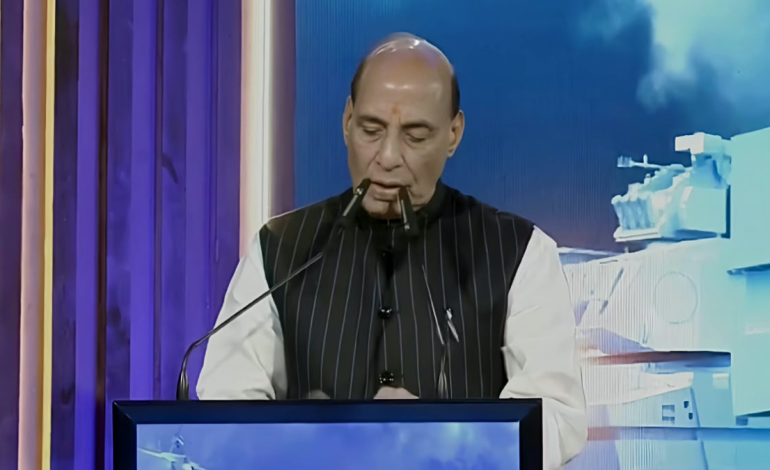
Defence minister Rajnath Singh during his address at the NDTV Defence Summit at the Oberoi in New Delhi, on September 27, 2026.

New Delhi: India is working towards developing capabilities for sixth-generation fighter aircraft while strengthening its preparedness for an era of fifth-generation warfare, the defence minister, Rajnath Singh, said at the NDTV Defence Summit 2026. He said India is building a future-ready defence strategy based on advanced technology, indigenous manufacturing and capabilities across multiple domains.
Drawing a comparison with the evolution of telecommunications from 2G to 5G, Singh said warfare has progressed through different generations. He said India is currently operating in an environment of fifth-generation warfare, where technology and new domains are changing the nature of the battlefield.
Singh said the modern battlefield extends beyond traditional land, sea and air operations, with cyber, space, electronic warfare, information warfare, artificial intelligence, drones and autonomous systems becoming increasingly important. He said India is strengthening capabilities for contact and non-contact as well as kinetic and non-kinetic warfare.
The minister highlighted quantum technology and said India’s policy framework is being strengthened to support emerging defence capabilities. He also pointed to the diversification of energy resources as part of the country’s preparations for a changing security environment.
Singh said future battlefields will be technology-driven and operate across multiple domains. He stressed that countries that remain ahead in technology will have an advantage on the battlefield.
Rajnath also linked this future-oriented approach with India’s push for greater self-reliance in defence manufacturing. He described the philosophy as “why buy what can be built here” and said building capabilities domestically would contribute to India’s strategic autonomy.
He said major structural reforms have taken place in the defence sector and that manufacturing has gained momentum. Singh also highlighted the role of young Indians working on artificial intelligence, drones, robotics, quantum technologies, cybersecurity and autonomous systems.
Singh described the DRDO as an innovation platform connecting industries, universities, startups and scientists. He said technology developed by DRDO for traditional missile systems would also be transferred to Indian private industry to support wider domestic production.
India’s defence startup ecosystem has grown from around a dozen startups in 2018 to more than 2,000, Singh said. The Ministry of Defence has approved procurement worth more than ₹2,400 crore from startups and MSMEs, while projects worth over ₹1,500 crore have been sanctioned for developing new technologies.
Indian defence products are now reaching more than 100 countries, including nations in Asia, Africa, Latin America and Europe, Singh said. He added that defence public sector undertakings are increasing their research and development spending and exploring new export opportunities.
On India’s international relation approach, Singh said the country seeks respectful relations with other nations and favours resolving issues through dialogue. He said India’s rise is aimed at collective and inclusive development rather than leaving other countries behind or disrupting the existing system.
On national security, Singh said India’s pursuit of peace should not be mistaken for weakness. Referring to a neighbouring country in an apparent reference to Pakistan, he said India would not compromise on its security and would remain prepared to carry out strikes against terrorists as long as the country continues to “propagate terrorism”.
Singh said India believes in dialogue, but that dialogue would end if a country continues to propagate terrorism. He added that India wants cooperation with other countries, but not at the cost of national interest.