


H-1B faces shake-up within a year, US watchdog warns; no shutdown announced yet
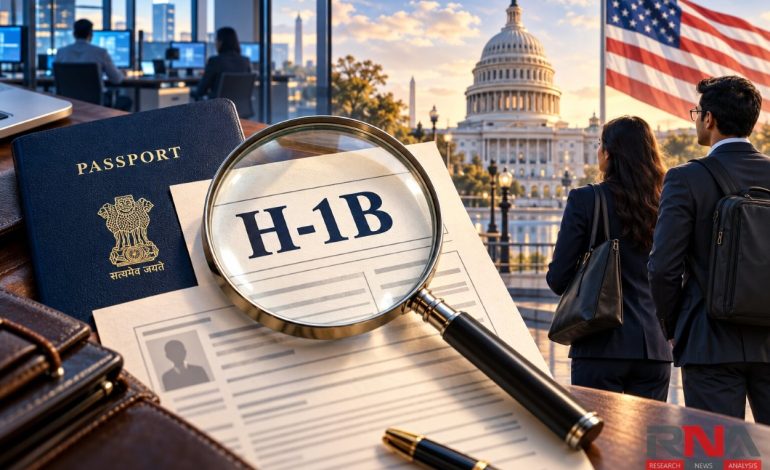
RNA Media illustration for representation.

New Delhi: The US labour department’s inspector general, Anthony D’Esposito, has warned that the foreign-worker visa system could change substantially within a year as investigators widen their scrutiny of alleged fraud and exploitation. His remarks have fuelled speculation about the future of the H-1B programme, a major employment route for Indian professionals, although he did not announce its closure or a timetable for ending it.
Speaking in an interview with conservative commentator Benny Johnson, D’Esposito predicted that the system would look “very different 365 days from now”. He said investigators were assembling a case and presenting their findings to the American public, linking the effort to the administration’s broader focus on foreign labour.
He also said investigators had “handcuffs ready”, signalling the possibility of criminal enforcement. However, the reported comments did not identify a decision to abolish H-1B, making the distinction between an expanding investigation and a programme-wide shutdown central to understanding his warning.
The investigation concerns allegations extending beyond administrative mistakes, including fraudulent recruitment, worker exploitation and possible human trafficking. D’Esposito has separately raised concerns about fictitious employers and jobs, suggesting that investigators are examining whether some businesses use employment-based immigration arrangements to facilitate unlawful activity.
An official statement issued on August 13, offers a concrete example of that scrutiny: D’Esposito accompanied investigators on field checks in Dallas at premises associated with companies holding approved H-1B petitions. At one building linked to more than 500 approved applications, investigators reported locked offices, unlit premises and little visible business activity.
The inspector general’s office said those checks formed part of a nationwide initiative announced in July, involving cooperation with other federal agencies. Its account described grounds for further investigation, rather than establishing that every business visited, or every petition associated with those addresses, was fraudulent.
The enforcement drive is now accompanied by additional instructions from the president, Donald Trump, on how employers should be scrutinized. An executive order signed on September 18, directs the labour, state and homeland security departments to consider whether sponsoring employers have undertaken layoffs during the preceding year or plan future cuts affecting comparable American workers.
The order also requires the labour department’s Wage and Hour Division to begin reviewing previously submitted labour condition application data within 30 days to determine whether further action against employers is warranted. It expands coordination with other agencies, bringing wage, employment, academic and industrial information into the assessment of applications and petitions.
Separately, Trump signed a proclamation extending restrictions on certain H-1B entries until September 21, 2027, retaining a $100,000 payment requirement for covered petitions involving workers outside the United States. The text permits national-interest exceptions, meaning its scope is narrower than a universal charge on every H-1B holder.
That payment policy remains entangled in litigation, an essential qualification when assessing its practical impact. An appeals court was reviewing a federal judge’s June ruling blocking collection of the fee; subsequent reporting also described the court-imposed restriction as continuing despite the proclamation’s extension.
For India, the stakes extend well beyond individual recruitment decisions because Indian professionals constitute the largest group using the programme. The US Citizenship and Immigration Services report for fiscal 2024 recorded 283,755 approved petitions for India-born beneficiaries, accounting for 71 per cent of approvals; this measure covers approved petitions, rather than simply new arrivals.
H-1B allows employers to hire foreign professionals temporarily for specialized occupations, generally requiring a relevant bachelor’s degree or equivalent qualification. The labour department’s programme guidance describes a regular annual cap of 65,000, with an additional 20,000 places under the advanced-degree exemption, while employers must attest to compliance with wage and working-condition requirements.
Those wage obligations are intended to protect both American and foreign employees: employers must pay the applicable prevailing wage or what they pay similarly qualified employees doing the same work, whichever is higher. Consequently, allegations of underpayment or sham employment concern compliance with existing safeguards as well as the administration’s argument for tighter controls.
Business groups maintain that H-1B helps employers recruit expertise unavailable in sufficient numbers domestically, while the administration argues that parts of the system facilitate displacement and wage suppression. The measures announced so far point to tougher employer scrutiny and contested restrictions on access, with D’Esposito’s one-year prediction leaving the precise shape of further changes unresolved.