
Iran military claims control of both Hormuz approaches as US disputes its grip on oil route
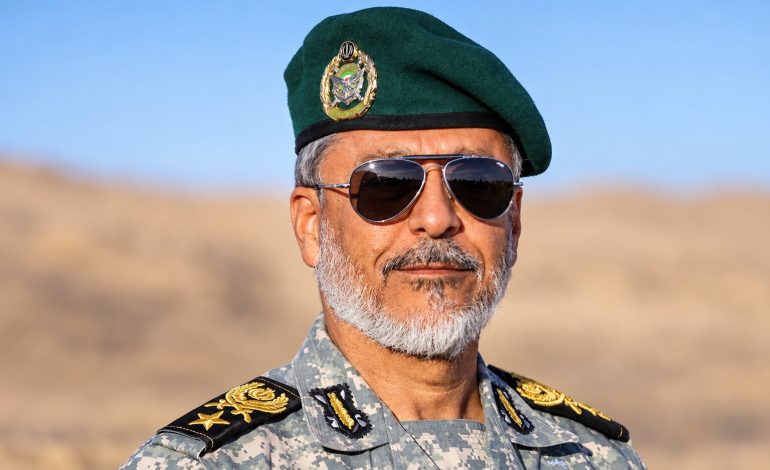
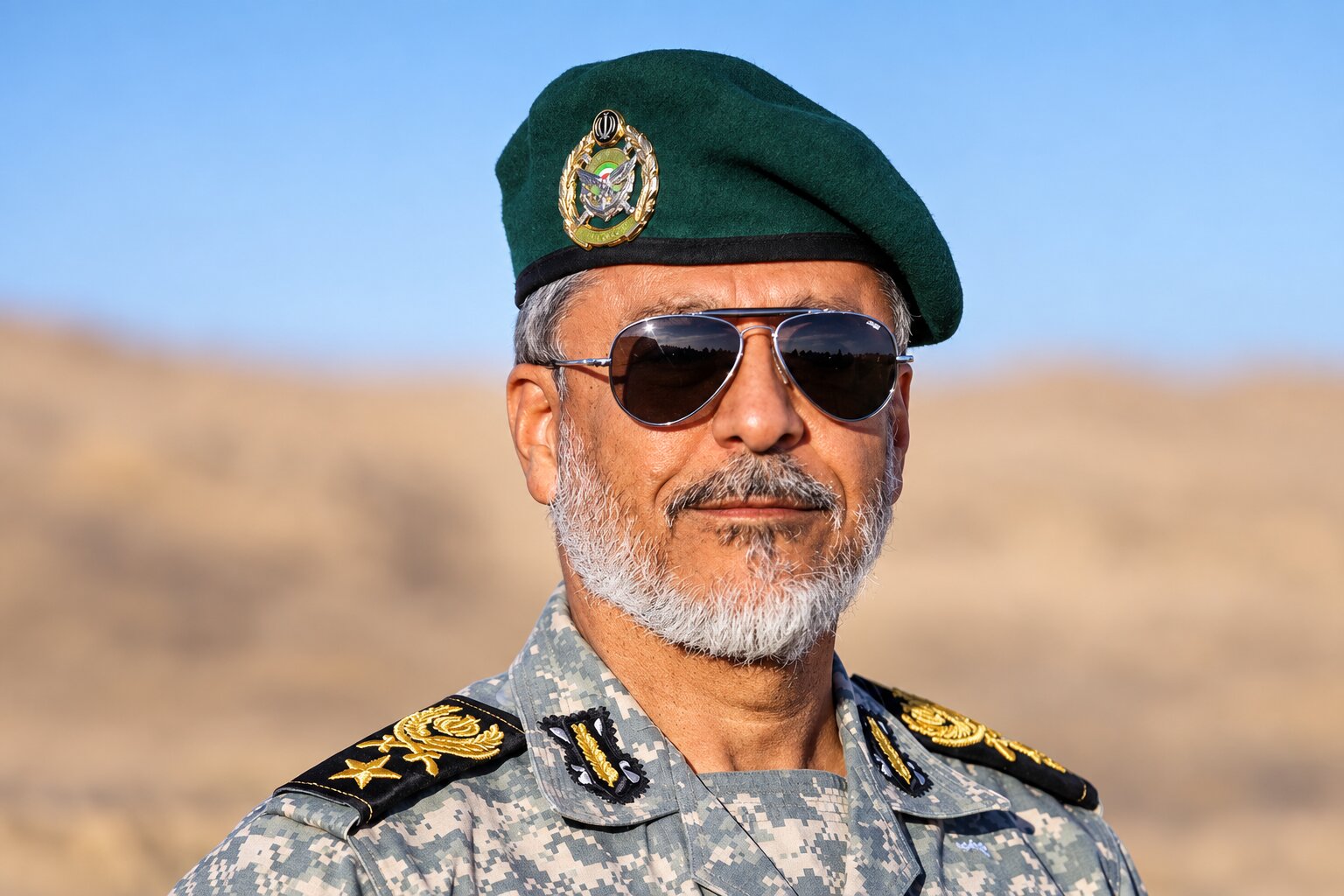
Real Admiral Habibollah Sayyari. (Creative Commons photo via Wikipedia.)

New Delhi: Iran’s armed forces control the eastern and western approaches to the Strait of Hormuz, a senior Iranian commander has said, renewing Tehran’s assertion of military dominance over the strategic oil passage. The claim comes amid conflicting American accounts of access through the waterway and renewed diplomatic efforts to resolve a confrontation with major consequences for energy importers, including India.
The deputy chief of Iran’s regular military for coordination, Rear Admiral Habibollah Sayyari, outlined the division of responsibilities between the country’s two naval forces in an interview reported by Mehr News Agency on Monday. He said the Islamic Revolutionary Guard Corps (IRGC) navy controlled the Persian Gulf, the strait itself and its western approaches, while the regular navy covered the eastern approaches and northern Indian Ocean.
Sayyari said Iranian forces were preventing passage in their operational area and maintaining readiness against further threats. He added that the military was addressing weaknesses identified during the fighting and applying lessons from the war to improve its capabilities.
His reference to “both sides” described the eastern and western operational sectors, rather than ownership of both shores of the strait. The passage lies between Iran and Oman, connecting the Persian Gulf with the Gulf of Oman and the Arabian Sea – a geography that makes Iranian claims of military control distinct from territorial sovereignty.
Washington has challenged Tehran’s account of its grip on shipping. In a statement reported by JFeed on Monday, the US Central Command, or Centcom, rejected Iranian control claims and cited thousands of vessel transits carrying more than a billion barrels of oil over recent months; those figures were American assertions, not an independently verified traffic assessment.
Available shipping data nevertheless points to severe disruption, although it cannot capture every crossing. Reuters reported on September 22 that preliminary tracking figures showed just two commodity vessels passing through the strait the previous day, compared with about 125 large commercial ships daily before the conflict began on February 28; vessels sailing with their identification transmitters switched off were excluded.
The competing accounts therefore require care: evidence that some ships are passing does not establish normal commercial access, while low recorded traffic does not prove an absolute blockade. The figures also cover different periods, making them unsuitable for a direct comparison of either side’s claimed control.
Tehran has sought to reinforce its military message through economic arguments. On Sunday, the speaker of Iran’s parliament, Mohammad Bagher Ghalibaf, said elevated oil prices contradicted Washington’s portrayal of the situation, although a price premium alone cannot establish which force controls a shipping route.
The dispute also concerns who can regulate international navigation. In July, the International Maritime Organization’s governing council urged countries to reject Iran’s attempt to impose sovereignty over the strait and its creation of an authority to control vessel movements.
Iran rejected that position, arguing that its measures protected maritime safety and national security. The disagreement underscores the distinction between a state’s ability to obstruct shipping and international acceptance of its claimed authority over passage.
The commercial stakes extend well beyond the immediate confrontation. According to the US Energy Information Administration, Hormuz carried an average of 20.9 million barrels of oil a day in the first half of 2025, equivalent to roughly one-fifth of global petroleum liquids consumption, alongside more than one-fifth of worldwide liquefied natural gas trade.
Asia is particularly exposed: China, India, Japan and South Korea together accounted for 74 per cent of crude oil and condensate moving through the strait during that period. For India, the resulting risk extends beyond delayed Gulf cargoes to potentially higher replacement costs when buyers compete for supplies from elsewhere.
Alternative export routes provide only partial protection. Saudi Arabia and the United Arab Emirates have pipelines that bypass Hormuz, but the EIA’s assessment makes clear that available alternatives cannot replace the full volume normally transported through the passage.
Diplomatic contacts were continuing as the latest military claims emerged. Several media outlets have reported that Qatari mediators were expected to meet the Iranian foreign minister, Abbas Araghchi, and American representatives separately to discuss a revised seven-day proposal linking the reopening of Hormuz to wider measures to end hostilities and ease pressure on Iran.
For shipping operators, a political announcement would still need to translate into dependable passage. Earlier in the conflict, the International Maritime Organization’s secretary-general, Arsenio Dominguez, warned that naval escorts could not guarantee safety – highlighting why sustained security for vessels and crews remains the practical test of any agreement.