In summit meeting with Trump at White House, Xi warns US and China would both lose in conflict, urges military dialogue
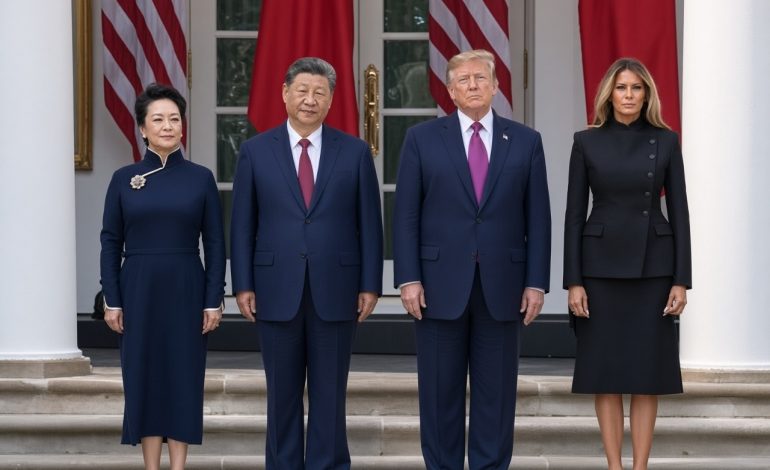
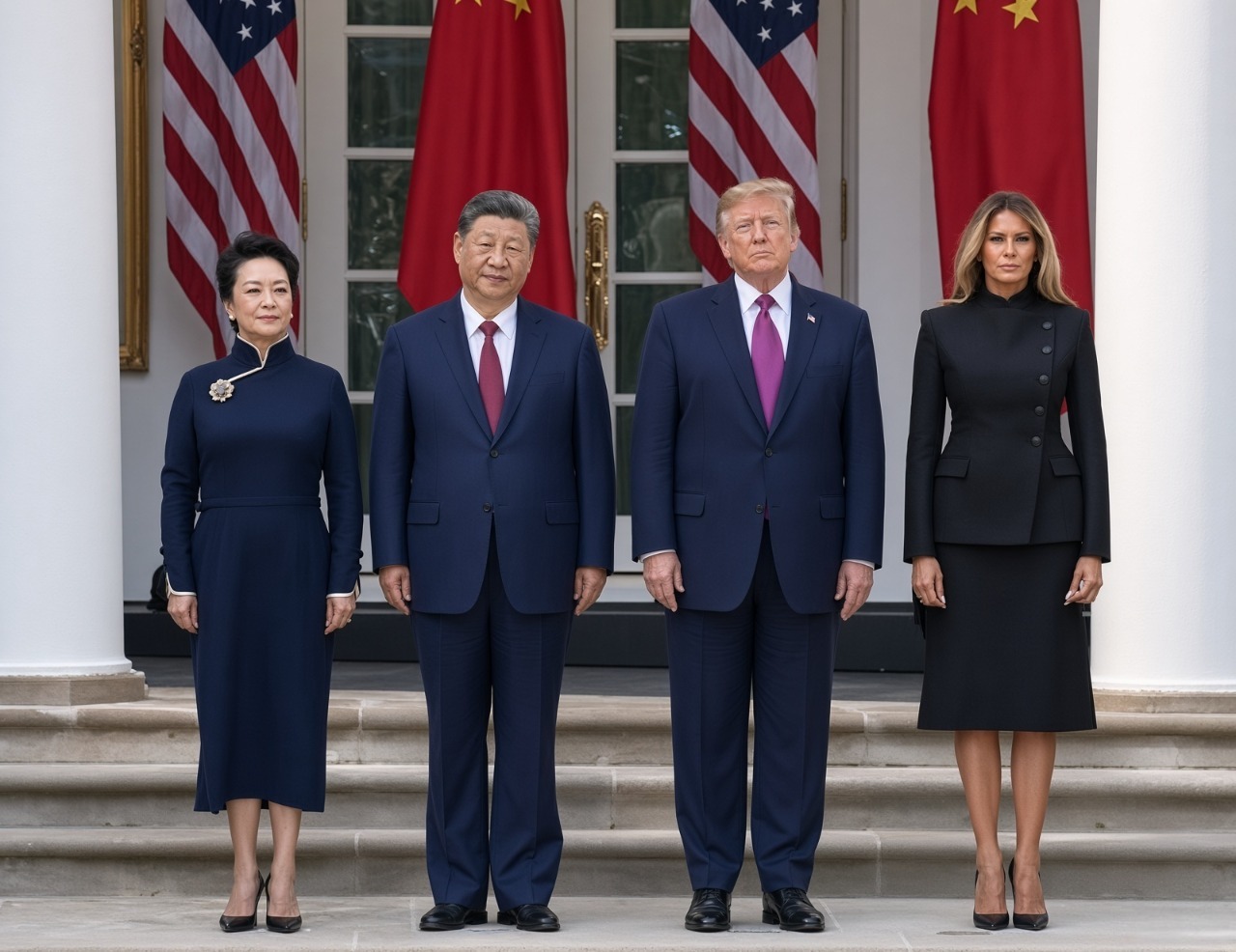
This White House video screenshot shows Xi Jinping (2L) and Peng Liyuan (L) with Donald Trump (2R) and Melania Trump at the White House, on September 2026.

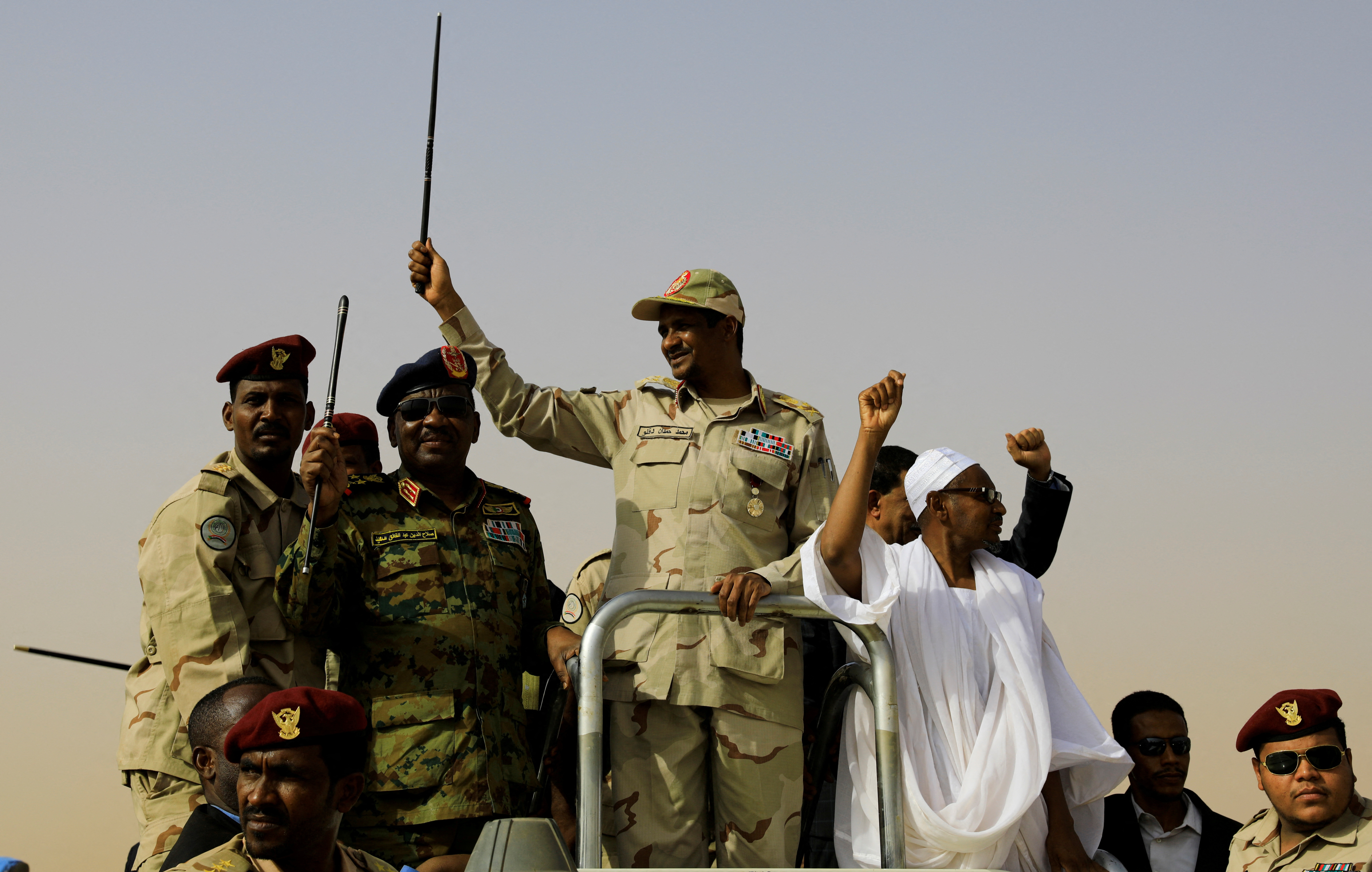
New Delhi: The president of China, Xi Jinping, called for regular military dialogue with the United States and warned that confrontation would damage both countries as he met the US president, Donald Trump, at the White House on Thursday. His appeal to manage their rivalry peacefully accompanied an invitation for 100,000 young Americans to visit China, combining a message on security with an effort to strengthen public ties.
Xi advocated stronger arrangements for communicating during crises and preventing confrontations, arguing that competition should remain within limits. His remarks placed the prevention of military conflict at the centre of Beijing’s public message as the two leaders began their Washington engagement.
“Our two militaries should maintain regular dialog and improve mechanisms for crisis communication and prevention,” Xi said. He also argued that sustained, frank discussions could help the countries understand their differences and establish greater trust despite their contrasting national circumstances.
The warning was accompanied by an elaborate military welcome at the White House, where Trump and Xi watched a silent drill display with their wives, Melania Trump and Peng Liyuan. The programme also included a military review and flyover in the Rose Garden before the substantive discussions.
Earlier on Wednesday evening, as RNA Media had reported, Trump and Melania, greeted Xi and Peng at Joint Base Andrews in Maryland, with a rare red-carpet welcome. No US president had personally welcomed a visiting leader at the base in six decades.
Military-to-military communication
Xi’s emphasis on communication addresses a longstanding vulnerability in the relationship, which is whether military commanders can reach one another when tensions rise. Such channels can help clarify intentions and prevent an encounter between armed forces from escalating through misunderstanding, even when the underlying political disputes remain unresolved.
Efforts to restore those contacts predate the present summit. After Xi met the then US president, Joe Biden, in San Francisco in November 2023, the two sides agreed to resume senior military exchanges, defence policy discussions, maritime safety consultations and telephone conversations between theatre commanders.
That agreement followed a breakdown in military communications after the then speaker of the US House of Representatives, Nancy Pelosi, visited Taiwan in August 2022. The subsequent effort to reopen contacts illustrated how quickly mechanisms intended to contain a crisis could themselves become casualties of diplomatic disputes.
Taiwan remains central to that risk, with Beijing claiming the self-governed island and its government rejecting Chinese sovereignty. Reuters reported ahead of the summit that Xi was expected to press Trump to stop American arms sales to Taiwan, invoking a 1982 bilateral communiqué.
Washington’s position includes commitments that complicate Beijing’s demand, like the US law requires support for Taiwan’s ability to defend itself. An accompanying memorandum from the then US president, Ronald Reagan, also made reductions in arms sales conditional on China pursuing a peaceful resolution of its differences with Taiwan.
Trade and AI
The most concrete outcome had already been settled before the leaders sat down. The treasury secretary, Scott Bessent, said on Wednesday evening that the two countries had agreed to extend what he called the Busan Agreement, the trade arrangement reached after Trump and Xi met on the sidelines of the Asia-Pacific summit in Busan, South Korea, on October 30, 2025.
That arrangement had been due to lapse on November 10, but will now run until January 10, giving both economies several more months to negotiate. Bessent added that some of Beijing’s promised commitments under the original deal had fallen short, and signalled that Washington now expected fuller compliance in the months ahead.
Artificial intelligence, once a peripheral irritant in the relationship, has moved close to the centre of the agenda. Hours before the summit began, China’s commerce ministry confirmed that senior negotiators from both sides had held their first formal discussions on the subject, a disclosure made public in Beijing by the ministry’s spokesman, He Yadong.
The talks were led on the Chinese side by vice-premier He Lifeng, who met his American counterpart in New York in the days before the summit, as RNA Media had reported.
Xi’s invitation to young Americans
Alongside his security message, Xi invited 100,000 young Americans to undertake study and exchange visits to China over the next five years. The announcement introduced a longer-term effort to build familiarity between the two societies into a visit dominated by difficult government-to-government negotiations.
Xi also said two giant pandas would soon be welcomed in Atlanta. The animals, Ping Ping and Fu Shuang, are expected to arrive in the coming days.
Their transfer follows a conservation arrangement announced by Zoo Atlanta on April 2 with the China Wildlife Conservation Association. Ping Ping, a male, and Fu Shuang, a female, were both born at the Chengdu Research Base of Giant Panda Breeding, according to the zoo.
The arrangement renews a partnership that previously ran from 1999 to 2024 and produced seven cubs from the original pair, Lun Lun and Yang Yang. Those two pandas and their youngest offspring returned to China in October 2024, ending the earlier phase of Atlanta’s programme.
The exchange initiative and panda announcement offered tangible public gestures alongside Xi’s broader appeal for restraint. His military proposals, however, were presented as calls for cooperation; they should not be read as confirmation that the summit had already produced a new bilateral crisis-management agreement.