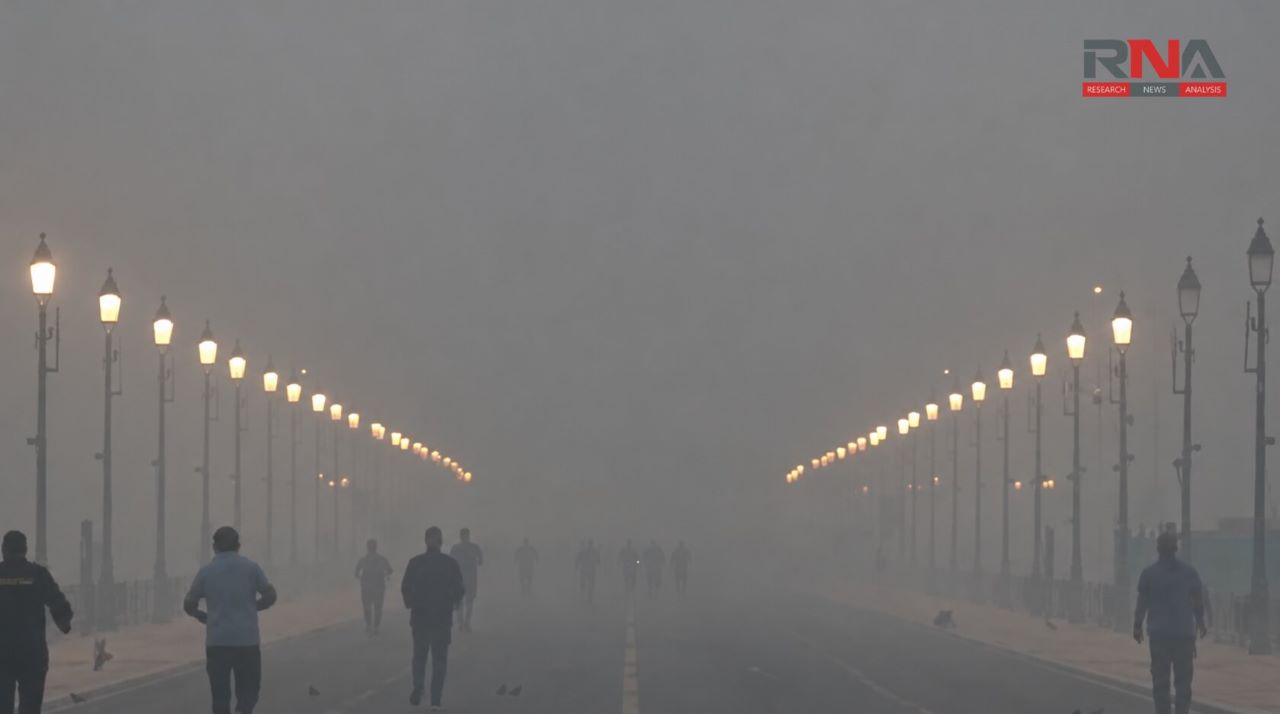

Diwali pollution pushes Delhi to the brink as toxic smog engulfs northern India, air quality worsens across major cities
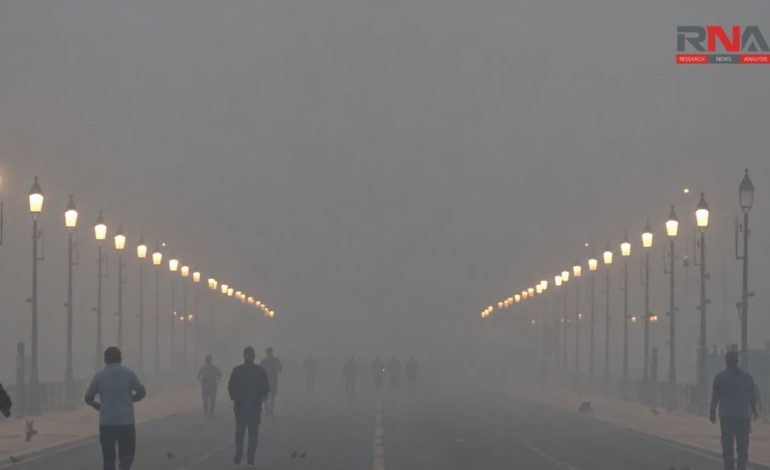

New Delhi: A thick blanket of toxic smog engulfed Delhi and several neighbouring cities on Monday as widespread firecracker use during Diwali aggravated an already serious pollution crisis across northern India. Air quality deteriorated to dangerous levels in several parts of the national capital despite restrictions on fireworks and emergency pollution-control measures, renewing concerns over the effectiveness of India’s response to its recurring winter air pollution problem.
According to the Commission for Air Quality Management (CAQM), Delhi’s overall air quality index (AQI) stood at 372 at 1pm on Monday, placing the capital in the very poor category. However, several monitoring stations recorded readings above 400, classified as severe, indicating substantially higher pollution exposure in individual neighbourhoods.
The deterioration followed Diwali celebrations on Sunday when fireworks were reportedly used extensively despite restrictions imposed by the Supreme Court. According to an analysis published by Down To Earth, 20 of Delhi’s 59 monitoring stations registered severe pollution by 10pm on Sunday, with Sonia Vihar recording an AQI of 463 and Jahangirpuri reaching 450.
Delhi’s overall AQI had already reached 376 on Sunday, compared with 369 the previous day, demonstrating that the atmosphere was heavily polluted before the main celebrations began. Firecracker emissions subsequently added substantial quantities of fine particulate matter to the air, with weak winds and cooler temperatures restricting their dispersal.
The pollution extended well beyond Delhi, affecting several cities across the National Capital Region (NCR) and other parts of India. According to city-wise pollution figures reported on November 9, Noida recorded an AQI of 340, Gurugram 328 and Ghaziabad 363, all within the very poor category.
Conditions were also troubling elsewhere, with Varanasi registering 306, Pune 242, Jaipur 223 and Ahmedabad 231. Mumbai recorded 171, Kolkata 164, Chennai 211, Hyderabad 122 and Bengaluru 129 in the same reporting snapshot, illustrating significant geographical differences in the intensity of pollution.
Some private monitoring platforms reported considerably higher figures, with one AQI.in-based assessment placing Delhi at 776 and Lucknow at 500 early on Monday. However, such readings cannot be directly compared with government figures because monitoring platforms use different calculation methods, averaging periods and pollution thresholds, with India’s official AQI scale capped at 500.
Why Delhi’s pollution crisis persists
Although Diwali fireworks contribute to sudden increases in pollution, Delhi’s winter air crisis is driven by several overlapping factors, including vehicular exhaust, industrial emissions, construction dust, waste burning and agricultural residue fires. Seasonal meteorological conditions compound the problem, as falling temperatures, low wind speeds and poor atmospheric ventilation allow pollutants to accumulate near the surface.
According to the pollution-source assessment, transport accounted for an estimated 19 per cent of Delhi’s pollution on Sunday, while stubble burning contributed approximately 3.5 per cent. These estimates highlight why restricting fireworks alone cannot eliminate the capital’s pollution problem, even though such restrictions can help prevent sharp short-term increases.
The recurring pattern is supported by historical evidence showing that air quality across Delhi-NCR deteriorated immediately after Diwali in eight of the nine years between 2017 and 2025. Of 52 city-level comparisons examined, pollution increased on 44 occasions, suggesting a persistent relationship between festival-related emissions and worsening atmospheric conditions.
Emergency restrictions and health concerns
The CAQM activated Stage III of the Graded Response Action Plan (GRAP) across Delhi-NCR on November 6, introducing tighter restrictions on construction activity, polluting vehicles and other emission sources. The measures were intended to prevent further deterioration, although the post-Diwali pollution surge demonstrated the difficulty of controlling emissions during periods of unfavourable weather.
The Supreme Court had permitted only certified green firecrackers during designated hours on November 7 and 8, with a complete prohibition returning on November 9. Reports of fireworks being used beyond the permitted hours have nevertheless raised fresh questions about regulatory enforcement and the availability of prohibited conventional crackers.
Health specialists warn that prolonged exposure to PM2.5 – particles measuring 2.5 micrometres or less – can aggravate asthma and other respiratory illnesses and increase cardiovascular risks. Children, older people and those with existing health conditions face particular vulnerabilities, although prolonged exposure to heavily polluted air can affect otherwise healthy individuals.
The Air Quality Early Warning System has indicated that unfavourable conditions could sustain severe pollution over the coming days, increasing pressure on authorities to enforce emergency restrictions. The larger challenge remains reducing year-round emissions through cleaner transport, industrial controls, effective dust management and coordinated action across state boundaries rather than relying primarily on temporary measures during winter.