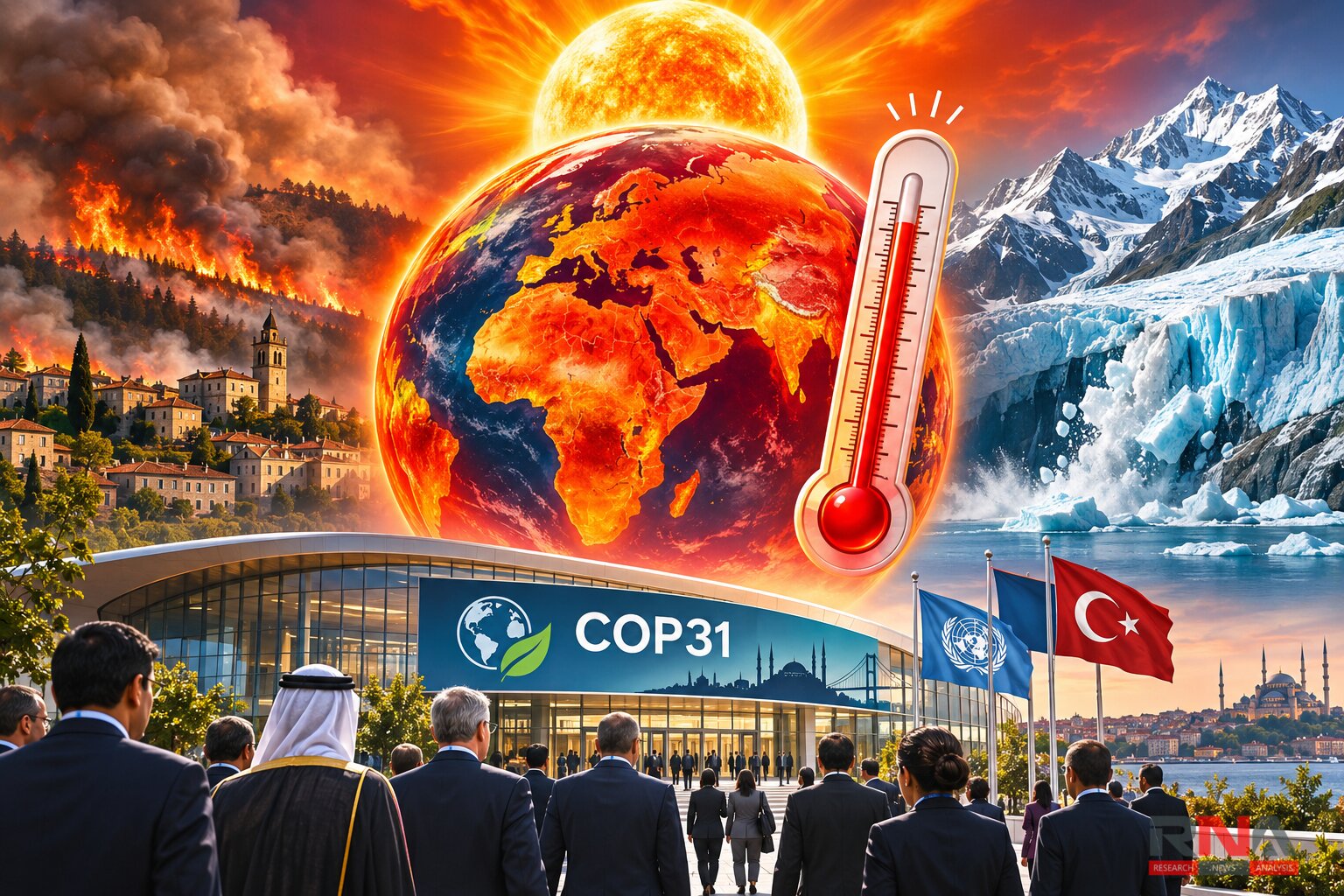
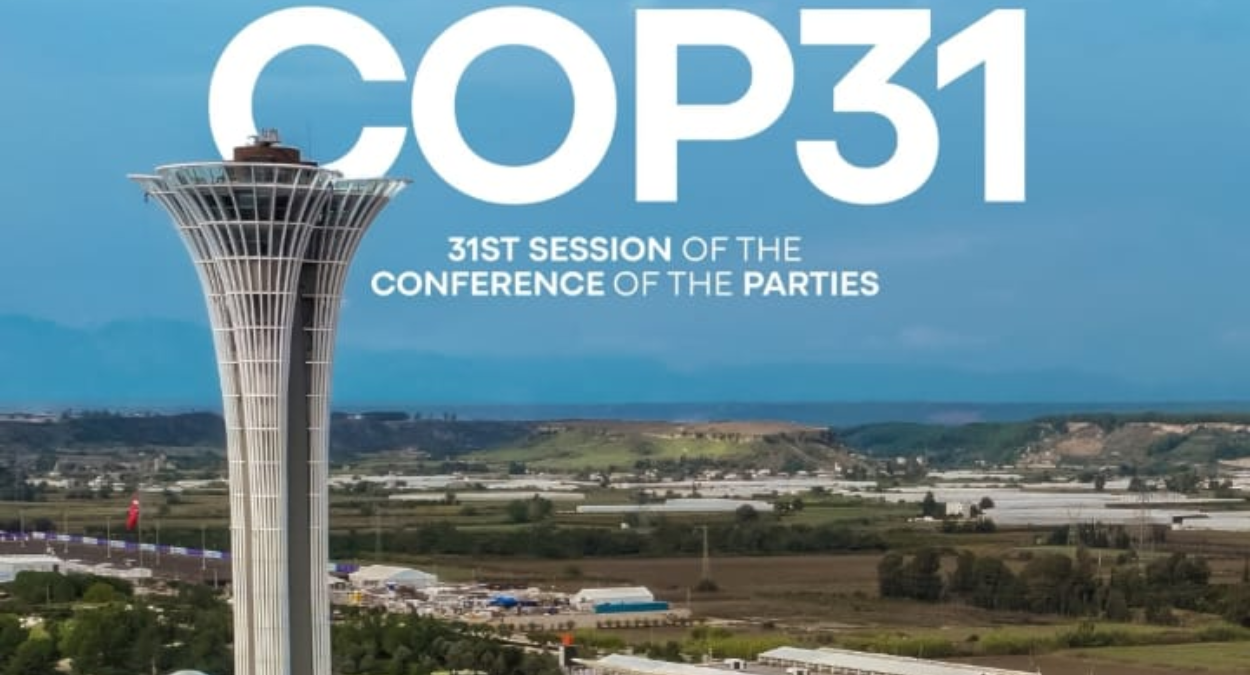

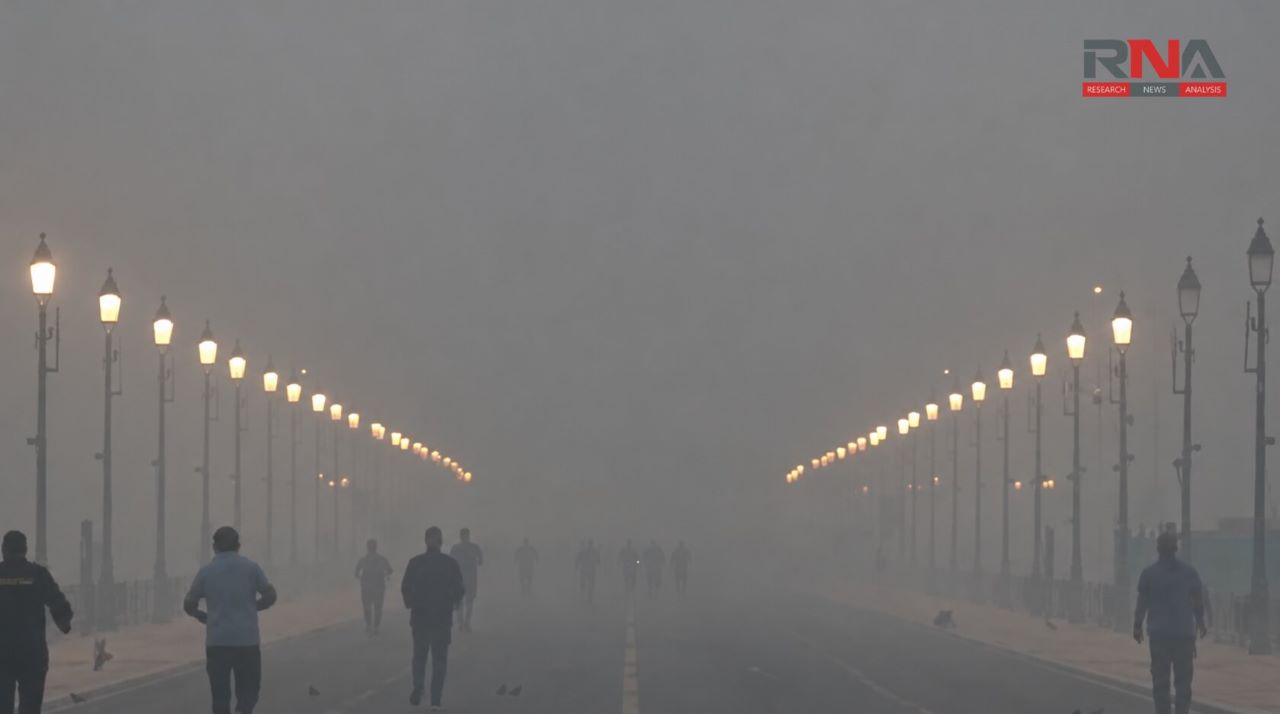

2026 could become hottest year on record as COP31 opens in Turkey. Scientists warn of accelerating climate crisis
RNA Media illustration for representation.

New Delhi: The world could be heading towards its hottest year since instrumental temperature records began, with an exceptionally powerful El Nino intensifying the effects of human-induced climate change. The warning comes as representatives of nearly 200 countries gather in Antalya, Turkey, for the COP31 climate summit, where governments face renewed pressure to cut greenhouse gas emissions and strengthen financial assistance to climate-vulnerable nations.
The US-based climate research organization, Berkeley Earth, has estimated a 95–96 per cent probability that 2026 will surpass 2024 as the warmest year on record, according to its latest assessment. However, the European Union’s Copernicus Climate Change Service offers a more conservative forecast, estimating an 80 per cent probability that 2026 will finish second and a 20 per cent chance that it will equal or exceed the 2024 record.
The difference reflects variations in temperature datasets, statistical methods and assumptions about how the developing El Nino will influence global temperatures during the final two months of the year. Nevertheless, both assessments indicate that the planet is experiencing an exceptionally prolonged period of warming, bringing the international community closer to the limits established under the 2015 Paris Agreement.
According to Copernicus data released on November 6, October 2026 was the hottest October ever recorded, with global average temperatures reaching 15.35°C – approximately 1.75°C above the estimated pre-industrial average. It was also the third consecutive month in which global temperatures exceeded the 1.5°C benchmark, underscoring the persistence of extraordinary warming.
The agency expects the annual average for 2026 to finish between 1.56°C and 1.61°C above pre-industrial levels, making it virtually certain that the threshold will be exceeded for a second calendar year after 2024. Significantly, Copernicus also expects the four-year average for 2023–2026 to exceed 1.5°C, a development that illustrates how sustained global warming has become.
How El Nino is intensifying global warming
Scientists attribute the underlying rise in global temperatures primarily to greenhouse gases released by human activities, particularly the burning of coal, oil and natural gas. The naturally occurring El Nino phenomenon is adding a temporary warming influence by altering ocean temperatures and atmospheric circulation across the tropical Pacific.
El Nino develops when unusually warm surface waters spread across the central and eastern equatorial Pacific, disrupting weather patterns across several continents. Its effects can include changes in monsoon rainfall, prolonged droughts, unusually heavy precipitation and higher average global temperatures, although their intensity and geographical distribution vary between events.
The latest Copernicus temperature assessment shows that average sea surface temperatures across the tropical Pacific reached unprecedented levels during October. In the Nino 3.4 monitoring region, the temperature anomaly climbed to 3.21°C above the 1991–2020 average, exceeding the peaks associated with several previous exceptionally strong El Nino episodes.
The World Meteorological Organization expects the current event to intensify towards December and persist into early 2027, potentially maintaining unusually high global temperatures. Unlike greenhouse gases, however, El Nino does not create a permanent source of additional planetary heating; rather, it redistributes heat within the ocean-atmosphere system.
Extreme weather raises stakes at COP31
The negotiations follow a year marked by severe heatwaves, destructive wildfires, flooding and glacier-related disasters across several regions. Europe experienced prolonged extreme heat during the summer, while catastrophic flooding associated with a glacier collapse in Nepal highlighted the vulnerability of Himalayan communities to rapidly changing mountain environments.
The United Nations climate summit, scheduled from November 9 to 20, is therefore expected to focus heavily on implementing existing commitments rather than negotiating another broad declaration. Turkey is hosting and presiding over the conference, with Australia leading formal negotiations under an unusual arrangement agreed between the two countries.
Climate finance has already emerged as a contentious issue, with developing countries seeking stronger guarantees that wealthy nations will provide the resources necessary for adaptation and emissions reduction. Disagreements over whether financing commitments should receive greater prominence on the official agenda complicated preparations for the summit’s opening.
India pushes for climate finance and equity
For India, the negotiations carry particular significance because of the country’s exposure to extreme heat, erratic monsoon rainfall, coastal flooding and Himalayan glacier retreat. These risks have implications for agricultural production, water availability, infrastructure resilience and disaster preparedness, making climate adaptation an increasingly important element of national development planning.
India’s environment minister, Bhupender Yadav, has emphasized that New Delhi will press for predictable climate financing, affordable technology transfer and equitable emission-reduction obligations. In its official statement ahead of COP31, the government reaffirmed its commitment to the principle of common but differentiated responsibilities, arguing that developed economies must recognize their historical contribution to atmospheric greenhouse gas concentrations.
The Paris Agreement seeks to hold the increase in global average temperatures well below 2°C and pursue efforts to limit it to 1.5°C above pre-industrial levels. Although an individual year exceeding 1.5°C does not, by itself, establish a permanent breach of that long-term objective, the increasingly frequent exceedances indicate that the remaining scope for limiting warming is narrowing.
The central challenge facing COP31 is consequently not merely whether 2026 breaks another temperature record, but whether governments can translate their commitments into measurable reductions in emissions and stronger protection against climate-related disasters. With El Nino expected to influence temperatures well into 2027, the scientific evidence suggests that the consequences of delayed action will become increasingly difficult and expensive to manage. E