



Isro privatization row: Media says employees seek ‘clarification’, agency calls reports ‘baseless’
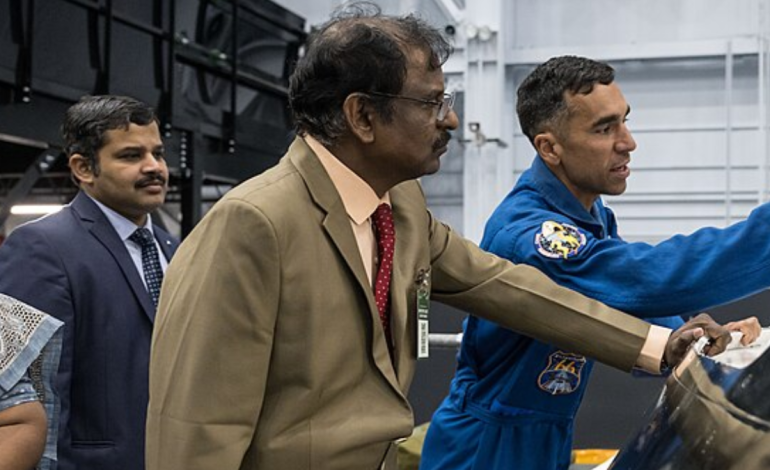
Isro chairman and department of space secretary, V Narayanan. (Image courtesy: Wikimedia)

New Delhi: Nine employee associations representing staff across Indian Space Research Organisation (Isro) centres have sought clarity on the space agency’s role as India moves towards greater private participation in the sector. In a September 4 letter to Isro chairman and department of space secretary, V Narayanan, they raised questions over the future of in-house production, recruitment and career opportunities.
The letter, verified by Hindustan Times, follows remarks by IN-SPACe chairman, Pawan Kumar Goenka, that Isro will eventually stop manufacturing launch vehicles. He said production would increasingly be handled by private companies and public sector undertakings, a development earlier reported by RNA Media.
The associations have asked whether Goenka’s statement reflects an approved government policy and sought details of how and when the proposed transition will take place.
Why are Isro employees concerned?
The employee bodies fear that moving more production work to industry could reduce the technical work available within Isro. They have warned that this could affect the existing workforce, with some employees potentially becoming surplus or being redeployed.
They have also raised concerns about sanctioned posts and future recruitment. A reduction in Isro’s in-house activities, they said, could lead to fewer positions and affect promotion and skill-development opportunities across scientific, technical and other fields.
The associations have separately stressed that launch vehicles cannot be viewed only as manufactured products. They said expertise in designing, developing, integrating, testing and launching rockets has been built within Isro over several decades and forms an important part of the organization’s capabilities.
Which Isro work could move to industry?
The shift has already begun with the Small Satellite Launch Vehicle (SSLV). Isro transferred the rocket’s technology and production rights to Hindustan Aeronautics Limited (HAL) following a bidding process.
HAL will initially receive technical support from Isro while building prototype vehicles. It is expected to take up independent production after this initial handholding phase.
The proposed transition could later cover the Polar Satellite Launch Vehicle (PSLV) and LVM3. Goenka has said production of both launch vehicles is expected to move towards the private sector, although the details of these transfers have not yet been made public.
The employee associations have also referred to reports about routine satellite manufacturing being shifted outside Isro and new launch infrastructure, including the Space Launch Complex at Kulasekarapattinam, being opened to private entities.
Why is government encouraging private production?
The policy is aimed at giving industry a larger role in commercial space activities while allowing Isro to concentrate on research, advanced technologies and scientific missions.
Goenka has said around 120 technologies developed by Isro have already been transferred to the private sector. The wider plan is to allow companies to manufacture and commercially use technologies after they have been developed and proven by the space agency.
The change is also intended to help build a stronger domestic space industry, with private companies taking on a larger role in rockets, satellites and other space systems.
What are employees asking the government?
The associations have clarified that they are not opposed to private participation or commercialization through NewSpace India Ltd (NSIL). Their concern is the absence of a formal Department of Space document defining the division of responsibilities between Isro and industry.
They want the government to clarify whether Isro will continue to handle the design, development, realisation, integration, testing and launch of the PSLV, LVM3, SSLV and their successor vehicles.
They have also sought clarity on the policy’s legal and administrative basis, its implementation timeline and its impact on existing employees and future recruitment.
What did Isro say about its future role?
Responding to reports and misinformation suggesting an attempt to privatize Isro or reduce its role, the space agency called the speculations “completely baseless and incorrect.” It said Isro will neither be privatized nor have its importance diminished and will continue to lead advanced space research, technology development, strategic missions, space science and exploration.
Isro said private-sector participation is aimed at expanding India’s space ecosystem, with mature and scalable activities increasingly undertaken by industry and PSUs. This will allow Isro to focus on frontier R&D, next-generation launch systems, human spaceflight, deep-space and planetary missions, while technology transfers enable industry to scale production and commercialization.
The agency described the approach as an “Isro-led national space ecosystem”. Under this model, the department of space will set policy, Isro will focus on advanced research and national missions, IN-SPACe will support private participation and NSIL will handle commercialization. The reforms are also aimed at achieving Space Vision 2047, including the Bharatiya Antariksh Station by 2035, a crewed Moon mission by 2040, reusable launch systems and planetary exploration.
Isro said India now has more than 450 space start-ups, while the space economy is estimated at $8.4 billion and is expected to reach $44 billion by 2033. It also clarified that the government will retain ownership and control of critical space infrastructure and strategic capabilities, stressing that the reforms are about expanding the space ecosystem, not privatizing Isro.