

China takes Pakistan into orbital age with Zeeshan Ali’s historic spaceflight aboard Shenzhou-24
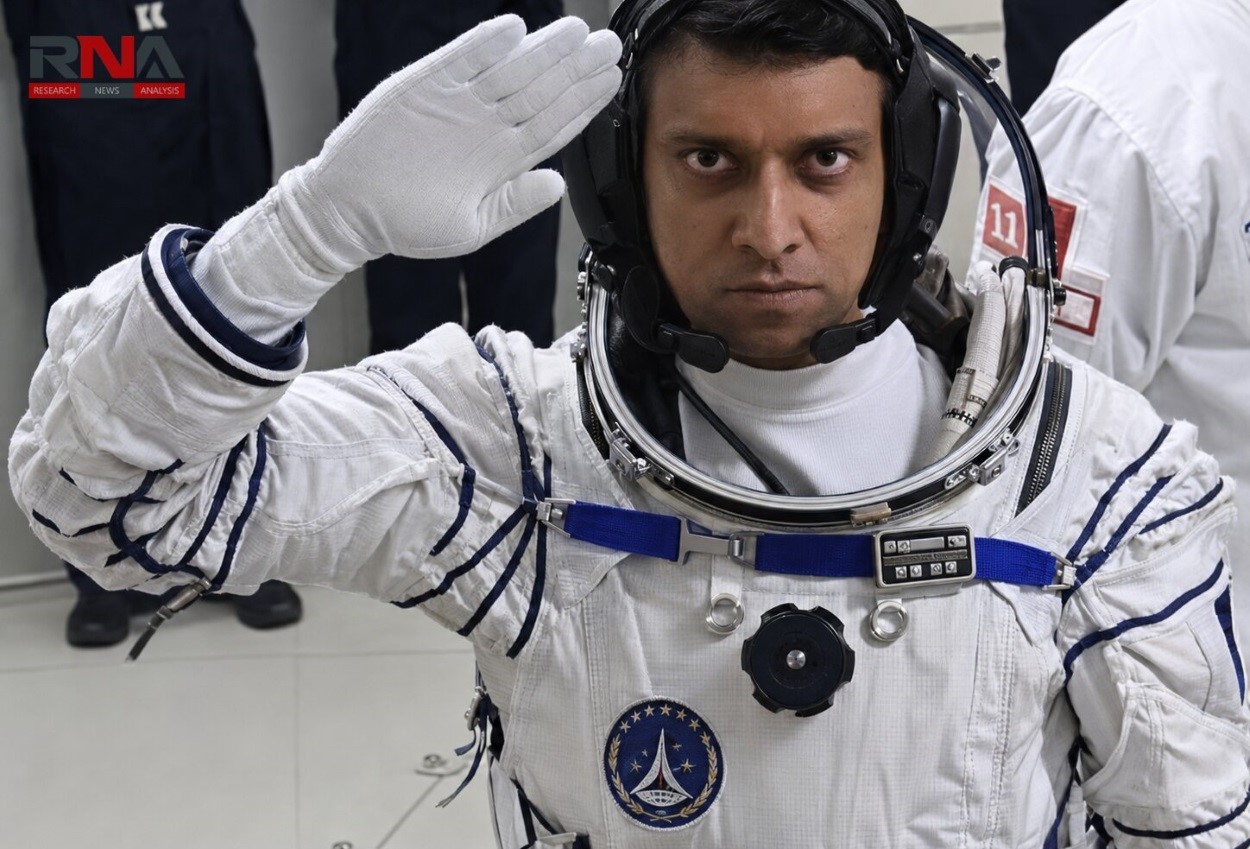
A digitally enhanced screenshot of a video showing Muhammad Zeeshan Ali saluting before boarding the Shenzhou-24 spacecraft.

New Delhi: Pakistan entered a new chapter in its space programme on Wednesday, with Pakistan Air Force pilot Wing Commander Muhammad Zeeshan Ali becoming the first Pakistani national to orbit Earth aboard China’s Shenzhou-24 spacecraft. The mission also marks a historic milestone for Beijing, which has opened its independently developed human spaceflight programme to a foreign astronaut for the first time.
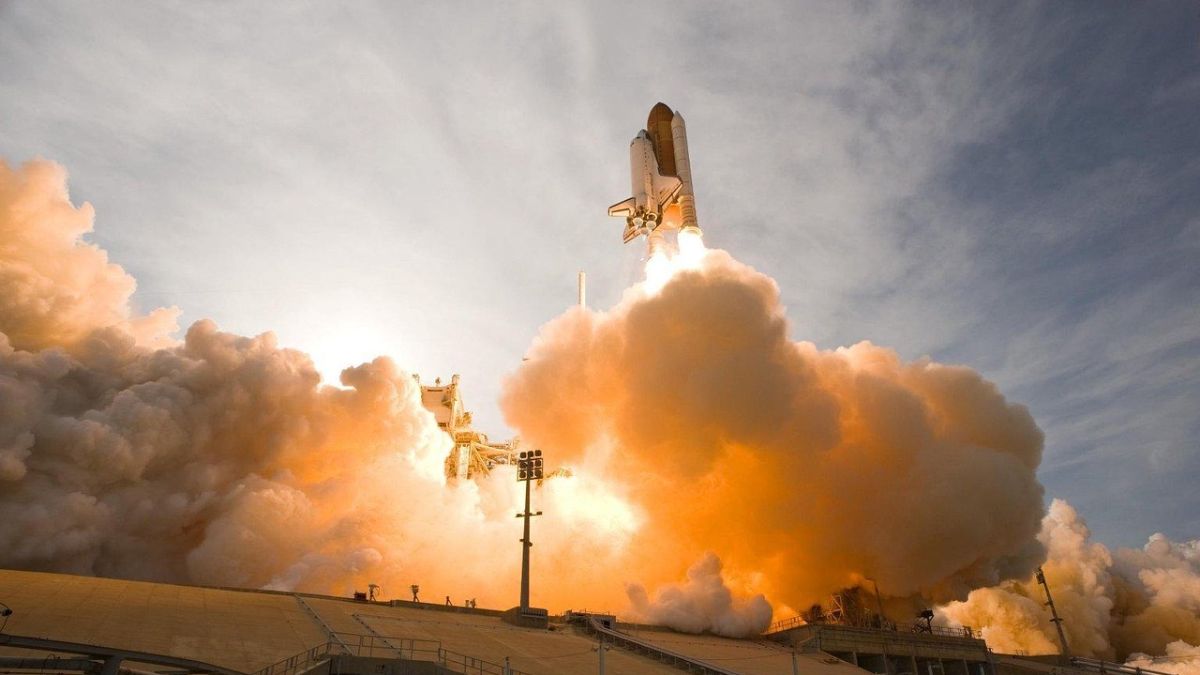
The spacecraft lifted off from the Jiuquan Satellite Launch Centre in northwestern China aboard a Long March-2F carrier rocket at 8.18am Beijing time (5.48am IST) on Wednesday. The China Manned Space Agency (CMSA) confirmed that the spacecraft successfully separated from the rocket around 10 minutes after liftoff and entered its designated orbit, with all three astronauts in good condition.
The 40-year-old Pakistani military pilot is travelling alongside two Chinese astronauts – mission commander Tang Hongbo and flight engineer Wu Yi – to China’s Tiangong space station. According to reports, Ali is expected to spend between five and 10 days aboard the orbital facility, where he will undertake scientific research as a payload specialist.
The successful launch triggered celebrations in Pakistan, with the prime minister, Shehbaz Sharif, describing the achievement as a historic first for the country and thanking the Chinese president, Xi Jinping. Pakistan’s planning minister, Ahsan Iqbal, who witnessed the launch in China, said the mission represented a new phase in bilateral technological cooperation.
From fighter pilot to astronaut
Ali’s journey into orbit is the culmination of an agreement signed in February 2025 between Pakistan’s Space and Upper Atmosphere Research Commission (Suparco) and the CMSA. The agreement provided for the selection and training of Pakistani astronauts, with one eventually joining a Chinese space mission.
In April this year, Pakistan selected Ali and another Pakistan Air Force pilot, Khurram Daud, for specialist astronaut training in China. According to Suparco’s official mission portal, Ali underwent an intensive training programme at the Astronaut Centre of China before being selected for the Shenzhou-24 mission.
The preparations included spacecraft operations, emergency procedures, scientific experimentation and learning to communicate with his Chinese colleagues in their language. Ali told reporters ahead of the launch that he hoped his mission would lay the foundation for more joint spaceflights and eventually broader cooperation in lunar and planetary exploration.
What will Zeeshan Ali do in space?
Unlike his Chinese crewmates, who are scheduled to remain in orbit for approximately six months, Ali will undertake a relatively short scientific mission. His responsibilities will primarily involve conducting experiments developed by Pakistani researchers rather than operating or piloting the spacecraft.
Suparco has identified four research projects covering biotechnology and advanced materials science. These include investigating graphene-based materials for radiation protection and developing self-healing carbon-fibre composites that could improve the durability of spacecraft structures.
The other two experiments will examine the effects of microgravity and cosmic radiation on quinoa seeds and the cultivation of microalgae and cyanobacteria in space. The latter could contribute to the development of sustainable life-support systems capable of generating oxygen, removing carbon dioxide and producing food during extended space missions.
The broader Shenzhou-24 expedition will undertake around 90 scientific investigations and technology demonstrations. Ali will return to Earth aboard the Shenzhou-23 spacecraft, which has been docked with Tiangong since May.
Is Ali the first Pakistani in space?
Although Pakistani authorities have described Ali as the country’s first astronaut, the distinction requires some clarification. Pakistani adventurer and entrepreneur Namira Salim travelled aboard the American commercial spaceflight company Virgin Galactic’s Galactic-04 mission on October 6, 2023.
Salim’s spacecraft reached an altitude of approximately 87.4 kilometres, exceeding the 80-kilometre threshold used by several American institutions to recognize spaceflight but falling short of the internationally recognized 100-kilometre Kármán line. Her suborbital flight provided a brief experience of weightlessness without completing an orbit around Earth.
Ali, therefore, is the first Pakistani to enter Earth’s orbit and the first astronaut trained and sent into space under Pakistan’s national space programme. He is also set to become the first Pakistani to live and work aboard a space station.
Pakistan’s ambitions beyond Earth’s orbit
Established in 1961, Suparco was among Asia’s earliest national space agencies, launching its first sounding rocket, Rehbar-1, in 1962. However, financial and technological constraints subsequently restricted the development of Pakistan’s space programme, leaving it increasingly reliant on international partnerships, particularly with China.
As RNA Media reported on Tuesday, Islamabad has also outlined ambitions to reach the Moon by 2035. Pakistan achieved an important milestone in May 2024 when its miniature satellite, iCube-Qamar, reached lunar orbit aboard China’s Chang’e-6 mission.
Pakistan is also developing a lunar rover for China’s Chang’e-8 mission, tentatively scheduled for 2028. These projects indicate Islamabad’s intention to expand its space programme beyond conventional satellite applications into planetary exploration and human spaceflight.
For Beijing, Ali’s participation carries considerable geopolitical significance as China seeks to establish itself as an alternative centre of international space cooperation. The selection of a Pakistani as its first international astronaut also reflects the privileged position Islamabad occupies in Beijing’s strategic partnerships.
China completed the basic three-module configuration of Tiangong in 2022 after developing an independent spaceflight infrastructure outside the International Space Station (ISS) partnership. With the ISS approaching the end of its operational life, Beijing is well positioned to offer orbital research opportunities to countries lacking independent human spaceflight capabilities.
In South Asia, India entered the human spaceflight era in 1984 when Squadron Leader Rakesh Sharma travelled aboard a Soviet spacecraft. In 2025, Group Captain Shubhanshu Shukla became the first Indian to visit the ISS, gaining operational experience relevant to Isro’s indigenous Gaganyaan programme.
For Pakistan, Wednesday’s launch represents a significant scientific and diplomatic achievement, although participation in a foreign space mission is distinct from possessing independent human spaceflight capabilities. The longer-term significance of Ali’s mission will depend on Islamabad’s ability to translate the expertise gained through Chinese cooperation into sustained domestic scientific research and technological development.