



Chandrayaan-2 Data Hints at Presence of Ice Beneath Moon’s South Pole Surface
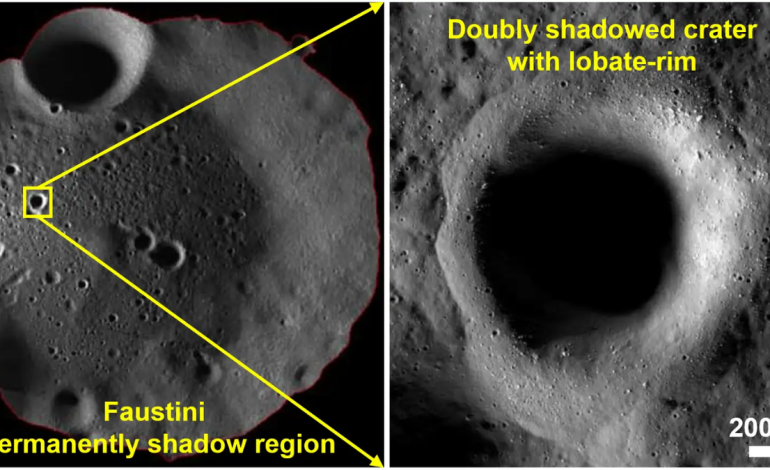
Moon water discovery. Image courtesy: ISRO

Years after Chandrayaan-2 reached the Moon, the mission continues to unlock new secrets, with scientists now uncovering fresh evidence of possible water ice deposits beneath the lunar south pole.
The observations were made by the Dual Frequency Synthetic Aperture Radar (DFSAR) onboard the Chandrayaan-2 orbiter. The findings were arrived at by researchers from the Physical Research Laboratory (PRL), Ahmedabad.
What the study found
The research focused on small craters located inside permanently shadowed regions near the Moon’s south pole. These areas never receive direct sunlight and remain extremely cold, making them ideal locations for preserving water ice over long periods.
The study was focused on small craters within permanently shadowed regions near the lunar south pole. These areas are never exposed to direct sunlight and remain extremely cold, making them ideal for preserving water ice over long periods.
After analysing radar images from four such craters, signs have been found that would confirm the possibility of ice beneath the surface of the moon. The radar observations helped scientists distinguish potential ice deposits from rough terrain and reflections..
According to a study published by ISRO, these results provide new insights to the distribution of water-bearing materials in the Moon’s polar regions and could assist in locating possible spots that are rich in ice for future lunar landings involving in-situ resource utilisation (ISRU) missions.
These recent findings are part of the ongoing efforts of space agencies around the world to learn more about the Moon’s south pole, which is becoming more significant in terms of future human activities and lunar exploration.
Some recent developments within space exploration include the Chinese mission Shenzhou-20, which established a record for the longest period spent in orbit, and the NASA Orion space vehicle, which still acts as a vital platform for Artemis missions after setting records in a voyage beyond the Moon.