

Indian Navy may retire three more Kilo-class submarines within five years, raises concerns over undersea fleet strength
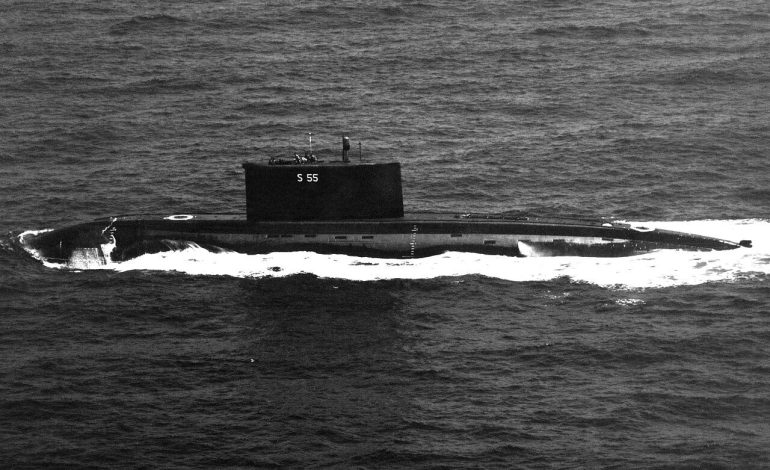

New Delhi: The Indian Navy could retire as many as three Russian-origin Kilo-class submarines over the next two to five years as ageing hulls, diminishing spares and rising maintenance costs make further life-extension work increasingly difficult. The planned withdrawals would sharply reduce the strength of a submarine class that has formed the backbone of India’s conventional undersea fleet for nearly four decades.
The Navy currently operates six Kilo-class boats, officially designated the Sindhughosh class in Indian service, following the decommissioning of the lead vessel, INS Sindhughosh, on December 19, 2025. Up to three of the remaining submarines are likely to be withdrawn during the indicated period, although the Navy has not publicly identified the boats or announced a firm decommissioning schedule.
India acquired 10 Project 877EKM Kilo-class submarines from the Soviet Union and Russia between 1986 and 2000. Of these, INS Sindhurakshak was lost after explosions and a fire at the Mumbai naval dockyard in August 2013, INS Sindhuvir was transferred to Myanmar in 2020, INS Sindhudhvaj was decommissioned in July 2022 and INS Sindhughosh retired after almost 40 years in service.
The remaining fleet comprises INS Sindhuraj, INS Sindhuratna, INS Sindhukesari, INS Sindhukirti, INS Sindhuvijay and INS Sindhushastra. Several have undergone extensive refits and equipment upgrades, but the condition of each hull, rather than merely its commissioning date, will be central to decisions on whether continued operation remains safe and financially viable.
INS Sindhukirti returned to operational service in August 2025 after completing a ₹934 crore refit at Hindustan Shipyard Limited in Visakhapatnam. INS Sindhuratna had earlier undergone a major refit in Russia, while a life-extension refit has also been proposed for INS Sindhuvijay, indicating that the Navy intends to retain selected boats where their hull condition and residual service life justify the expenditure.
The Kilo class earned a formidable reputation for its low acoustic signature, leading Nato navies to describe it as the “Black Hole”. Designed primarily for anti-submarine and anti-surface warfare, the double-hulled diesel-electric boats displace about 3,000 tonnes when submerged and can carry heavyweight torpedoes, mines and Klub-S anti-ship cruise missiles.
The submarines have been progressively modernized with improved sonar, electronic-warfare equipment, communications systems and weapons. Such upgrades can enhance detection and combat capability, but they cannot indefinitely reverse hull fatigue or eliminate the growing logistical difficulties associated with operating platforms designed more than four decades ago.
Maintaining an older submarine also becomes progressively costlier as original equipment manufacturers discontinue components and replacement parts become harder to obtain. Long refit cycles can further reduce operational availability, leaving fewer submarines ready for patrols even when the vessels remain officially in commission.
The expected retirements expose the difficult timing of India’s submarine modernization programme. The Navy operates six Kalvari-class submarines built by Mazagon Dock Shipbuilders Limited under Project 75 and four German-designed Shishumar-class boats, giving it 16 conventional submarines after INS Sindhughosh’s retirement.
If three Kilo-class submarines are withdrawn without replacement, that number could fall to 13. The practical availability would be lower because submarines periodically undergo repairs, refits, crew training and certification before returning to operational deployment.
The decline would come as China expands the reach of the People’s Liberation Army Navy in the Indian Ocean and Pakistan prepares to induct Chinese-designed Hangor-class submarines equipped with air-independent propulsion. Conventional submarines are particularly valuable in the relatively confined waters of the Arabian Sea, Bay of Bengal and northern Indian Ocean, where their stealth makes them effective for surveillance, sea denial and attacks on surface ships.
India’s principal replacement programme is Project-75(I), under which six advanced diesel-electric submarines equipped with proven air-independent propulsion are proposed to be built domestically. Mazagon Dock Shipbuilders and Germany’s ThyssenKrupp Marine Systems emerged as the sole technically compliant partnership after trials, and the approximately ₹70,000-crore proposal has moved towards final government approval.
Air-independent propulsion would allow the new submarines to remain submerged considerably longer than conventional diesel-electric boats, which must periodically operate their diesel engines while snorkelling to recharge their batteries. However, even after a contract is signed, design adaptation, technology transfer, local construction and trials mean that the first Project-75(I) submarine is unlikely to enter service before the early 2030s.
The government has also considered acquiring three additional Kalvari-class submarines with a greater proportion of Indian-made equipment and provision for an indigenous air-independent propulsion system. That proposal could provide industrial continuity at Mazagon Dock Shipbuilders and help bridge the numerical gap, although a final contract has yet to be announced.
The impending Kilo-class withdrawals therefore represent more than the routine retirement of ageing warships. They underline the narrowing window available to India to synchronize new construction with the departure of older boats and prevent a prolonged reduction in conventional submarine strength at a time of intensifying undersea competition in the Indo-Pacific.