



US midterms 2026: How Europe, China and India could be affected
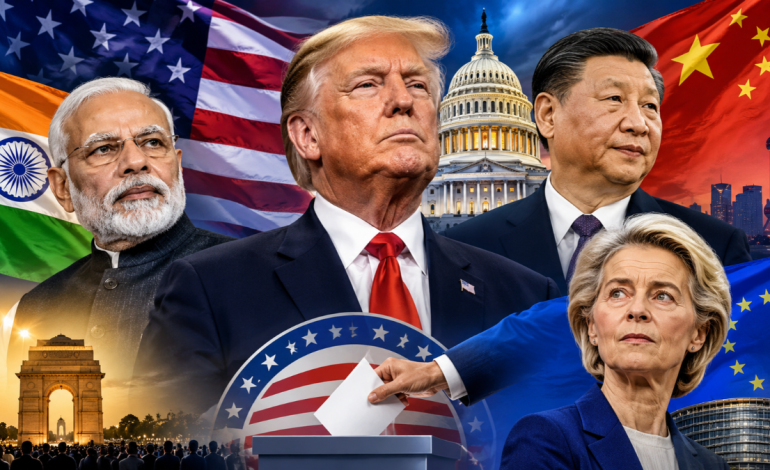
RNA Media illustration for representation.

New Delhi: Voting has begun in the United States on Tuesday for the midterm elections, which will decide whether the United States president, Donald Trump, and his Republican Party retains control of Congress. All 435 seats in the US house of representatives and 35 of the 100 senate seats are being contested. Voters in 36 states are also electing governors.
Polling began in Vermont at 5am local time (10 am GMT/3.30pm IST), followed by New York, New Jersey, Virginia and other eastern states. More than 59 million Americans had already voted through early voting, according to the University of Florida’s Election Lab. The results will decide which party controls Congress for the next two years.
If Democrats win control of either chamber, Trump could face greater opposition to his policies and more scrutiny of his administration. The outcome could also affect US relations with its allies and rivals, including Europe, China and India.
US midterms and India’s trade, defence ties
For India, the US election outcome matters mainly for trade and defence ties with the US. Differences over tariffs, market access and India’s relations with Russia have created challenges between the two countries.
Trade negotiations remain a key concern. India and the US announced a framework for an interim trade agreement in February, but talks have faced delays over tariffs and market access. RNA Media reported in October that trade negotiations between India and the US had stalled.
If Democrats gain control of either chamber of Congress, they could increase scrutiny of Trump’s tariff decisions and trade policies. However, this would not automatically remove duties on Indian goods or change the proposed trade agreement. Much will depend on how the Trump administration handles negotiations with India.
Defence cooperation is another important area. India and the US have expanded military exercises, defence technology partnerships and cooperation in the Indo-Pacific. Both countries are also concerned about China’s growing influence in the region.
A change in Congress could affect discussions on defence spending, military support and technology transfers. However, India’s strategic importance to the US is likely to keep defence cooperation on the agenda under either party.
For New Delhi, the main concern is whether political differences in Washington could slow down decisions on trade and defence. This could delay negotiations and agreements, even if the broader relationship between the two countries remains strong.
Will US election change Nato’s future?
European governments are concerned that a weaker Republican performance could lead Trump to take a tougher position towards Nato. The alliance is already facing pressure from Washington to increase its defence spending and take greater responsibility for European security.
The issue has gained importance ahead of a Pentagon review of American troop deployments in Europe. Reuters reported in August that the review was examining different force levels and options for changing the US military presence. Around 80,000 American troops were stationed across Europe at the time.
Any reduction could raise concerns about Nato’s ability to respond to security threats, particularly as Russia’s war in Ukraine continues. European officials are also watching US support for Kyiv, including weapons supplies funded by Nato members through the Prioritized Ukraine Requirements List, RNA Media reported.
According to reports, some Nato diplomats fear Trump could use America’s military presence and support for Ukraine as leverage in negotiations involving the Russian president, Vladimir Putin. However, the scale of any possible withdrawal remains uncertain.
US midterm impact on China policy
Both Republicans and Democrats support restrictions on China’s access to advanced technology, South China Morning Post reported. These include advanced AI chips and semiconductor equipment. The next Congress is also expected to consider new laws to tighten export controls and prevent sensitive US technology from reaching China.
If Democrats gain control of either chamber, they could increase scrutiny of Trump’s dealings with the Chinese president, Xi Jinping. This may include trade agreements, tariffs and any decision to ease restrictions on Chinese technology. Lawmakers are also discussing the “MATCH Act”, which seeks to align US allies’ restrictions on chipmaking equipment with Washington’s rules.
Taiwan will remain another key issue. Democrats could push for closer checks on US arms sales to the island and delays in weapons deliveries. Trump’s decision to hold back approval of a proposed $14-billion arms package for Taiwan may also face scrutiny.
However, Democrats do not have a single position on China. Some want tighter restrictions on technology exports, while others support more cooperation with Beijing on AI.
The newly elected members of Congress will take office in January 2027. Their arrival will determine how much legislative support Trump has during the final two years of his presidency.