

Russia rains missiles and drones on Kyiv and other Ukraine cities, kills 22
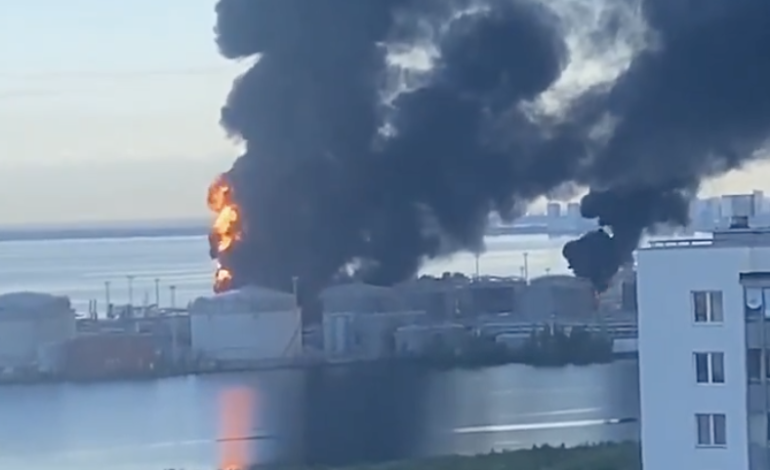
This screengrab taken from an amateur video shows buildings in Kyiv on fire after a Russian missile and drone strike.

New Delhi: Russia launched one of its most destructive aerial barrages of recent months against Ukraine on Tuesday, killing at least 22 civilians and wounding 138 others in a coordinated missile and drone assault that struck Kyiv, Dnipro, Kharkiv, Poltava, Zaporizhzhia and other cities – an attack that had been openly telegraphed to foreign embassies days earlier.
The assault began overnight and continued during the day, with Russia unleashing 73 missiles and 656 drones across Ukraine. Ukrainian air defences destroyed or suppressed 40 missiles and 602 drones. The sheer volume of projectiles overwhelmed interceptor capacity in critical moments, allowing ballistic missiles to pierce through to residential neighbourhoods.
Emergency rescue crews digging through the wreckage of apartment buildings pulled out the bodies of a 3-year-old child as well as those of a woman and her 8-year-old son in the central Ukrainian city of Dnipro. Officials said 16 people were killed in Dnipro and six in Kyiv. In Kharkiv, eight people were wounded. The Dnipro mayor, Borys Filatov, proclaimed Wednesday a day of mourning for the dead in his city. The announcement that came just 20 minutes before he said another drone had struck a residential building there at around 2.40pm.
In Kyiv, multiple explosions set off fires across various areas of the city. The city mayor, Vitali Klitschko, warned residents to stay in shelters, adding that power was knocked out in several districts of the capital. At least 81 people were wounded in Kyiv alone, according to Tymur Tkachenko, head of the Kyiv City Military Administration.
Meanwhile, a Ukrainian drone strike killed one person in Russia’s Kursk region, near the Ukrainian border, and another drone sparked a fire at an oil refinery in the southwestern Russian city of Krasnodar.
Russia’s warning
What made this attack particularly chilling was that it was not a surprise. Residents of Kyiv had been on edge for days after Russia warned last week that a massive aerial attack was coming and told foreign diplomats to leave. None appeared to heed the call, and no embassies immediately reported damage on Tuesday. The announcement – effectively a threat delivered through official channels – underscored Moscow’s confidence in its aerial campaign and its calculation that international outrage carries little operational cost.
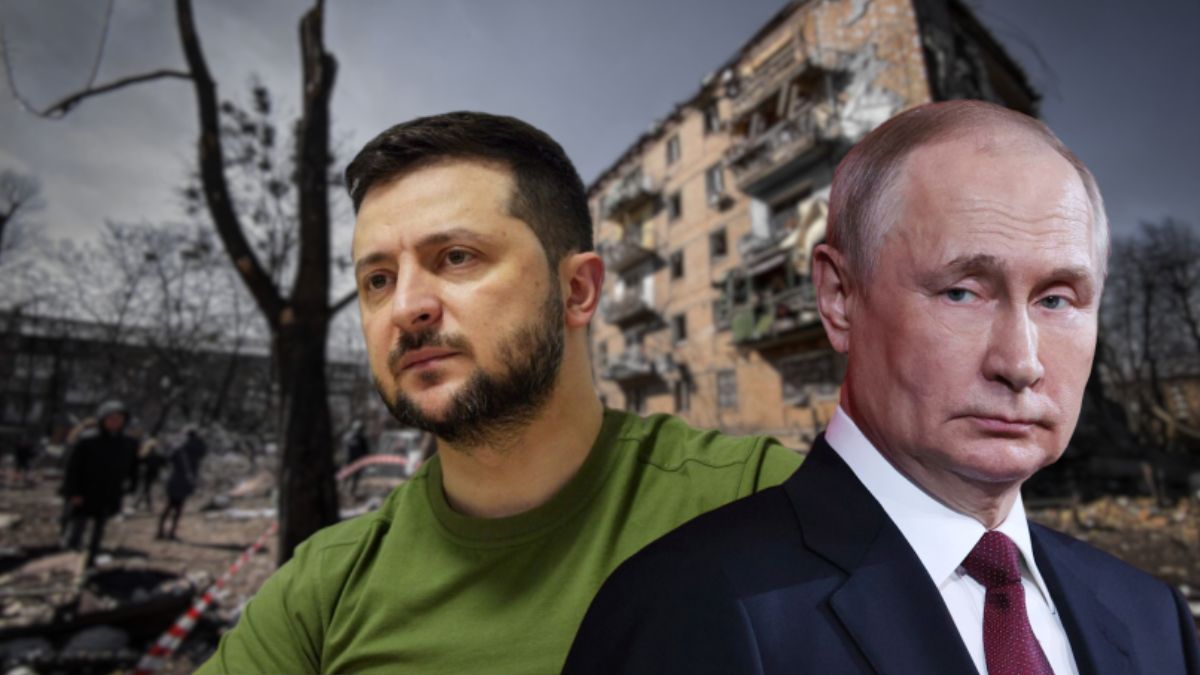
The Ukrainian president, Volodymyr Zelenskyy, appealed for more United States and European support, calling the attack “an explicit statement by Russia: If Ukraine is not protected from ballistic missiles and other missile strikes, those strikes will continue.” The US-led peace efforts have largely stalled, with no progress on key differences. Zelenskyy accepted an unconditional ceasefire demanded by the US president, Donald Trump, but the Russian president, Vladimir Putin, refused.
Starobilsk trigger
Tuesday’s assault did not emerge in a vacuum. It follows a sharp escalation in tit-for-tat strikes over the past fortnight, with a single incident in Russian-controlled erstwhile Ukrainian territory of Luhansk serving as the immediate flashpoint.
On the night of May 21–22, drones struck the dormitory and nearby educational buildings of the Starobilsk College of Luhansk State Pedagogical University. The death toll rose to 18, with many of the victims young women. Putin ordered his military to prepare options for retaliation after Moscow accused Kyiv of what it described as a deliberate drone strike on the teacher training college. Russia subsequently revised the death toll further upward; Putin said that the May 22 drone attack had killed 21 and given the war “a whole new dimension”.
Ukraine flatly denied targeting civilians. Kyiv said its intended target in Starobilsk was Russia’s Rubicon Centre for Advanced Unmanned Technologies – a defence ministry unit for advanced drone technology involved in drone operations against Ukraine – and that its forces were strictly observing international humanitarian law. The conflicting claims remain unverified by independent observers; several countries called for access to the site, while UN officials decried all attacks on civilians.
Pattern of escalation
Ukraine has not been passive. In the weeks preceding the Starobilsk attack, Kyiv carried out large-scale drone strikes on oil infrastructure inside Russia, seeking to degrade the revenue streams sustaining Moscow’s war effort. The Starobilsk strike was part of a broader pattern of Ukrainian long-range operations targeting what Kyiv describes as military facilities in Russian-controlled territory.
Days after the Starobilsk attack, Russia fired the hypersonic Oreshnik ballistic missile at Kyiv for the third time in the conflict, on May 24. The EU’s foreign policy chief, Kaja Kallas, called the use of the Oreshnik a “political scare-tactic” and “reckless nuclear brinkmanship”.
The Oreshnik missile is nuclear-capable, intermediate-range and can hit targets nearly 5,600 kilometres away. The apparent interception failures underscored Ukraine’s chronic shortage of air-defence missiles capable of downing ballistic weapons. Kyiv relies heavily on US Patriot air-defence systems to intercept such weapons, but interceptors remain in short supply and are among Ukraine’s most urgent requests to Western partners.
Putin has escalated Moscow’s aerial campaign in recent weeks in an apparent bid to take advantage of Ukraine’s shortage of US-made air-defence systems and persuade an increasingly pessimistic domestic audience that Moscow is prevailing in the four-year-old war. Western officials and analysts say Ukrainian drones have been pinning down Russian troops on the front line, choking Russian supply lines in occupied regions and disrupting oil facilities deep inside Russia that provide vital revenue for Moscow.
Ukraine’s foreign minister said on Tuesday that Russia’s strikes on Kyiv and other cities show that Putin is running out of military options in his years-long invasion. The claim reflects Kyiv’s political messaging as much as battlefield reality: Ukraine’s air defences remain overstretched, its western partners distracted by other crises, and its civilian population absorbing casualties that show no sign of abating.
For now, the skies over Ukraine’s cities offer little comfort. Russia has signalled it will continue striking, Ukraine has vowed to defend itself and retaliate, and the civilians caught between them – in dormitories, apartment blocks, and the rubble of Dnipro – bear the cost of a war neither side is willing to end on the other’s terms.