


Putin arrives in Delhi for BRICS as Modi talks focus on Su-57, trade and energy

Image courtesy: screen grab from a widely circulated video showing Putin’s arrival in New Delhi for BRICS Summit.

New Delhi: The Russian president, Vladimir Putin, arrived in New Delhi on Friday for the 18th BRICS Summit and is scheduled to hold bilateral talks with the prime minister, Narendra Modi, before the two-day leaders’ meeting. Defence cooperation and efforts to expand and rebalance economic ties are expected to dominate the talks as India and Russia review their special and privileged strategic partnership.
Putin was received by the minister of state for external affairs, Kirti Vardhan Singh, on arrival. The bilateral comes with several important strands of the relationship still in play, including the proposed Su-57 fighter sale, outstanding S-400 air-defence deliveries and efforts to take bilateral trade to $100 billion by 2030.
Kremlin spokesperson, Dmitry Peskov, said earlier this week that the proposed sale of Russia’s Su-57 fifth-generation fighter was on the agenda and acknowledged Indian interest in access to relevant production technologies. Those discussions remain at the proposal stage, with no purchase or technology-sharing arrangement publicly finalized.
As RNA Media had earlier reported, the Modi-Putin talks were expected to focus on the proposed Su-57 deal, wider defence cooperation and efforts to expand energy and trade ties.
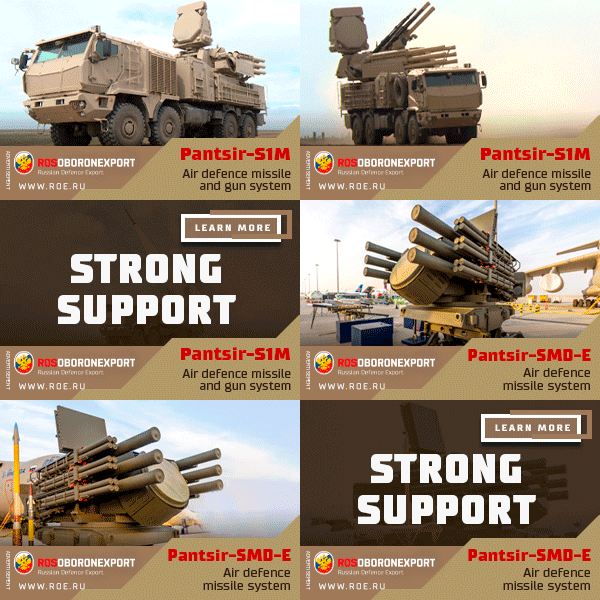
Peskov has also said Russia will fulfil its remaining obligations under India’s S-400 contract and that the two sides are exploring upgrades to the jointly produced Brahmos missile. The defence discussions therefore involve both completing existing commitments and examining the next phase of military technical cooperation, without a confirmed Su-57 agreement so far.
The economic challenge is different. Bilateral trade currently stands at around $60 billion, with both countries targeting $100 billion by 2030, but India is seeking a more balanced relationship after imports of Russian energy widened the trade gap.
On Thursday, the commerce and industry minister, Piyush Goyal, called for higher Indian exports to Russia in sectors including pharmaceuticals, engineering goods, chemicals, textiles, food and marine products and auto components. New Delhi has been pressing for greater market access to ensure that the expansion in trade is not driven primarily by Russian exports.
Energy, payments and nuclear ties support wider relationship
Russian crude oil and fertilizer supplies remain important components of bilateral trade. Reuters reported this month that around 96 per cent of India-Russia trade is now settled in rupees and rubles, after earlier payment difficulties linked to the trade imbalance and limited rupee convertibility.
Peskov separately said Moscow was not pursuing de-dollarization as an objective and remained open to payment mechanisms acceptable to both sides.
Civil nuclear cooperation remains another established pillar. Four additional Russian designed units are under construction at the Kudankulam Nuclear Power Plant after the first two entered operation, while India and Russia have discussed a second nuclear-power site, localization of equipment and further Russian designed projects.
The Ukraine conflict will remain part of the diplomatic backdrop. During their August 31 meeting in Bishkek, Modi reiterated that dialogue and diplomacy were the way forward and the two leaders reviewed cooperation across defence, energy, transport and other sectors.
Beyond the bilateral talks, Putin is scheduled to address the plenary session of the BRICS business forum and visit the Innoprom exhibition with Modi. The engagements will add a business and technology component to a visit already focused on defence, trade and energy cooperation.
Putin will join other leaders at the BRICS Summit in New Delhi on September 12 and 13. Friday’s bilateral is expected to review ongoing defence commitments and the next phase of economic cooperation before both leaders move into the wider BRICS programme.

1 Comment
[…] International September 11, 2026 […]