





Pakistani man gets 27.5 years in jail for Iran-backed plot to kill Trump; Biden, Haley were also targets
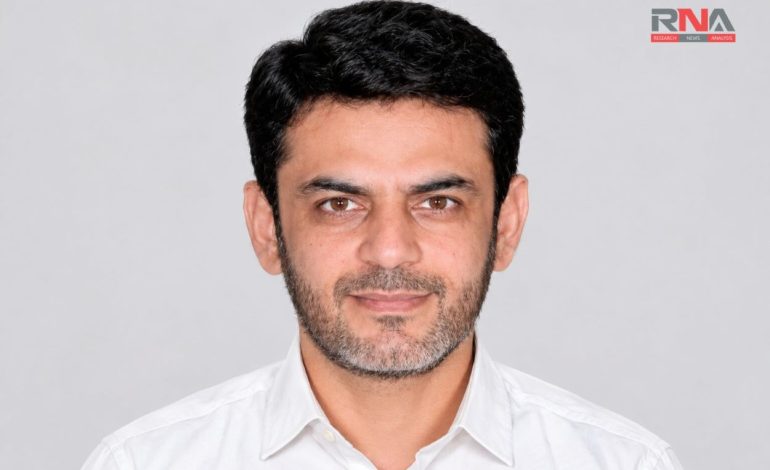
Asif Merchant.

New Delhi: A US federal court has sentenced a Pakistani national to 27 years and six months in prison for orchestrating an Iran-linked conspiracy to assassinate the US president, Donald Trump, and potentially other senior American political figures during the 2024 presidential election campaign. The sentencing on November 17 brings a major terrorism prosecution to a close, exposing how an alleged Iranian intelligence operation sought to recruit contract killers on American soil in retaliation for Washington’s assassination of a senior Iranian military commander.
The convict, Asif Raza Merchant, 48, received a 330-month prison sentence from the US district judge, Eric R Komitee, in Brooklyn, New York, after a federal jury found him guilty in March this year of murder-for-hire and attempting to commit an act of terrorism transcending national boundaries. According to the US justice department, Merchant had operated under the direction of Iran’s Islamic Revolutionary Guard Corps (IRGC), which allegedly wanted to avenge the killing of its influential commander, Qasem Soleimani, in an American drone strike in Baghdad in January 2020.
Although Trump was believed to be the principal target, prosecutors said the conspiracy potentially extended to the former US president, Joe Biden, and the former American ambassador to the United Nations, Nikki Haley, both of whom were politically prominent during the 2024 election cycle. Merchant acknowledged during his trial that his Iranian handler had discussed all three names, although he maintained that he had never received a definitive instruction identifying which politician should be killed.
The US attorney general, Todd Blanche, described Merchant as an Iranian operative who had entered the United States to organize Trump’s assassination, declaring that Washington would not tolerate foreign-directed attacks against its political leadership. However, the Iranian government has consistently denied involvement in plots to assassinate American officials, leaving the prosecution’s findings and Tehran’s rejection of the allegations at odds.
How the assassination conspiracy unfolded
According to federal prosecutors’ account of the investigation, Merchant began developing links with the IRGC around 2022, when visits to Iran for religious pilgrimages brought him into contact with an intelligence operative identified as Yousef Merhardad. Over approximately 18 months, he reportedly met the handler around 15 times in Tehran, receiving instructions in counterintelligence techniques and preparations for a politically motivated killing in the United States.
Prosecutors said Merchant was instructed to recruit professional criminals, preferably people connected with organized crime, who could assassinate an American politician during a campaign rally. After spending a week in Iran, he travelled to the United States in April 2024 and approached an acquaintance for assistance, unaware that the individual would alert the Federal Bureau of Investigation.
The acquaintance became an FBI informant, allowing investigators to monitor Merchant’s activities as the assassination arrangements developed. During one recorded conversation, Merchant reportedly used objects placed on a napkin to demonstrate how an attacker could approach and kill a politician at a public gathering.
The investigation subsequently became an undercover operation when Merchant was introduced to individuals he believed were professional assassins but who were actually FBI agents. He held three meetings with the supposed contract killers and eventually paid them $5,000 as an advance, money prosecutors said he had obtained through relatives overseas.
Investigators also recovered electronic evidence showing his interest in Trump’s campaign activities, including internet searches concerning political rallies and the location of a Trump event in New Jersey. Merchant was arrested in Richmond, Texas, on July 12, 2024, as he prepared to leave the United States for Pakistan, effectively ending the conspiracy before any assassination attempt could be carried out.
His arrest came just one day before an unrelated gunman opened fire at Trump’s election rally in Butler, Pennsylvania, grazing his ear and killing a spectator. American authorities have not established any connection between Merchant’s conspiracy and that shooting, a distinction that remains important in assessing the different threats Trump faced during the election campaign.
Merchant claims Iranian threats forced him
During his trial, Merchant acknowledged participating in the conspiracy but argued that Iranian intelligence operatives had pressured him into cooperating by threatening the safety of his relatives living in Iran. He maintained that he had expected American authorities to discover the operation before anyone was harmed and believed cooperation with investigators might eventually help him secure immigration benefits.
His defence lawyers portrayed him as a businessman with extensive banking experience in Pakistan rather than an ideological extremist committed to political violence. Prosecutors disputed that explanation, pointing to his repeated contacts with Iranian intelligence, operational preparations and social-media activity expressing hostility towards Trump and the United States.
At sentencing, Komitee acknowledged that Merchant may have genuinely feared for his relatives but concluded that the evidence also demonstrated a substantial willingness to harm the United States. Although prosecutors had sought life imprisonment, the judge imposed a shorter sentence, and Merchant’s lawyers subsequently indicated that he intended to appeal the conviction.
Soleimani’s killing and Iran’s retaliation campaign
The origins of the conspiracy lie in the January 3, 2020, American drone strike near Baghdad international airport that killed Soleimani, the commander of the IRGC’s Quds Force and one of Iran’s most influential military strategists. The operation, authorized during Trump’s first presidency, severely escalated tensions between Washington and Tehran and prompted repeated Iranian threats to retaliate against those responsible.
Soleimani had overseen Tehran’s network of military partnerships and allied armed organizations across West Asia, making his death both a strategic setback and a powerful political grievance for Iran’s leadership. American officials have subsequently accused Iranian intelligence organizations of pursuing retaliatory operations against former senior US officials, including individuals associated with the decision to eliminate him.
The Merchant prosecution is particularly significant because investigators obtained evidence of an actual murder-for-hire arrangement rather than relying exclusively on intelligence assessments about possible threats. Nevertheless, the conviction establishes Merchant’s criminal responsibility under American law and does not, by itself, amount to a judicial conviction of named senior Iranian officials.
The sentencing also comes against a background of renewed confrontation between Washington and Tehran, including continuing concerns over threats to American government personnel. As RNA Media reported on November 17, US intelligence has reportedly identified possible Iranian plans targeting senior administration officials, although the available assessments do not establish that every alleged operation has been authorized or is imminent.
The same tensions have prompted heightened security precautions around senior American policymakers, with RNA Media separately reporting that the US treasury secretary, Scott Bessent, relocated to protected military accommodation following reported assassination threats. Such developments illustrate Washington’s concern that its confrontation with Iran could extend beyond conventional military operations to targeted violence against political and administrative figures.
For American counterterrorism agencies, the Merchant case demonstrates the effectiveness of human intelligence and undercover investigations in disrupting overseas-directed assassination conspiracies before they reach the execution stage. For Washington and Tehran, however, the conviction adds another contentious chapter to a confrontation in which military retaliation, intelligence operations and threats against senior officials remain closely intertwined.


