

Myanmar military airstrikes kill civilians at wedding venue as humanitarian crisis in country worsens
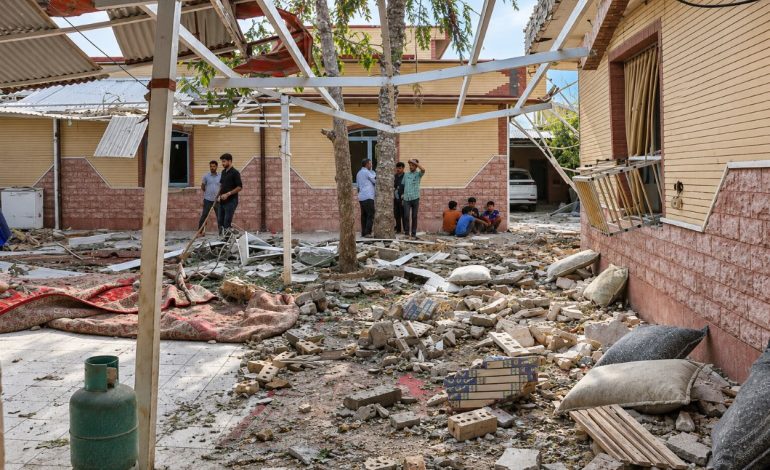
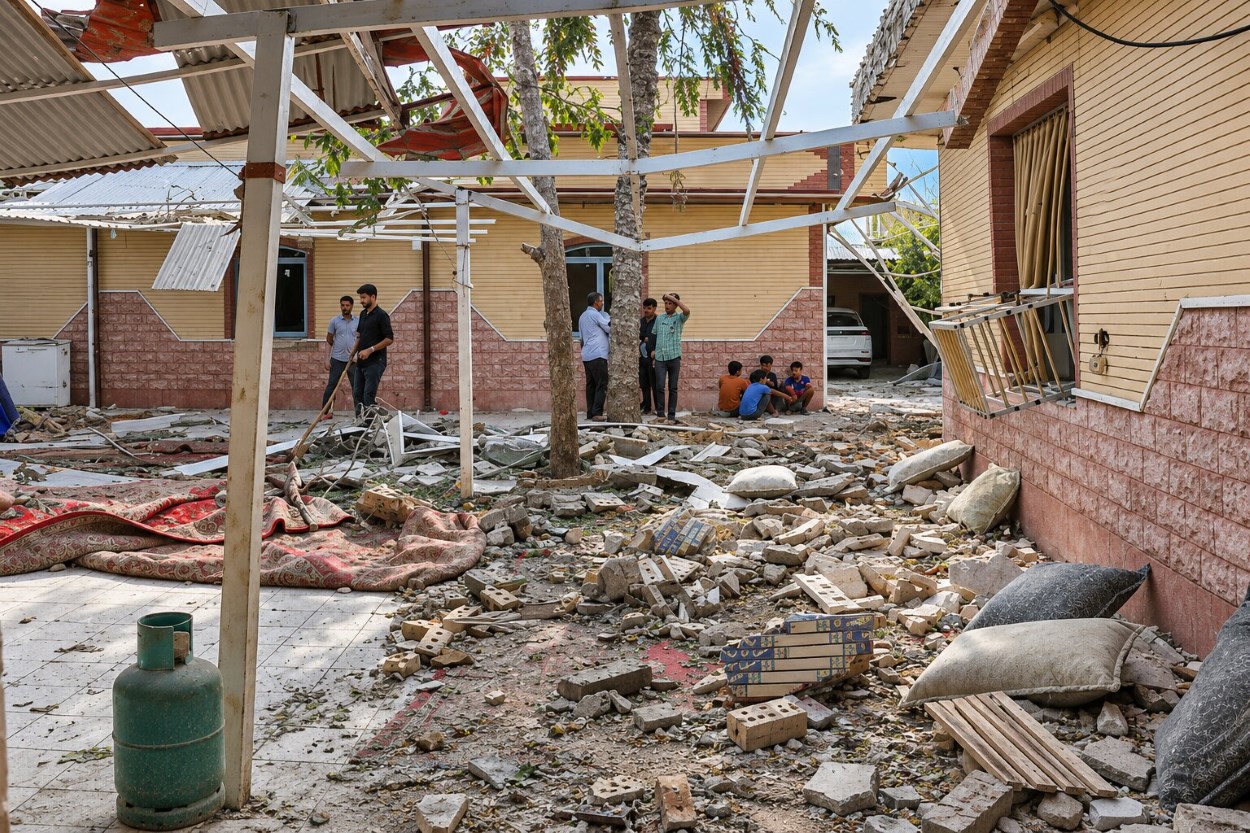
The site of an airstrike in Myanmar, on November 28, 2026. (Photo via X)

New Delhi: An airstrike by the Myanmar military on a wedding venue near the border between Shan and Karenni states on Saturday killed at least 21 people, including five children, and wounded more than 40 others, according to a local rescue organization. The bombing was part of a fresh wave of military attacks across the conflict-ravaged country, coming barely nine days after the international court of justice (ICJ) delivered a landmark judgment holding Myanmar responsible for genocide against its Rohingya minority.
The attack on Saturday took place in the Moe Bye area, also known as Mobye, where preparations were underway for the wedding of two internally displaced people. The region has been a major theatre of confrontation between government troops and armed resistance groups since the military overthrew the elected government of Aung San Suu Kyi in February 2021.
According to an AFP report carried by NDTV, the victims included several women and children, while rescue workers were searching for missing people. The Nway Oo Yaung Chi Foundation, which provides humanitarian assistance to displaced communities, gave the casualty figures.
Myanmar-based news outlets Narinjara and New Day Myanmar also reported the bombing, citing local sources and rescue personnel. Initial casualty estimates varied, and the full extent of the losses remained unclear.
Fresh wave of military airstrikes
The wedding venue bombing coincided with separate airstrikes in the western state of Rakhine, where a market in the historic town of Mrauk-U was among the civilian establishments hit. The head of a local funeral organization told AFP that nine people had died in the market bombing, while further fatalities were reported elsewhere.
The latest violence followed an attack on a school and monastery in the central Magway region on Thursday, which also resulted in civilian and resistance fighter deaths. Myanmar’s opposition National Unity Government (NUG) blamed the military for the attack, which was separately reported by Reuters.
The military was not immediately available for comment on Saturday’s bombings, AFP reported. Independent verification of battlefield claims remains difficult in Myanmar because of restrictions on journalists, communications disruptions and limited access to conflict zones.
Why Myanmar’s military is increasingly relying on airpower
The intensification of aerial bombardment reflects a broader shift in the conduct of Myanmar’s civil war. Having suffered substantial territorial losses to ethnic armed organizations and pro-democracy resistance forces, the military has increasingly relied on its technological superiority to compensate for weaknesses in its ground forces.
The resistance made significant territorial gains following the launch of Operation 1027 in October 2023 by the Three Brotherhood Alliance. However, the military has subsequently regained ground in several regions through renewed offensives, compulsory military recruitment and extensive use of airpower.
An assessment by the Armed Conflict Location and Event Data (ACLED) indicates that the military has sought to re-establish its authority in several border states during 2026. These include Chin, Kachin, Kayin and Rakhine, where ethnic armed organizations exercise considerable territorial control.
In Rakhine, the military launched a renewed offensive in September to recover territory from the Arakan Army (AA), one of Myanmar’s most powerful ethnic armed organizations. ACLED’s analysis of the Rakhine conflict has documented a recurring pattern of aerial attacks affecting civilian marketplaces.
The absence of effective air defences among most resistance groups remains a significant disadvantage for the opposition. For civilians living in contested territories, however, the military’s growing dependence on aerial warfare has made even locations far removed from active ground combat increasingly unsafe.
In August, a United Nations-backed investigation highlighted an escalation in military aerial attacks affecting civilian populations. Under international humanitarian law, all parties to an armed conflict are required to distinguish between civilians and combatants and take feasible precautions to minimize civilian harm.
Bombings follow landmark genocide verdict
The latest escalation comes at a particularly sensitive diplomatic moment for Myanmar’s military-backed administration. On November 19, the ICJ ruled that Myanmar had violated the Genocide Convention through its persecution of the predominantly Muslim Rohingya population during military operations in northern Rakhine in 2017.
The judgment, delivered in a case instituted by The Gambia in 2019, established Myanmar’s responsibility as a state under international law. The court also ordered Myanmar to take measures to prevent further violations, ensure accountability and provide reparations to the victims, according to the Independent Investigative Mechanism for Myanmar.
However, the Myanmar president, Min Aung Hlaing, who led the 2021 military coup and assumed the presidency earlier this year following widely criticized elections, has indicated that his administration would not implement all the court’s directives. Reuters reported on Thursday that the government continued to defend its earlier military operations as counterterrorism measures.
Although the ICJ judgment concerns the persecution of the Rohingya, rather than the ongoing civil war in its entirety, Saturday’s bombings have renewed questions about civilian protection and military accountability in Myanmar.
A worsening crisis with implications for India
Myanmar’s conflict has increasingly developed into a regional humanitarian and security challenge. According to Unicef’s mid-year humanitarian assessment for 2026, some 16.2 million people, including 4.9 million children, required humanitarian assistance.
By the end of June, nearly 3.8 million people had been displaced within Myanmar, while another 1.6 million were living as refugees or asylum seekers in neighbouring countries. Conflict, economic deterioration and disruptions to healthcare and education have compounded the humanitarian emergency.
For India, which shares a 1,643-kilometre land border with Myanmar across Arunachal Pradesh, Nagaland, Manipur and Mizoram, the continuing instability carries significant strategic implications. Apart from refugee movements and cross-border security concerns, the conflict threatens the progress of important connectivity initiatives, including the Kaladan Multimodal Transit Transport Project and the India-Myanmar-Thailand Trilateral Highway.
The deterioration of security in Rakhine is particularly significant because of the state’s geographical proximity to Bangladesh and its importance to India’s access to Southeast Asia through the Bay of Bengal.
Nearly six years after the military takeover, Myanmar remains without a credible nationwide political settlement. The bombing of a wedding venue involving families already uprooted by conflict illustrates how the consequences of the country’s prolonged civil war continue to fall disproportionately on its civilian population.