


Iran reaffirms nuclear treaty commitments as hardliners push for atomic bomb
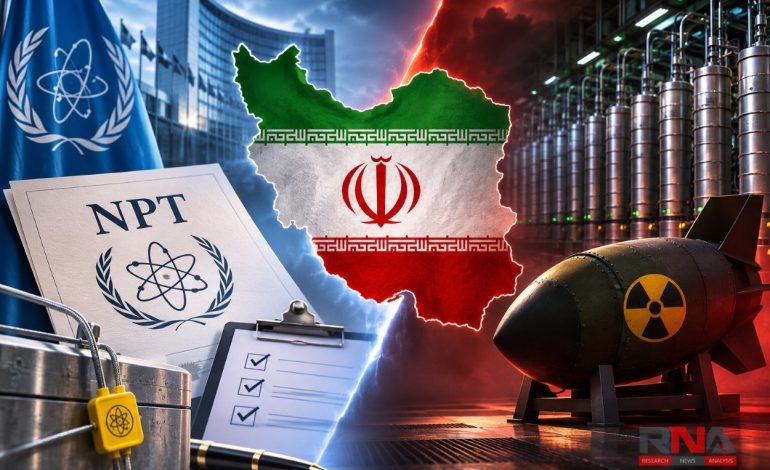
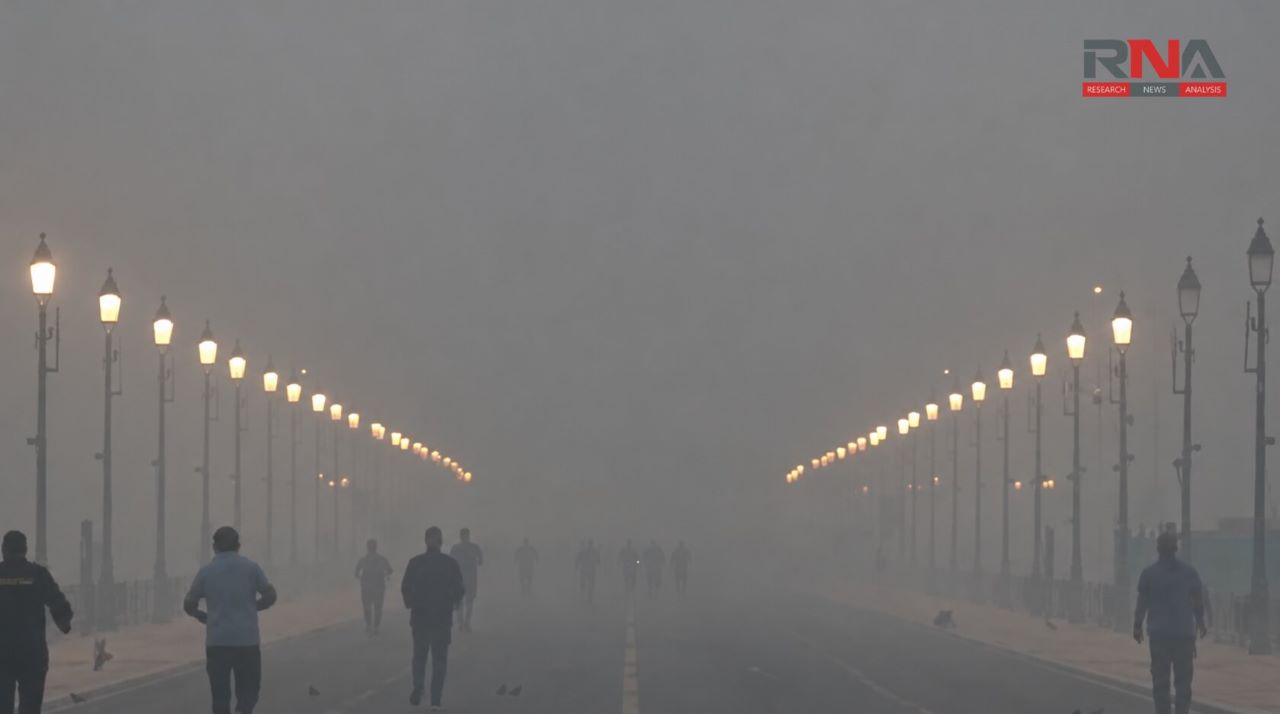
RNA Media illustration for representation.

New Delhi: Iran has reaffirmed its commitment to the Nuclear Non-Proliferation Treaty (NPT) despite growing demands from influential political and military figures to reconsider its longstanding opposition to nuclear weapons following repeated American and Israeli attacks. The declaration comes as Tehran restricts international inspections of its most sensitive nuclear installations, raising fresh concerns about the future of its atomic programme and the prospects for a negotiated settlement with Washington.
The spokesman of Iran’s foreign ministry, Esmaeil Baghaei, said on Tuesday that Tehran had neither withdrawn from the treaty nor suspended its obligations under it. However, he argued that military strikes against Iranian nuclear infrastructure had fundamentally altered the circumstances under which the country could cooperate with the International Atomic Energy Agency (IAEA), the United Nations’ nuclear watchdog.
Baghaei maintained that Iran remained committed to peaceful nuclear development but could no longer permit inspections under arrangements that disregarded its security concerns. According to the Iranian Tasnim News Agency, he also accused the IAEA leadership of failing to adequately address the attacks on facilities previously monitored under international safeguards.
The spokesman nevertheless confirmed that IAEA inspectors had recently visited the Russian-built Bushehr nuclear power station, which generates electricity and escaped direct bombardment during the conflict. Although American strikes damaged areas around the installation and prompted the partial evacuation of Russian personnel, Bushehr remains accessible to international inspectors, unlike the strategically important enrichment facilities at Natanz and Fordow.
The distinction is central to the increasingly contentious nuclear dispute because access to a civilian power station provides little reassurance about activities at Iran’s principal uranium-enrichment installations. The IAEA’s director general, Rafael Grossi, warned the UN Security Council in late October that the agency could no longer reliably verify Iran’s nuclear material without the information and access it had repeatedly requested.
The disagreement has intensified following American and Israeli attacks on Iranian nuclear facilities during the 12-day conflict in June 2025 and the wider military campaign launched on February 28 this year. The assassination of Iran’s former supreme leader, Ali Khamenei, whose religious ruling prohibited nuclear weapons, has further encouraged hardliners to question whether Tehran should continue relying exclusively on conventional military deterrence.
Among those advocating a reassessment is Iran’s senior security official, Mohsen Rezaei, who has repeatedly raised the possibility of abandoning the NPT. The spokesman of the Islamic Revolutionary Guard Corps (IRGC), Hossein Mohebbi, has also indicated that the organization would make the necessary preparations if the country’s leadership authorized a fundamental change in its nuclear doctrine.
Such declarations do not establish that Iran has decided to manufacture nuclear weapons, but they indicate a growing debate over whether acquiring an atomic deterrent could discourage further foreign attacks. Under the NPT, Iran is entitled to develop nuclear technology for peaceful purposes but is prohibited from manufacturing or acquiring nuclear weapons, with its activities subject to international safeguards.
Withdrawal from the treaty is legally possible under Article X, which allows a member state to leave after giving three months’ notice when extraordinary circumstances threaten its supreme national interests. However, such a decision would deepen international suspicions, potentially invite additional sanctions and remove an important framework for independently verifying Iran’s nuclear activities.
The uncertainty is particularly serious because Iran possesses a substantial stockpile of highly enriched uranium, including material enriched to 60 per cent purity – considerably above civilian power-generation requirements and approaching the roughly 90 per cent level associated with weapons-grade material. The IAEA has reported a stockpile of approximately 440.9kg enriched to that level, although disrupted inspections have complicated efforts to establish its present condition and whereabouts.
Diplomatic efforts have continued alongside the military confrontation, with Qatar and Pakistan attempting to narrow differences between Tehran and Washington. A Qatari-backed proposal reportedly envisages renewed inspections of damaged nuclear installations in exchange for American steps to ease restrictions on Iran, including arrangements for reopening the Strait of Hormuz and releasing frozen Iranian funds.
Iran has insisted that its enriched uranium must remain within the country, although it has indicated a willingness to reduce enrichment levels under international supervision. Tehran also maintains that any comprehensive settlement must address sanctions, compensation for wartime damage and wider regional security arrangements rather than concentrating exclusively on its nuclear activities.
The latest diplomatic signals remain contradictory. On November 10, Rezaei denied that negotiations with Washington were taking place, insisting that Iran’s conditions must first be met, even as the American president, Donald Trump, suggested after discussions with Qatari mediators that major hostilities were unlikely to resume soon.
The dispute has already acquired wider implications for the international non-proliferation system, particularly after the IAEA board of governors voted in September to refer Iran’s safeguards non-compliance to the UN security council. As the Arms Control Association reported, Russia and China opposed the decision, reflecting divisions among major powers over how Tehran should be brought back into compliance.
For India, the confrontation carries implications extending beyond nuclear proliferation, particularly because prolonged instability around the Strait of Hormuz threatens energy supplies, commercial shipping and economic security across the Indian Ocean region. Any agreement capable of restoring international inspections, reducing the likelihood of renewed military strikes and reopening maritime trade routes would therefore have consequences well beyond Iran’s immediate neighbourhood.
The central question is whether Iran can retain its declared commitment to nuclear non-proliferation while withholding access to facilities essential for independent verification. Unless Tehran and Washington reach a broader security arrangement addressing both Iran’s nuclear capabilities and its concerns about further attacks, the divide between its official nuclear doctrine and increasingly assertive hardline demands is likely to widen.


