

US Congress blocks Pete Hegseth impeachment over Iran war, but fresh showdown looms
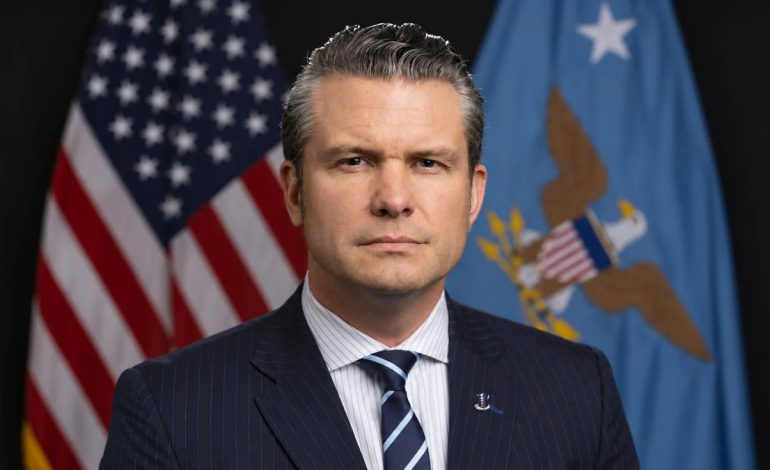
Pete Hegseth. (Image courtesy: Wikimedia Commons)

New Delhi: The Republican-controlled US House of Representatives has blocked an attempt to impeach the defence secretary, Pete Hegseth, over allegations that he violated congressional authority by conducting military operations against Iran and engaging in other unlawful actions. The decision, taken on Tuesday, November 10, 2026, provides temporary relief to one of the most controversial members of the president, Donald Trump’s, administration but leaves him facing renewed scrutiny when Democrats assume control of Congress in January.
The House voted 211–204 to send eight articles of impeachment to its judiciary committee, effectively preventing them from advancing during the current congressional session. The resolution was introduced by Thomas Massie, a Republican representative from Kentucky and an outspoken critic of the administration’s military policies, who was the only member of his party to oppose the procedural manoeuvre.
The outcome exposed the limits of Republican dissent over the administration’s handling of the Iran conflict, which has entered its ninth month and become an increasingly divisive issue in American politics. Although several Republicans have expressed reservations about the war and Hegseth’s leadership, none joined Massie in supporting the impeachment initiative at Tuesday’s vote.
The controversy has acquired greater political significance following the November 3 midterm elections, in which Democrats secured control of both chambers of Congress. The results have weakened the administration’s legislative position and raised the prospect of congressional investigations into military decisions taken during Trump’s second presidency.
Eight charges extending beyond the Iran war
At the centre of the impeachment resolution is the allegation that Hegseth authorized and sustained military operations against Iran without the approval required under the US Constitution and the War Powers Resolution of 1973. The legislation establishes procedures governing the deployment of American forces into hostilities and generally requires their withdrawal within 60 days, with a possible additional 30-day period, unless Congress authorizes continued operations or other statutory conditions apply.
Massie contends that the Pentagon disregarded these restrictions by maintaining the campaign against Iran beyond the permitted period and continuing military operations despite congressional opposition. His 34-page impeachment resolution, introduced on November 9, contains three separate articles concerning the Iran war and the administration’s alleged disregard for Congress’s constitutional authority.
The remaining five articles address other aspects of Hegseth’s conduct, including alleged failures to protect civilians during military operations and the use of lethal force against suspected drug-trafficking vessels in the Caribbean. Massie also accused the defence secretary of involvement in the seizure of Venezuela’s former president, Nicolás Maduro, retaliation against the Democratic senator, Mark Kelly, over protected political speech, and unauthorized military operations in Yemen.
The allegations concerning maritime strikes are particularly serious because they question whether the administration improperly substituted military force for conventional law-enforcement procedures. Massie’s resolution alleges that the operations resulted in at least 243 deaths, although the accusations remain politically contested and have not been established through an impeachment trial.
Hegseth rejects allegations
Speaking at the Pentagon hours before the congressional vote, Hegseth dismissed the impeachment effort as politically motivated “farce” and “stunt” and defended the legality of the administration’s military operations. He described the proceedings as a farce and argued that disagreements over defence policy did not constitute grounds for removing a cabinet secretary from office.
The White House reinforced that position through an official statement rejecting the resolution as an attempt to undermine national security and the armed forces. Trump subsequently celebrated the congressional outcome, praising Hegseth and describing the failed impeachment initiative as a vindication of his defence secretary’s record.
Hegseth also defended the administration’s campaign against Iran, maintaining that American military operations had severely weakened Tehran’s armed forces. However, the conflict remains unresolved, with the strategic contest around the Strait of Hormuz continuing to affect regional security and international energy markets.
Democrats prepare for another confrontation
The Republican victory in the House may prove temporary because Democrats will acquire considerably greater investigative and legislative powers when the new Congress convenes in January. Hakeem Jeffries, the Democratic leader in the House, has already supported impeachment, accusing Hegseth of misusing his authority and damaging American national security.
Nevertheless, impeachment and removal from office are separate constitutional processes, requiring a simple majority in the House to approve charges and a two-thirds majority in the Senate to secure conviction. Even with Democratic control of both chambers, obtaining sufficient Senate votes to remove Hegseth would remain a formidable political challenge.
There is also a historical dimension to the controversy, as no US defence secretary has previously been impeached under the department’s present name. The closest precedent dates to 1876, when the House impeached the secretary of war, William Belknap, over corruption allegations, although the Senate subsequently acquitted him.
For Washington, the immediate dispute is therefore about more than Hegseth’s political survival because it concerns the constitutional balance between presidential authority and congressional oversight of military operations. Tuesday’s vote has prevented an immediate impeachment confrontation, but it has neither resolved the accusations against the Pentagon chief nor settled the wider argument over America’s continuing war in Iran.