
Trump tightens Iran blockade as Iraq gasfield attack deepens West Asia crisis. Can Qatar avert another round of war?
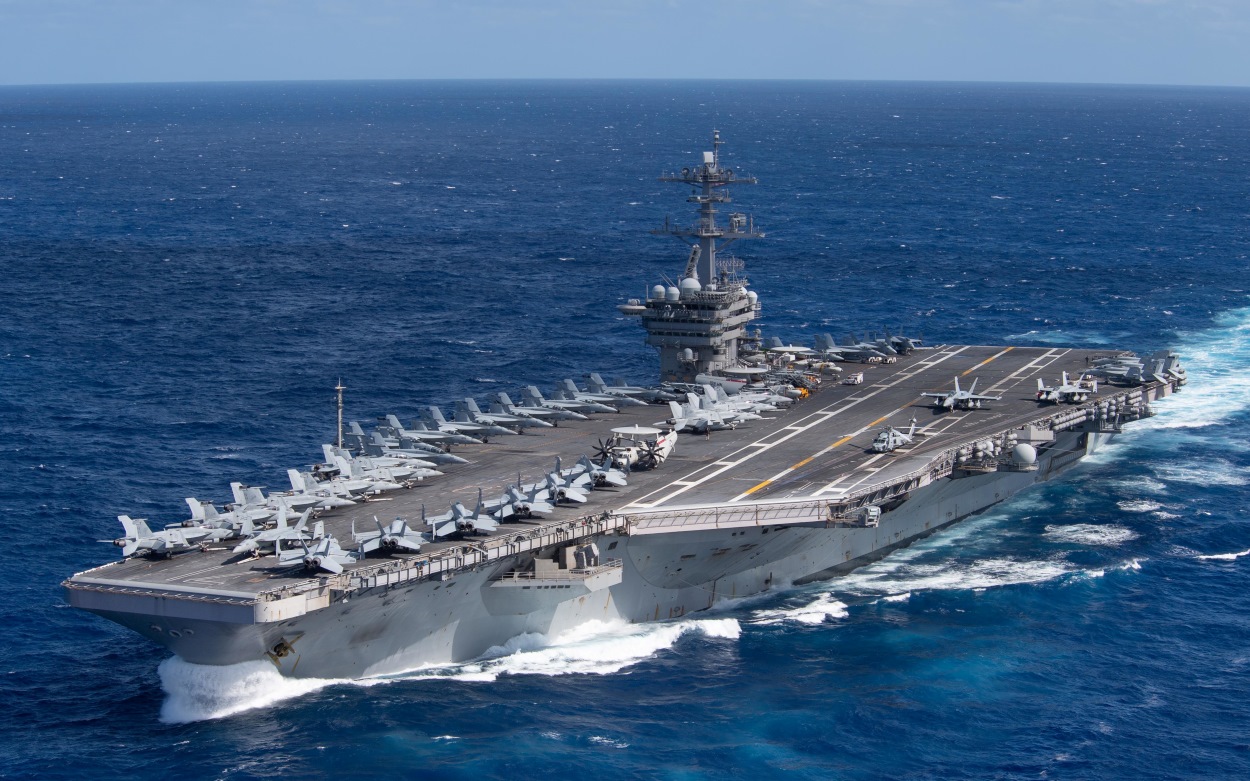
The US Navy aircraft carrier USS Theodore Roosevelt is heading towards the gulf and expected to be in the region within a week. (Photo: Wikipedia/US Navy)

New Delhi: The United States has widened its economic offensive against Iran by targeting the country’s overland supply routes, even as a devastating drone attack on a major gasfield in northern Iraq has exposed the growing vulnerability of West Asia’s energy infrastructure. The developments come as Washington and Tehran explore renewed diplomatic engagement through Qatar, although deep disagreements over sanctions, maritime security and Iran’s nuclear programme continue to obstruct a settlement.
The US president, Donald Trump, has said Washington’s latest restrictions on Iranian land-based trade are in effect, extending an existing naval blockade designed to weaken Tehran’s military capabilities and financial resources. However, Trump has also indicated that another major round of American airstrikes remains unlikely if negotiations produce progress on Iran’s nuclear activities and the reopening of the strategically vital Strait of Hormuz.
The latest American initiative, designated Task Force Iron Gate, was announced by US Central Command (Centcom) on Saturday. Based in Tampa, Florida, the approximately 20-member military-civilian unit will coordinate with American government agencies to identify and disrupt the movement of weapons, dual-use technologies, sanctioned goods and revenue across Iran’s land borders and the Caspian Sea.
Unlike a conventional military blockade involving troops physically sealing international borders, Iron Gate appears primarily designed to strengthen intelligence-sharing, sanctions enforcement and the monitoring of transport networks. Washington has not publicly explained how the restrictions will be implemented or whether they could involve direct military operations against shipments travelling through neighbouring countries.
The initiative reflects an important limitation of the existing maritime blockade: Iran has continued obtaining strategically significant materials through alternative supply chains despite restrictions on its seaborne commerce. A Reuters investigation published in October revealed that Iranian military-linked organizations had imported at least $2 billion worth of equipment, explosives and heavy vehicles since January 2025 through networks involving Russia, China and Central Asia.
American officials estimate that the naval blockade has already prevented Iran from exporting more than $25 billion worth of crude oil. Nevertheless, restricting its remaining trade corridors could prove considerably more complicated because overland shipments involve sovereign neighbouring states whose cooperation Washington cannot automatically assume.
Drone attack cripples electricity supplies in Iraqi Kurdistan
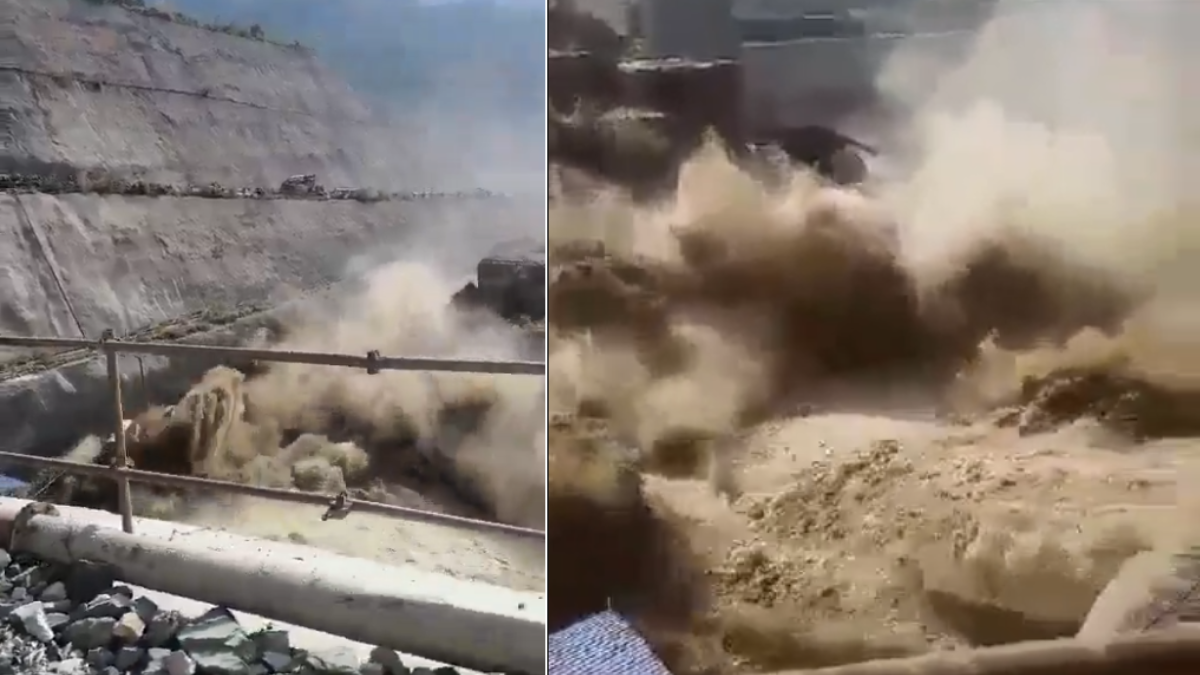
Meanwhile, a drone attack on the Khor Mor gasfield in Iraq’s semi-autonomous Kurdistan region on Sunday night caused a fire, halted production and disrupted electricity supplies across northern Iraq. Regional officials reported that more than 70 per cent of the Kurdish region lost power following the strike, which interrupted gas deliveries to several major generating stations.
The facility, operated by Pearl Petroleum, whose shareholders include the United Arab Emirates-based Dana Gas and Crescent Petroleum, supplies fuel essential to the region’s electricity network. According to reports, the attack affected approximately 2.8 gigawatts of electricity generation, although the operator subsequently extinguished the fire and reported no injuries among its personnel.
No organization has claimed responsibility, and investigators have yet to establish who launched the drone. Although Kurdish authorities have previously blamed Iran-aligned armed groups for attacks on energy installations, there is no independently established evidence connecting Tehran to this particular incident.
The strike nevertheless illustrates Iraq’s precarious position in the regional confrontation, with Baghdad attempting to maintain relations with both Washington and Tehran while armed factions operate within its territory. Repeated attacks on energy facilities also threaten foreign investment and could undermine efforts to improve electricity availability in a country already struggling with persistent infrastructure weaknesses.
Qatar pushes diplomacy
Diplomatic efforts intensified on Monday, with Qatar’s prime minister and foreign minister, Sheikh Mohammed bin Abdulrahman Al Thani, scheduled to meet Trump and the US vice-president, JD Vance, in Washington. Qatar has emerged as a principal intermediary between the adversaries, and discussions reportedly centre on a proposed two-day arrangement intended to create conditions for more substantial negotiations.
Under the proposal, Washington would lift its naval blockade and release some frozen Iranian assets, with Tehran subsequently reopening the Strait of Hormuz and facilitating renewed international nuclear inspections. However, the US secretary of state, Marco Rubio, has questioned the practicality of Iran’s conditions and warned that a diplomatic breakthrough is not imminent.
Iran’s Foreign Ministry spokesman, Esmaeil Baghaei, defended Tehran’s position on Monday, arguing that lifting sanctions, ending the blockade and stopping hostilities were reasonable prerequisites for negotiations. He also criticized American pressure on Iraq to restrict cross-border trade with Iran, underscoring how Washington’s expanded economic campaign could complicate Tehran’s relations with neighbouring countries.
The conflict, which began with American and Israeli strikes on February 28, has continued through intermittent attacks despite repeated diplomatic initiatives. Iranian media reported fresh American strikes on Qeshm Island, near the Strait of Hormuz, while attacks on commercial shipping and renewed Houthi operations against Saudi Arabia have heightened concerns about another regional escalation.
For India, the continuing confrontation carries substantial strategic and economic implications because the Gulf remains crucial to its energy security, maritime commerce and the welfare of millions of Indian expatriates. Prolonged disruption around the Strait of Hormuz, coupled with attacks on regional energy infrastructure, could increase shipping costs, complicate oil procurement and add uncertainty to New Delhi’s relations with both Iran and the Gulf Arab states.
The immediate question is whether Washington’s increasingly restrictive economic measures will give it greater negotiating leverage or persuade Tehran that further concessions would invite additional pressure. With military operations continuing alongside mediation, the outcome of Qatar’s diplomatic initiative could determine whether the conflict moves towards a negotiated settlement or enters another dangerous phase.