


Britain clears Storm Shadow technology for Ukraine. Why local SCALP assembly could alter the Russia-Ukraine war
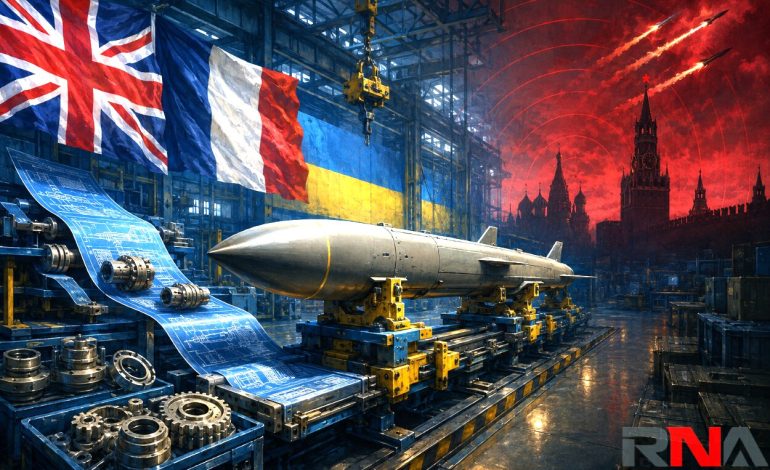
RNA Media illustration for representation.

New Delhi: Britain has authorized the defence manufacturer MBDA to release classified information about British-made components used in the SCALP long-range cruise missile, clearing an important obstacle to its planned assembly in Ukraine. The decision, announced during a high-profile visit to Kyiv on Monday, marks a shift from supplying Ukraine with limited stocks of advanced western weapons towards helping it manufacture them at home.
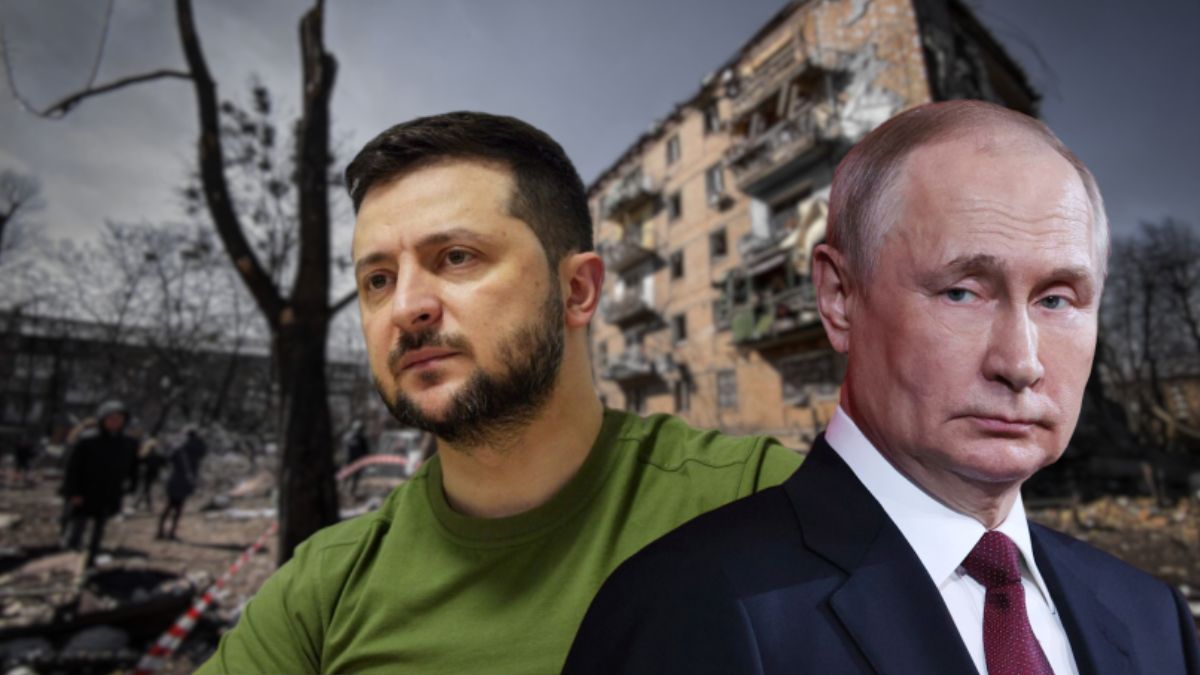
The British prime minister, Andy Burnham, unveiled the move during his first overseas visit since taking office, timed to coincide with the 35th anniversary of Ukraine’s independence. He met the Ukrainian president, Volodymyr Zelenskyy, and joined European leaders for talks on military assistance, air defence and longer-term security guarantees for the war-torn country.
SCALP is the French designation for the missile known in Britain as Storm Shadow, an Anglo-French weapon containing technology and components developed in both countries. Britain’s approval allows MBDA to share the restricted information required for France and Ukraine to proceed with local assembly lines, according to an official statement from the British government.
The decision builds on an agreement announced by the French president, Emmanuel Macron, on July 13, 2026, under which France became prepared to license Ukrainian production of SCALP cruise missiles, AASM precision-guided bombs and Aster air-defence interceptors. The British clearance was necessary because Paris could not independently authorize the transfer of protected British technology embedded in the jointly developed missile.
Britain said the initiative would complement Project Brakestop, its programme to develop cheaper and more readily produced long-range strike weapons for Ukraine. London has committed £25 billion ($34.1 billion) in assistance to Kyiv since Russia began its full-scale invasion, including £16 billion ($21.8 billion) in military support and £5.6 billion ($7.6 billion) in non-military assistance.
He also co-chaired a meeting of the Coalition of the Willing with Macron and the German chancellor, Friedrich Merz, as European governments examined ways to sustain Ukraine’s defence and prepare security arrangements for any eventual ceasefire.
Russia warns missile plants will be destroyed
Russia reacted sharply, accusing Britain of becoming increasingly involved in the war and obstructing diplomatic efforts to reach a settlement. The Kremlin spokesman, Dmitry Peskov, said London was “adding fuel to the fire” and claimed it was pursuing measures intended to prevent progress towards peace.
Peskov said the Russian military was systematically collecting intelligence to locate missile manufacturing and assembly facilities inside Ukraine and would seek to destroy them. Moscow regarded the British decision “extremely negatively”, he said, according to Reuters.
The warning followed earlier Russian threats of unspecified consequences over reports that British-made drones had been used in Ukrainian attacks deep inside Russia. Burnham rejected Moscow’s criticism, maintaining that Britain was assisting Ukraine in defending itself against an invasion launched by Russia.
Storm Shadow and SCALP are air-launched, conventionally armed cruise missiles intended for precision attacks against hardened bunkers, command centres and other high-value stationary targets. Britain has previously described the missile’s range as exceeding 250 kilometres, allowing Ukrainian aircraft to release it from well outside the most heavily contested sections of the frontline.
The 1,300-kilogram missile flies at low altitude and combines inertial navigation, satellite positioning and terrain-reference guidance before using an infrared seeker during its final approach. These features are intended to make it difficult to detect and enable accurate attacks in poor weather or at night, according to MBDA.
Britain became the first country to supply Ukraine with long-range western cruise missiles in 2023, and France subsequently provided SCALP missiles from its own stocks. Ukrainian forces have used the weapons against Russian command facilities, logistics centres, airbases and naval infrastructure in occupied Ukrainian territory and, more recently, against military targets inside Russia.
Why local SCALP assembly could change the war’s long-range balance
The significance of the British decision lies less in the immediate number of missiles available to Ukraine and more in the transfer of the knowledge and industrial permissions required to sustain production. Western governments are, in effect, moving from periodically donating scarce weapons to helping Ukraine become part of the European defence manufacturing network.
That transition could reduce Kyiv’s dependence on unpredictable deliveries from allied stockpiles, many of which were not designed to support a prolonged, high-intensity war. It could also allow production to be adjusted according to Ukraine’s operational requirements, although the scale, cost and timetable of the proposed assembly lines remain undisclosed.
Long-range precision weapons cannot capture or hold territory, but they can influence ground operations by attacking the military system that supports frontline formations. Ammunition depots, fuel installations, railway hubs, airfields, headquarters, communications facilities and bridges become vulnerable when a defender can strike hundreds of kilometres behind the battlefront.
Russia has repeatedly moved command posts and large logistics centres farther from the frontline in response to Ukrainian precision attacks. A more dependable supply of SCALP missiles could force Moscow to disperse its infrastructure further, spend more resources protecting rear areas and accept longer, less efficient supply routes to its forces in occupied Ukraine.
The missile’s hardened-target capability is particularly important because Ukraine’s inexpensive long-range drones are better suited to large industrial sites, fuel installations and other targets vulnerable to fires or secondary explosions. Reinforced command posts, underground facilities and protected infrastructure generally require heavier and more accurate warheads of the kind carried by Storm Shadow and SCALP.
The Royal United Services Institute has previously assessed that the missile can disrupt Russian logistics and command-and-control networks, creating temporary openings that Ukrainian forces may exploit. Its wider effect comes from compelling Russia to defend a much larger number of possible targets, thereby stretching air-defence batteries that might otherwise be concentrated near the frontline.
Greater numbers would also give Ukraine more flexibility to combine cruise missiles with drones, decoys and electronic warfare in complex attacks designed to overload Russian defences. Such coordinated operations could raise the probability that at least some high-value weapons reach their targets, while forcing Russia to expend costly interceptors against cheaper threats.
However, the decision does not amount to the immediate transfer of a complete manufacturing process, and assembly lines are unlikely to begin producing missiles at meaningful rates quickly. Establishing secure facilities, training workers, maintaining quality control and ensuring regular supplies of engines, seekers, navigation systems, warheads and specialized materials could take considerable time.
The facilities will also become priority targets for Russian missiles, drones and intelligence operations, as Peskov’s statement made explicit. Ukraine and its partners may therefore have to disperse production, conceal critical machinery and provide substantial air defence for plants whose locations cannot remain secret indefinitely.
Russian air defences have also adapted during the war and are considerably more effective against familiar western munitions than they were when those weapons first appeared. A RUSI study published in December 2025 found that Russian forces were frequently intercepting more than half of the Storm Shadow missiles used even in complex Ukrainian attacks.
The missile should consequently not be treated as a wonder weapon capable of reversing the conflict on its own. Its effectiveness will depend on production volume, intelligence, mission planning, launch-platform availability and Ukraine’s ability to combine it with other weapons while exploiting gaps in Russia’s layered air-defence network.
If protected production lines eventually deliver missiles in substantial numbers, Ukraine could impose heavier and more regular costs on Russia’s military infrastructure and constrain Moscow’s ability to sustain offensives. A stronger indigenous strike capability could also improve Kyiv’s position in any future negotiation by demonstrating that the passage of time will not automatically erode its capacity to resist.
If production remains slow, expensive or vulnerable to Russian attack, the immediate military consequences will be limited and the announcement will remain primarily a political signal. Even then, the decision is significant because it shows Britain and France moving beyond temporary weapons transfers towards integrating Ukraine into Europe’s long-term missile-production architecture.
The authorization therefore represents a strategic investment rather than an instant battlefield turning point. Its eventual influence on the war will be determined not by the release of classified information itself, but by whether Ukraine can convert that information into a secure, scalable and continuously operating production system.