

Australia tightens student visa family rules: What they mean for Indians
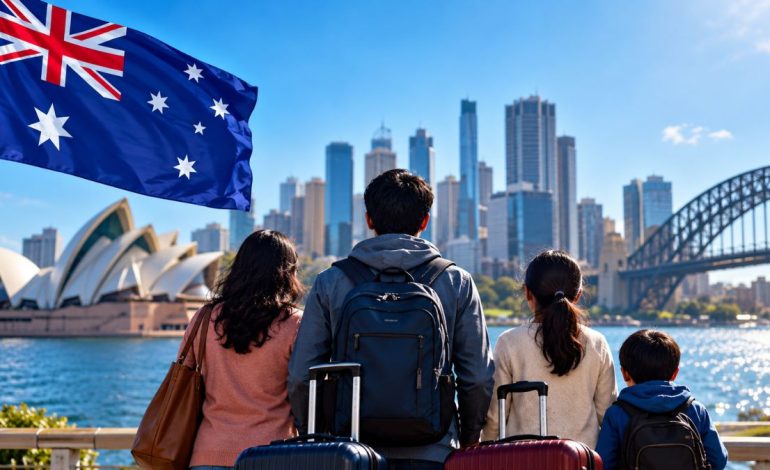
Australia’s planned visa changes could reshape how international students bring their families.(Image courtesy: AI generated picture via DALL-E)

New Delhi: Australia has announced plans to restrict partners and children from being attached to most new international student and temporary graduate visas as part of a wider overhaul of temporary migration. Families already in Australia under existing arrangements will not be separated, while exemptions are planned for nationals of Pacific and Asean countries and certain courses, including PhDs.
For Indian students, the distinction is significant because India is not covered by the country based exemptions announced so far. However, the new family restrictions are not yet fully in force: current student visa rules still allow applicants to include a partner or an unmarried dependent child under 18, while eligible family members can also join later as subsequent entrants.
The home affairs minister, Tony Burke, announced the changes at the national press club on September 17. He said students and temporary graduate visa holders would no longer routinely be able to attach family members, but existing families already in Australia would retain their arrangements until they leave the country or become eligible for permanent residence.
Why Australia is tightening migration rules
Burke said the overhaul was intended to give the government greater control over parts of a migration system that had become heavily demand driven, with employers seeking workers and education providers enrolling overseas students according to demand. He also identified “visa hopping” as a concern, while stressing that legitimate progression from study to a graduate visa, sponsored employment and eventually permanent residence was not the pathway the government was seeking to restrict.
Burke described international education as an important Australian export and cautioned that deep cuts to migration could also affect jobs and economic activity.
Australia’s department of home affairs says the broader migration package has begun to be implemented and will be progressively rolled out over the next 12 months. A precise commencement date for the new student-family restriction has not yet been published.
What it means for Indian students
The change is particularly relevant to Indians because of their growing presence in Australia. Australian Bureau of Statistics data show 971,020 India born residents at June 2025, up from 449,040 a decade earlier, making them the country’s largest overseas born group. Department of education figures for January-May 2026 show India accounted for 16 per cent of Australia’s 680,582 international students, behind China at 23 per cent.
For future Indian applicants, the proposed rules could mean spouses or children may no longer be able to accompany them through the same visa pathway unless an exemption applies. That could affect decisions over travel, housing, childcare, schooling and the timing of study, although applicants will need to check the rules in force when they lodge their visas.
Crackdown on ‘visa hopping’
The overhaul also targets what Burke calls “visa hopping”. Under the announced approach, students who complete one qualification would generally be allowed to progress only to a higher level course, while switching to another course at the same level would require a fresh visa application so authorities can assess whether the transfer represents a genuine education pathway.
Students who genuinely need additional time to complete an existing course will still be able to seek a 12 month extension, including in circumstances such as serious illness or the collapse of an education provider. Burke said such extensions and legitimate course transfers were not the type of “visa hopping” the government was seeking to prevent.
The wider package includes stronger action against people without valid visas and migration agents who knowingly support applications without merit, revised skilled visa processing priorities and a “No Further Stay” condition on visitor visas. The government also plans ballots for second and third-year working holiday maker visas, capped at 45,000 and 5,000 places respectively, while retaining existing regional work requirements.
The latest Australian Bureau of Statistics data put net overseas migration at 292,100 in the year ending March 2026. The 2026–27 Budget forecasts 245,000, falling to 225,000 in 2027-8, figures Burke has said the government intends to meet.
Indian students already in Australia with family members attached to their visas are not being asked to separate under the announced policy. Future applicants, and students making fresh visa or course applications, will need to check the latest department of home affairs conditions as the changes are introduced progressively.