

Trump orders US Navy back to steam catapults even as India pursues Emals. Informed reset or costly whim?
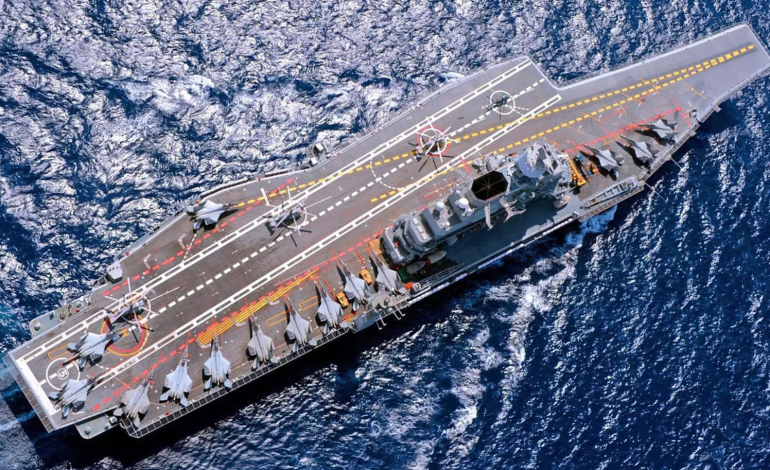
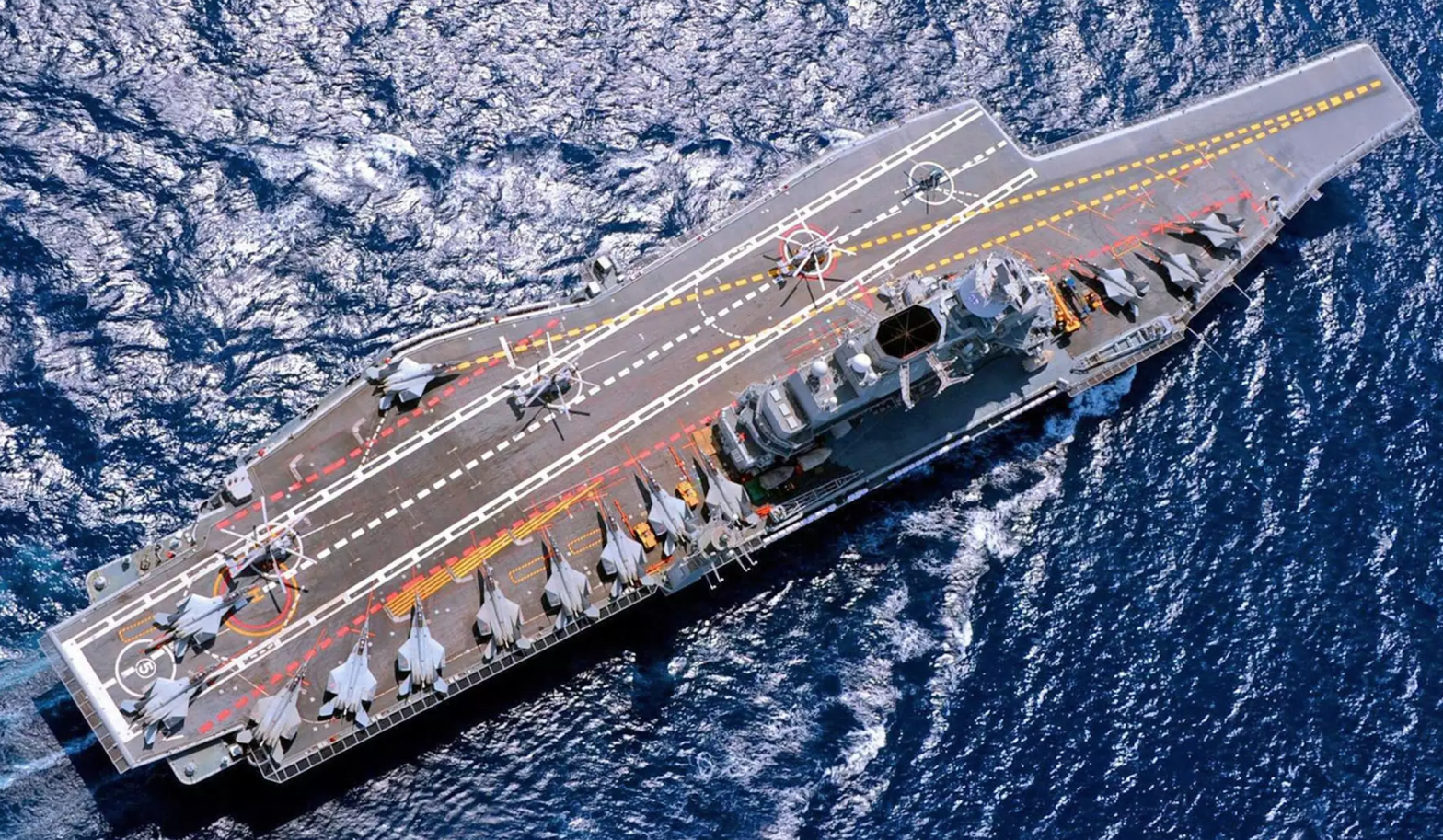
INS Vikrant. India Navy doesn't use Emals, but is seeking the tech. (Photo: MoD)

New Delhi: The US president, Donald Trump, has ordered the Pentagon to prepare for replacing the electromagnetic aircraft-launch system planned for the future USS Doris Miller (CVN-81) with traditional steam-powered catapults. The reversal has particular relevance for India, whose long-term defence technology roadmap seeks two such electromagnetic systems as the Indian Navy examines its eventual transition from ski-jump carriers to catapult-assisted flight operations.
A national security memorandum signed on Thursday, gives the Pentagon 60 days to prepare a plan setting out the engineering measures, timetable and resources required for the change. It also directs officials to replace the carrier’s advanced weapons elevators with hydraulic machinery.
The order applies directly to CVN-81, the future USS Doris Miller, which will be the fourth carrier in the Gerald R Ford class. It does not require the removal of the Electromagnetic Aircraft Launch System, or Emals, from the USS Gerald R Ford or the next two ships, the future USS John F Kennedy and USS Enterprise.
The memorandum also does not mean steam machinery will immediately be installed aboard the Doris Miller. It requires a costed implementation plan, while the eventual conversion will depend on technical feasibility, congressional funding and the ability of American industry to restart the production of equipment that has not been ordered for a new carrier in more than two decades.
Huntington Ingalls Industries began cutting steel for the Doris Miller in 2021, with the carrier’s keel scheduled to be laid by the end of 2026. The ship was originally expected to be delivered in 2032, although the US Navy now anticipates delivery around 2034, according to Reuters.
General Atomics, which manufactures Emals and the advanced arresting gear fitted to Ford-class carriers, said production of the equipment intended for CVN-81 was already nearly 50 per cent complete. It warned that abandoning the system at this stage would introduce substantial cost, schedule and integration risks.
No authoritative estimate for the redesign has yet been released, although preliminary assessments suggest that it could cost hundreds of millions of dollars and potentially more once ship-wide modifications are included. Steam catapults need extensive piping, cylinders, valves and supporting machinery that were deliberately removed from the Ford-class architecture, which was designed around increased electrical power.
Trump has criticized Emals for nearly a decade, describing it as expensive, unreliable and unnecessarily complicated. Addressing a defence gathering in Pennsylvania in July, he argued that steam systems were easier to maintain and said future carriers should not be built with electromagnetic catapults.
The president has based part of his argument on conversations he says he held with sailors and catapult specialists during visits to US carriers. In his account, experienced crew members preferred steam because mechanical faults could be diagnosed and repaired aboard ship without the specialized technical assistance sometimes required by Emals.
His criticism first gained traction during the troubled development of the USS Gerald R Ford, whose catapults, arresting gear, weapons elevators and radar systems suffered delays, cost growth and reliability problems. The carrier eventually entered operational service, however, and had completed 36,863 electromagnetic launches by March 2026, according to Pentagon figures cited by Reuters.
The decision is part of a broader Trump administration initiative intended to confront delays, declining shipyard capacity and rising costs in US naval construction. The same memorandum calls for establishing a fifth public Navy shipyard and a centralized component-repair centre, besides permitting limited foreign construction of American naval vessels under specified conditions.
Why Trump wants steam – and whether his judgment stands up
Trump’s concern is not entirely without technical foundation because Emals performed far below its stated reliability requirement during the Gerald R Ford’s early testing. In 2022, the Pentagon’s operational test office recorded an average of 614 launches between operational mission failures, against a requirement of 4,166.
Those figures represented a substantial engineering shortfall, rather than merely political hostility towards new technology. Early configurations also made it difficult to isolate some failed electrical components during flight operations, while spinning down parts of the system could take about 90 minutes.
The performance has since improved, although the public record does not establish that every reliability objective has been achieved. The Pentagon’s 2025 operational assessment said hardware and software modifications had produced gradual improvements in reliability and availability, but noted that the carrier continued to depend on off-ship technical support for some problems.
There is, therefore, a defensible case for scrutinizing whether Emals has delivered everything the US Navy originally promised. Cost overruns, years of corrective work and continuing support requirements give Trump a factual basis for demanding a fresh examination of the programme.
Questioning Emals, however, is different from concluding that steam is the right answer for a carrier designed from its earliest stages around electrical power. The presidential memorandum cites no comparative Navy study, operational evaluation or independent lifecycle-cost assessment showing that converting CVN-81 would be cheaper or more effective than completing Emals and correcting its remaining faults.
The sequence is revealing because Trump has instructed the Pentagon to prepare a plan for replacement, rather than first asking it to establish which system offers the better operational and financial outcome. His preferred engineering solution was settled before the Navy was directed to calculate its cost, risks and consequences.
The decision is consequently neither a completely uninformed whim nor a demonstrably evidence-led acquisition judgment. It is better understood as a presidential preference rooted in genuine early failures, anecdotal testimony and Trump’s wider distrust of complicated defence programmes, but imposed before the publication of a rigorous technical comparison.
Steam catapults versus Emals
A steam catapult diverts high-pressure steam from a carrier’s propulsion plant into long cylinders beneath the flight deck. The expanding steam drives pistons connected to a shuttle, which pulls the aircraft along the catapult track until it reaches flying speed.
The technology has been used by the US Navy since the 1950s and has accumulated an extensive operational record across successive classes of aircraft carriers. Its maintenance procedures, failure modes and operating limitations are thoroughly understood, and generations of sailors have been trained to repair the equipment at sea.
Maturity is steam’s greatest advantage because mechanical familiarity and established repair procedures have considerable value during prolonged combat operations. A system that can be restored by the ship’s crew may be preferable in some circumstances to one that requires scarce electronic components or assistance from shore-based specialists.
Steam catapults nevertheless impose significant penalties on the ship. Their piping, cylinders, valves and water-brake systems occupy considerable space, add weight, generate heat and humidity, consume freshwater and require labour-intensive inspection and maintenance.
Their acceleration is also less precisely controlled, which can place greater physical stress on an aircraft and its external stores. Steam is particularly unsuited to very light aircraft because its power delivery cannot be regulated across as wide a range as an electromagnetic system.
Emals replaces the steam cylinders with a linear induction motor that generates a travelling electromagnetic field along the launch track. Stored energy is converted into a controlled electrical pulse, accelerating the shuttle more smoothly and allowing operators to match the launch force more precisely to an aircraft’s weight.
According to the US Navy’s Naval Air Systems Command, this control allows Emals to launch platforms ranging from lightweight unmanned aircraft to heavy strike fighters. The system was also designed to reduce aircraft stress, machinery weight, maintenance requirements and crew numbers while enabling higher sortie rates.
Those advantages are becoming more important as carrier air wings expand beyond conventional fighters and helicopters to include unmanned refuelling, surveillance and combat aircraft. A precisely controlled catapult provides far greater flexibility for launching platforms that may be substantially lighter or heavier than present carrier-borne fighters.
Emals carries a different set of vulnerabilities because it depends on high-power electronics, energy-storage machinery, software and complex control systems. Diagnosing faults can require specialist expertise, while the early Ford configuration demonstrated that the architecture of shared electrical components could allow an individual failure to affect wider flight operations.
The real comparison is therefore not between a dependable simple machine and an inherently unreliable digital experiment. It is between a mature but heavy and maintenance-intensive system and a more adaptable technology that promises significant operational advantages but has taken considerably longer than expected to mature.
Reintroducing steam aboard the Doris Miller would involve much more than exchanging one piece of flight-deck equipment for another. Ford-class carriers eliminated much of the steam infrastructure found aboard the Nimitz class, while their internal compartments, reactors, electrical network and manpower requirements were designed around electrically operated systems.
Bryan Clark, a naval analyst at the Hudson Institute, told Breaking Defense that restoring steam lines would require extensive redesign. He also warned that the United States had not purchased a steam catapult in more than 20 years, meaning suppliers would need time and investment to re-establish production.
A steam-equipped Doris Miller would effectively become a separate variant within the Ford class. That could create distinct requirements for training, spares, maintenance, technical documentation and shore infrastructure over the carrier’s service life.
Why decision matters to India’s carrier plans
India currently operates two aircraft carriers, INS Vikramaditya and INS Vikrant, neither of which uses a catapult. Both employ the short take-off but arrested recovery, or Stobar, configuration in which fighters launch from a curved ski-jump under their own power and land with the help of arresting wires.
The arrangement is less complicated and expensive than catapult-assisted take-off but arrested recovery, or Catobar, but it places limits on aircraft weight at launch. Depending on wind, temperature and operational circumstances, a fighter may have to trade fuel or weapons for the ability to leave the deck safely.
Stobar also makes it difficult to operate conventional fixed-wing airborne early-warning aircraft, which are heavier and cannot accelerate sufficiently from a ski-jump. The Indian Navy consequently relies on helicopters for carrier-based airborne surveillance, although these generally offer less altitude, endurance and radar coverage than fixed-wing early-warning platforms.
Emals would allow a future Indian carrier to launch fighters with larger fuel and weapons loads, as well as heavier surveillance, electronic-warfare, refuelling and unmanned aircraft. These capabilities would extend the carrier group’s detection range, combat radius and ability to sustain air operations across the Indian Ocean.
India’s Technology Perspective and Capability Roadmap 2025 lists a tentative requirement for an aircraft carrier, two Emals systems, arresting gear, an automatic carrier-landing system and associated aviation-management equipment. The roadmap also indicates interest in nuclear propulsion for future carriers and other major surface combatants.
The document establishes that electromagnetic launch technology remains part of India’s long-term naval planning, but it should not be confused with an approved purchase of the American Emals. A capability roadmap guides research and industry and does not, by itself, constitute procurement approval, a finalized carrier configuration or a contract with General Atomics.
The Defence Research and Development Organisation is also working on electromagnetic launch technology that could eventually be scaled for naval aircraft, according to an analysis of the roadmap by Naval News. Developing a full-scale carrier catapult, however, would require major advances in energy storage, power conversion, thermal management, control software and repeated launch reliability.
India’s immediate carrier project and its longer-term Catobar ambition also need to be distinguished. The Navy has considered an improved repeat of the approximately 45,000-tonne INS Vikrant design as its next indigenous carrier, while the larger vessel traditionally associated with the name INS Vishal has been discussed as a more ambitious Catobar platform.
The government has not publicly frozen the final configuration of the next carrier or conclusively linked the two Emals systems in the roadmap to that particular ship. The electromagnetic requirement may therefore be intended for a later and larger carrier, rather than the improved Vikrant design that has dominated the immediate procurement discussion.
Trump’s order is nevertheless important for Indian planners because the US Navy has provided the world’s only extensive operational data on a modern electromagnetic carrier catapult. Washington’s forthcoming assessment could offer valuable evidence about reliability, lifecycle expenditure, technical manpower, spare-part requirements and the cost of integrating such a system into a carrier.
The reversal may also affect the commercial and industrial future of the American system if Emals production ends after equipment for the first three Ford-class carriers. The US Navy would still operate and support those systems for decades, but a smaller production base could influence export pricing, upgrades and the availability of components for potential foreign customers.
For India, the proper lesson is not automatically to follow Trump back to steam or to dismiss his concerns. New Delhi should examine verified operational data from the Gerald R Ford, insist on technology access and lifecycle-support guarantees, and ensure that the carrier’s propulsion and electrical architecture are designed around the launch system from the beginning.
An indigenous Indian Emals would also need to demonstrate thousands of representative launches before being accepted for operational service. A catapult failure can interrupt a carrier’s entire strike cycle, making reliability, redundancy and maintainability at sea more important than impressive performance during isolated technology demonstrations.
The US controversy ultimately reinforces the case for India to avoid committing to a fashionable technology before its engineering, cost and support requirements are fully understood. At the same time, the operational advantages of electromagnetic launch – particularly for fixed-wing early-warning aircraft and unmanned systems – are too consequential for a future blue-water navy to disregard.
Trump has raised legitimate questions about reliability and excessive complexity, but his directive has not yet demonstrated that steam offers a better answer for the Doris Miller. India should treat the episode as a valuable technical warning, not as evidence that electromagnetic catapults have reached a strategic dead end.