Pakistan claims progress on Iran-US peace push, but Munir’s balancing act faces a harder test
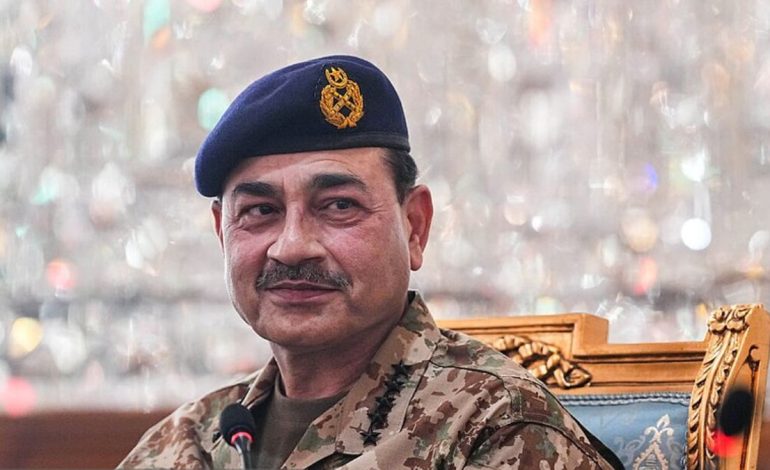
Pakistan army chief Asim Munir during his visit to Tehran. Image courtesy: Wikimedia Commons

New Delhi: Pakistan has claimed “significant progress” in its latest attempt to revive negotiations between Iran and the United States after the Pakistani army chief, field marshal Asim Munir, held a series of high-level meetings in Tehran. Yet no agreement has been announced, and Iran’s response to the latest US outreach suggests that Islamabad’s access to both capitals has still not translated into decisive leverage.
Munir met the Iranian president, Masoud Pezeshkian, and the parliament speaker, Mohammad Bagher Ghalibaf. He also met other senior political and security officials during his visit. Pakistan’s interior minister, Mohsin Naqvi, who accompanied him, said the discussions focused on ending the conflict, preventing further regional escalation and reopening the Strait of Hormuz.
The visit came after the US president, Donald Trump, spoke to Munir and asked Pakistan to use its influence with Tehran to help revive negotiations, according to Reuters citing Pakistani sources. It placed Munir in an unusual position: carrying Washington’s message into Tehran while Pakistan simultaneously sought to convince Iran that it was not acting as an American proxy.
Pakistan’s two-sided balancing act
The conflict has given Islamabad an unusual diplomatic opening. Pakistan has maintained direct channels with Tehran while building a noticeably warmer relationship with the Trump administration. Earlier, Islamabad helped broker the Islamabad Memorandum of Understanding between Washington and Tehran, an arrangement intended to halt hostilities and create space for negotiations. That understanding later unravelled as military exchanges resumed.
Munir’s personal access to Trump has strengthened Pakistan’s claim that it can serve as a bridge. Geography and security realities, however, make Iran equally difficult for Islamabad to ignore. The two countries share a long border, face recurring militant violence around Balochistan and Sistan-Baluchestan and retain important political and economic ties.
But the ability to speak to both sides is not the same as the ability to alter their calculations. Pezeshkian’s response to the latest US outreach made that clear. During his meeting with Munir, the Iranian president said Washington would have to change its approach and warned that reliance on “coercion and bullying” would complicate implementation of any understanding. Iran has separately acknowledged receiving a US message through Pakistan indicating Washington’s interest in resuming negotiations.
Conflict has spread across the Gulf
The diplomatic push comes after months in which the US-Iran confrontation has repeatedly spilled beyond Iranian territory.
Following US-Israeli strikes on Iran, Iranian missiles targeted or crossed the airspace of several regional states hosting US military assets, including Bahrain, Kuwait, Qatar and the UAE. Jordan also intercepted incoming missiles. Bahrain said a service centre used by the US Fifth Fleet was struck.
Tehran has also warned that further American attacks could trigger retaliation against military or energy infrastructure in Gulf states that assist US operations.
Washington, meanwhile, has widened economic pressure on Iran. Its latest sanctions package targets nearly 60 individuals, entities and vessels connected to military procurement, petroleum, shipping and other networks. Tehran has warned of retaliation against attempts to enforce or deepen that pressure.
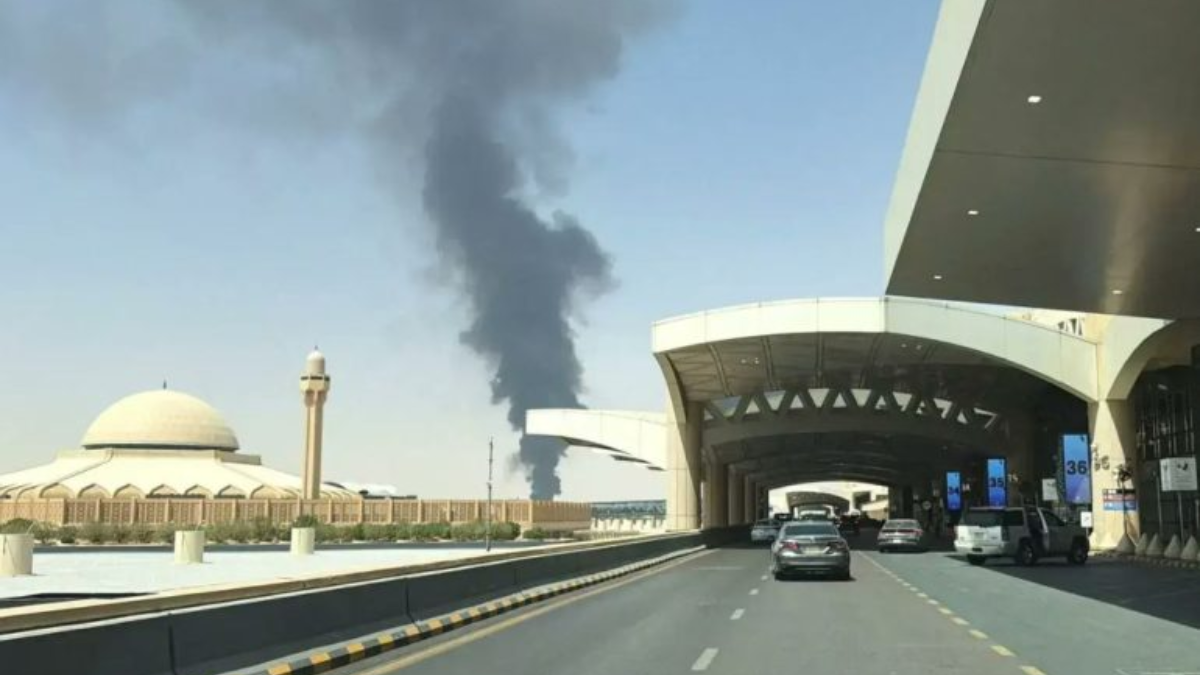
Iran’s regional network has added another layer of instability. The Iran-aligned Houthis have renewed attacks on Saudi targets and Red Sea shipping. On August 20, the group said it had targeted Najran airport and an Aramco facility with drones, although Saudi Arabia had not immediately confirmed those specific strikes. Earlier attacks wounded civilians and increased fears of coordinated pressure on Gulf infrastructure.
Hezbollah entered the wider confrontation against Israel after the February attacks on Iran before agreeing to a fragile ceasefire in June. The United States has since imposed fresh sanctions on the Lebanese group, again highlighting its links with the Quds Force of Iran’s Islamic Revolutionary Guard Corps.
Hamas, although historically backed by Tehran, remains engaged in a separate confrontation with Israel in Gaza. Attempts to implement a US-backed peace plan there have repeatedly stalled.
Mecca pact complicates Iran outreach
Pakistan’s room for manoeuvre has narrowed further since it joined Saudi Arabia and Turkiye in signing the Makkah joint defence agreement on August 7.
The pact says an armed attack on one member will be regarded as an attack on all three. Pakistan has said the arrangement is defensive and directed against no particular country.
Regional media have subsequently reported that Iran has also been invited to consider joining the grouping, but the agreement still presents Islamabad with an awkward strategic equation.
Saudi Arabia has faced direct threats from Iran-aligned groups during the conflict. Pakistan is therefore deepening a formal defence relationship with Riyadh while simultaneously trying to persuade Tehran that the emerging security architecture is not aimed at containing Iran.
That contradiction may prove to be the biggest limit on Pakistan’s mediation.
Why India is watching closely
For India, the outcome goes well beyond Pakistan’s diplomatic ambitions. The conflict has disrupted energy markets and commercial shipping through the Strait of Hormuz, one of the world’s most important oil chokepoints. Reuters reported on August 25 that only around 5 million to 7 million barrels a day were moving through the waterway by some tracking estimates, while describing the wider crisis as the largest oil-supply disruption on record.
India is particularly vulnerable to sustained disruption in the Gulf because of its dependence on imported crude and liquefied natural gas, as well as the presence of millions of Indians across West Asia.
There is also direct commercial exposure to Iran. India-Iran trade has fallen by more than 90 per cent from around $17 billion in 2018-19, but Indian exporters of rice, tea and pharmaceuticals still depend on Iranian demand. Fresh US sanctions and disruption to UAE-based trading and payment channels could make those exports harder.
New Delhi must therefore protect several relationships at once: its strategic partnerships with Gulf states, engagement with Iran, expanding ties with Israel and its broader relationship with Washington.
Pakistan may currently possess a rare diplomatic opening because both Washington and Tehran are willing to hear its messages. Whether it can turn that access into an agreement is another matter. The deeper the conflict becomes entangled with Gulf security, sanctions, shipping and Iran-aligned armed groups, the harder Islamabad’s balancing act gets.
For Pakistan, the question is no longer simply whether it can mediate between the US and Iran. It is whether it can continue to reassure Tehran while deepening defence commitments with Saudi Arabia and maintaining close political access to Washington. That is where access may begin to collide with leverage.