
After Akash air-defence systems exports to Armenia, Tajikistan and Turkmenistan, India eyes more global orders
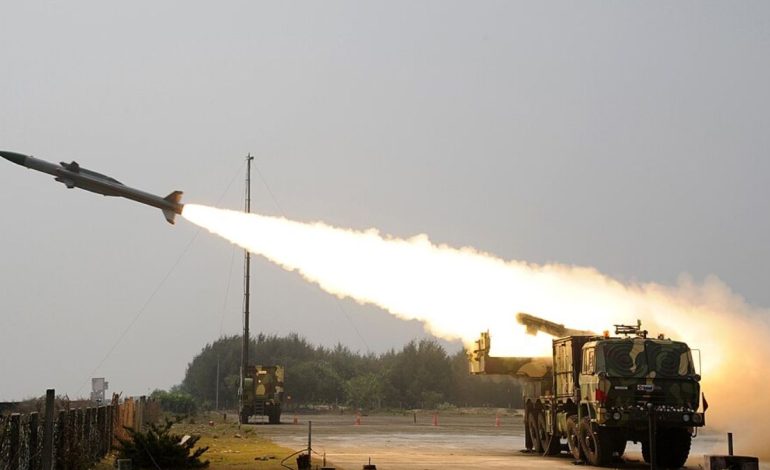
Akash air-defence system is gaining overseas customers as New Delhi expands its defence export footprint.(Image courtesy: Wikimedia Commons.)

New Delhi: India has exported its indigenous Akash surface-to-air missile system to Armenia, Tajikistan and Turkmenistan, expanding its overseas customer base beyond the first foreign sale. Production has stabilized and India’s armed forces continue to place additional orders as New Delhi seeks more international buyers.
Armenia was the first foreign customer and acquired multiple batteries before exports expanded to Tajikistan and Turkmenistan, marking Akash’s entry into the Central Asian defence market.
The defence secretary, Rajesh Kumar Singh, described Akash as “one of our success stories”, saying the programme demonstrated the maturity of India’s indigenous missile design and production capabilities.
“The first customer was Armenia, which has taken multiple batteries. Thereafter, we’ve also exported it to Tajikistan and Turkmenistan,” Singh said during an exclusive interaction with ANI on October 1.
He said production had stabilized and pointed to continued demand from India’s own services. “I’m sure there will be many more from various parts of the world,” Singh said. He also said Akash was effective against high-velocity aerial targets but did not identify future buyers or announce fresh contracts.
Stable production backs export push
The domestic order pipeline remains central to the programme. In March 2023, the defence ministry signed an ₹8,160 crore contract with Bharat Dynamics Limited for improved Akash systems for the Army Air Defence’s 3rd and 4th regiments. Those orders moved into delivery this year, with the defence minister, Rajnath Singh, flagging off Akash combat systems at Bharat Electronics Limited in Bengaluru in February.
Rahul Wankhede, a research analyst at the Manohar Parrikar Institute for defence studies and analyses, said sustained domestic production could reassure foreign customers.
“This assures potential buyers of supply chain reliability, quick replenishment and a comprehensive training package,” Wankhede told the South China Morning Post.
The exports to Tajikistan and Turkmenistan also give India a foothold in Central Asia, where Russia has traditionally been a major military supplier and China has expanded its defence presence. Turkmenistan already operates a layered mix of Chinese made air-defence systems, including the long-range FD-2000, medium-range KS-1A and short-range FM-90, while the newer FK-2000 missile-and-gun system was displayed in Ashgabat in September.
From indigenous system to export programme
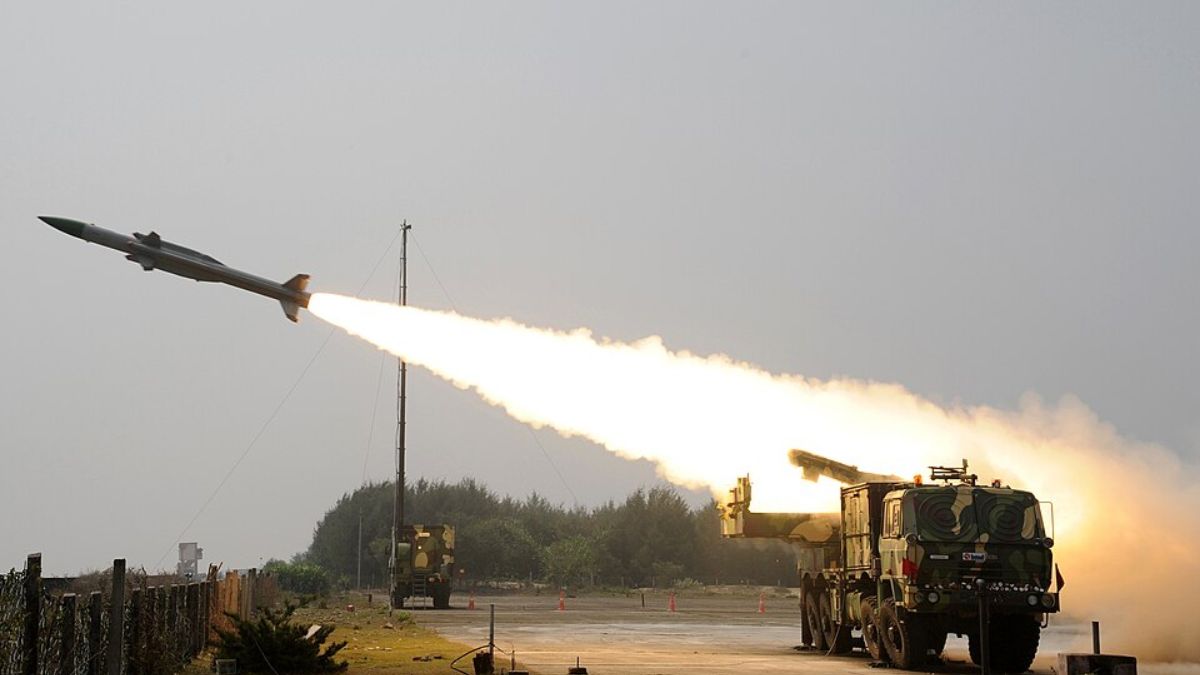
Developed by the Defence Research and Development Organisation, Akash is a mobile short-range surface-to-air missile system designed to protect vulnerable areas and points against aerial attack. Bharat Dynamics Limited lists its operating range at 4.5 kilometers to 25 kilometers and engagement altitude from 100 metres to 20 kilometers, with helicopters, fighter aircraft and unmanned aerial vehicles among its target categories.
Akash has been inducted into both the Indian Army and Indian Air Force. Newer developments include Akash Prime and the separate Akash-NG programme, whose capabilities should not be conflated with the baseline system being exported.
The government cleared Akash for export in December 2020, specifying that the export version would differ from the system deployed by India’s armed forces. India’s defence exports reached a record ₹38,424 crore in 2025-26, up 62.66 per cent from a year earlier.