


US-China chip war intensifies as senator seeks ban on CXMT. Why Chinese memory chips are the new battleground
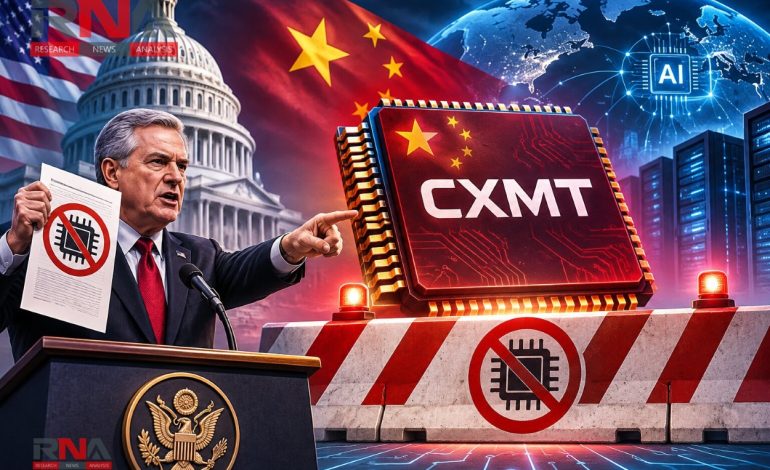
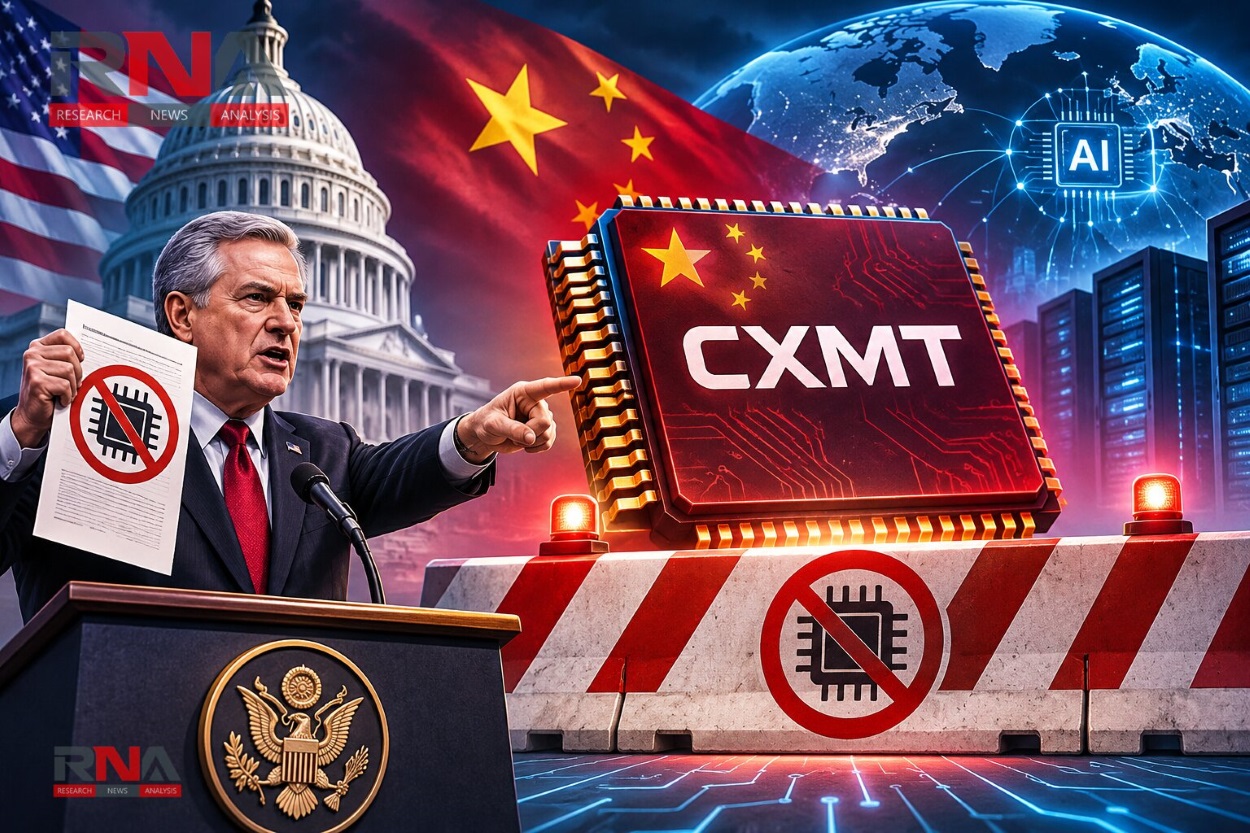
RNA Media illustration for representation.

New Delhi: A powerful Republican senator has called for sweeping restrictions on Chinese semiconductor manufacturer ChangXin Memory Technologies (CXMT), seeking to exclude its products from the American market and cut off its access to US technology. The demand marks another escalation in the US-China technology confrontation, with Washington increasingly concerned that Beijing’s expanding memory-chip industry could strengthen its artificial intelligence capabilities and military modernization programmes.
The chairman of the US senate intelligence committee, Tom Cotton, made the demand in a letter to the commerce secretary, Howard Lutnick, on Thursday, in which he argued that CXMT’s growing technological capabilities and connections with the Chinese state posed risks to American economic and national security. Cotton urged the commerce department to place the company on its “entity list”, which would subject exports of American technology and equipment to stringent licensing restrictions.
The proposed action would extend beyond existing controls on selected Chinese semiconductor facilities by targeting CXMT’s wider access to American technology and its ability to sell products in the United States. Cotton also asked the department to examine whether its information and communications technology authorities could be used to prevent CXMT memory chips from entering the American market.
Why Washington considers CXMT a security threat
CXMT, headquartered in Hefei in China’s Anhui province, is the country’s leading manufacturer of dynamic random-access memory (DRAM), a semiconductor component essential for computers, servers, smartphones and increasingly sophisticated AI systems. Its emergence as a credible international supplier has made it an important part of Beijing’s efforts to reduce dependence on foreign semiconductor companies.
American concerns extend beyond commercial competition because memory chips also perform essential functions in military computing, surveillance systems, communications equipment and advanced weapons platforms. Washington argues that China’s policy of integrating civilian technological advances with military development makes it difficult to separate ostensibly commercial semiconductor production from potential defence applications.
The US defence department included CXMT in its June 2026 list of Chinese military companies, citing its affiliations with China’s ministry of industry and information technology and state-owned industrial interests. However, inclusion on this list does not automatically prohibit all commercial transactions, making Cotton’s proposed additional restrictions substantially more consequential.
Importance of memory chips in the AI race
Although international attention has concentrated largely on advanced processors manufactured by Nvidia and its competitors, memory technology is equally important to the development of powerful AI systems. High-bandwidth memory (HBM), which stacks memory chips vertically to move large quantities of data rapidly, allows sophisticated processors to handle the enormous computational demands of training and operating advanced AI models.
China has struggled to obtain sufficient quantities of these specialized components since Washington tightened export controls on advanced memory technology in December 2024. Consequently, Beijing has accelerated domestic production, regarding an independent supply of advanced memory as essential to building alternatives to American-designed AI computing systems.
CXMT is attempting to produce HBM3E, a sophisticated memory technology widely used in contemporary AI accelerators, despite substantial manufacturing difficulties. According to a Reuters investigation published on October 28, the company’s reported production yields were only 20–30 per cent, compared with approximately 70 per cent at South Korea’s SK Hynix, a leading global manufacturer.
The figures indicate that a comparatively small proportion of CXMT’s manufactured chips meet the required specifications, substantially increasing production costs and limiting output. Nevertheless, the company reportedly intends to begin limited HBM3E manufacturing before the end of 2026, underlining Beijing’s determination to establish a domestic supply chain even before its technology becomes internationally competitive.
Reuters also reported that CXMT accounted for approximately 10 per cent of global DRAM revenue in the second quarter of 2026, making it the world’s fourth-largest supplier in that segment. The figure illustrates why American policymakers increasingly regard Chinese memory manufacturers as potential competitors to established producers such as Samsung Electronics, SK Hynix and Micron Technology.
What an American ban could achieve
Placing CXMT on the so-called entity list would require suppliers to obtain US government licences before providing the company with covered technologies, manufacturing equipment, software and technical assistance. Unlike an outright commercial embargo, the “entity list” restrictions operate through export licensing requirements, although restrictive licensing policies can effectively prevent companies from receiving critical equipment and services.
For CXMT, losing access to advanced American semiconductor manufacturing tools could complicate efforts to improve production yields, expand capacity and compete with established international manufacturers. A separate prohibition on selling its products in the United States would create an additional obstacle, potentially limiting its commercial expansion and discouraging American technology companies from incorporating Chinese memory chips into their products.
However, Washington would also have to consider the consequences for global semiconductor supply chains, where American, South Korean, Japanese, Taiwanese and Chinese companies remain closely interconnected. Further restrictions could accelerate China’s efforts to develop domestic substitutes, even as they slow its immediate technological progress.
Political pressure grows on Washington’s chip policy
Cotton’s intervention comes as Lutnick faces mounting congressional scrutiny over the administration’s handling of advanced semiconductor exports to China. In a separate Reuters report on Thursday, senior White House officials were reported to be discussing his possible removal following controversies surrounding Nvidia’s exports and the resignation of its chief executive, Jensen Huang.
The administration has also faced criticism for delaying additions to the “entity list”, reportedly out of concern that further restrictions could aggravate trade tensions with Beijing. According to Reuters, the United States had not announced new additions to the blacklist since October 2025, despite earlier consideration of restrictions on several Chinese technology companies, including CXMT.
The latest dispute reflects a broader strategic calculation in Washington that controlling advanced semiconductor technology is increasingly important to maintaining America’s military and technological advantage. For China, however, restrictions on companies such as CXMT reinforce the argument that technological self-reliance is essential to its long-term economic and national security.
The immediate question is whether the Trump administration will translate Cotton’s demands into enforceable restrictions or continue balancing national security concerns against its wider trade relationship with China. As of publishing this, no new comprehensive ban on CXMT had been confirmed, leaving the company’s future access to American technology and markets uncertain.